
Finding warmth in the Faroe Islands' long dark
When the light disappears for most of the day, the Faroe Islands turn inward—toward wool, warm kitchens, and the people who fill them.
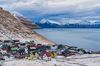
Every inch of the wind-whipped landscape was white, sitting in stark contrast to the dark Atlantic. Sheep dotted the hills, snow clinging to their wool, and the gray sky hinted at another round of precipitation to come. My cheeks still stung with cold and the wind still whistled in my ears as I blasted the heat in my rental car, the thought of my favorite fish soup on the dinner horizon keeping me warm. Most would call this the “off-season,” but here, in the far-flung Faroe Islands, locals and return visitors know it’s more like the cozy season.
This was my third visit to the “wool islands,” where sheep grossly outnumber people, but my first in winter. My earlier trips had been long days under the midnight sun, zigzagging across the 18-island archipelago with my camera to cover as much ground as I could. This time would be different. When unpredictable, harsh weather meets steep, switchback roads along sheer cliffs, the only option is to slow down—way, way down.
When the dark sets your schedule
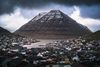
A sunrise alarm is unnecessary in mid-January in this corner of the world. It was a far cry from my usual travel-photography-focused schedule, where I’d hit snooze every two minutes starting at 4 a.m. until I finally wrangled myself out of bed to shoot the sunrise. Here, the darkness pulled me into a deep sleep, the kind I hadn’t had since college; no blackout shades needed. It was an odd adjustment: barely a handful of daylight hours at my disposal, with the in-betweens as intense black stretches that run from mid-afternoon well into the following morning.
Coffee was sipped leisurely in a calm breakfast room at my hotel in the capital city of Tórshavn. Local specialties were spread across the buffet tables: fresh slices of smoked salmon, Faroese rye bread, and small heart-shaped waffles paired with local rhubarb jam, still warm enough to soften the butter. There was no rush to be anywhere, and the dark outside only made the room feel warmer, creating an easy excuse to linger over a second cup of coffee as it steamed against the cold coming off the window. Quiet voices were an unspoken agreement, fueled by politeness, because surely the rest of the world was still asleep in the peaceful hush of the lingering night, despite the clock showing 9 a.m.
A table set at the end of the road

Ample snow was on the horizon on the first full day of my trip. The entire sky was one ashen cloud, massive and heavy with precipitation. It looked ready to pop, but I was hoping it would hold on until after my visit to Hanusarstova, a farm on the island of Eysturoy. The drive led me through one of the Faroe Islands’ famous undersea tunnels, some of which are so long that they have roundabouts and small pull-offs to serve as rest areas. Then it was over a mountain pass until the road ended in Æðuvík, a small village mottled with colored houses and wide-open views of the Atlantic. Harriet Olafsdóttir av Gørðum and her two dogs greeted me warmly, the dogs circling my legs and pressing wet noses into my gloves. They led me on a tour of the family farm, where the work is still done by hand.
“The land is so wet that we can’t have tractors,” Olafsdóttir told me, and after being soaked to the bone more times than I can count here in the Faroes, I believed her completely.
We wandered toward the barn, the air sweet with hay and straw, to meet the residents: four Faroese horses (a breed with fewer than 100 left in the world), two rabbits, some chickens, and the current wintertime count of 70 sheep, all of which she knew by name.
She’s a fifth-generation farmer and a photographer who runs the farm with her husband and two children. The property also includes a beautifully remodeled cottage rental and space to host guests for a home-cooked meal—a Faroese tradition of hospitality known as heimablídni.
After walking the farm, we chatted easily over lunch in their cozy kitchen, surrounded by framed photos of the sheep wearing whimsical flower crowns, and I experienced heimablídni for myself. Potato soup with garlic, onions, and carrots grown on the Hanusarstova farm; fermented sheep meat; hard-boiled eggs; and homemade rye bread adorned the table as the snow started to fall.
Spinning, sweaters and soup
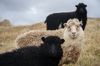
The next morning brought more of the same easy comfort. I made my way to the island of Sandoy to visit Kyrra, a family-run, sustainable micro-spinnery with a small boutique in the tiny village of Skopun. Wool from surrounding farms is spun into handmade yarn and knit into finished pieces like sweaters, all from 100 percent Faroese sheep and all in small batches. Without the shop, the wool from the sheep, raised primarily for meat, would go to waste.
Back in Tórshavn, armed with my new knowledge of wool, it was easy to see how tightly the resource is woven into daily life, no pun intended. The compact old town has several knitwear shops, and one of the most popular among them is the female-owned Shisa Brand, owned and operated by Sissal Kristiansen. The store works to preserve Faroese wool heritage and hand-knitting while offering designs most people would call more modern than traditional.
Each piece is made by a local Faroese knitter from the owner’s own patterns, Kristiansen told me. “For me, this is very much about the history of the Faroe Islands—that’s what I’m trying to sell,” she notes.
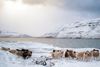

A wool sweater isn’t just protection from the elements. Its colors and patterns are inspired by the land around them: the gray sky, the dark sea, the natural brown and tan tones of the sheep. After a few days of watching that wool move from the animal to the spinnery to the knitter’s hands, I’d never appreciated that more.
Outside, the snow kept falling in hefty, heavy flakes that make you feel like you’ve wandered onto a winter movie set. When that weather sets in, it’s always best to retreat into one of the town’s small, warmly lit restaurants. They’re easy to find, usually marked with handwritten chalkboard signs and windows lined with narrow, flickering candles burning actual flames—no push-button electric candles here.
I wandered into Ástaklokkan, sitting inside an old building in the old town. Stepping in was like stepping back a century: original wooden floors that creaked underfoot, low ceilings, and rock walls where tiny green plants had taken root in the cracks and held on through the winter. I peeled off my parka with a contented sigh and felt the cold leave my shoulders as the warmth and the low murmur of other diners settled around me. I ordered house-made soda and langoustine soup with crusty bread on the side.
I’m convinced there’s something close to luxury in a well-crafted bowl of Faroese seafood soup, and this meal proved it again. It arrived steaming, creamy and deep with flavor, rich enough that I slowed myself down just to savor it.
A stranger at the knitting circle

On my last night in the Faroes, I walked to a local’s home in Tórshavn through a snowstorm, flakes catching in my collar, the only sound coming from my own boots crunching down the empty street. Inside, the windows were fogged with heat, the air thick with the scent of herbs and tea, and needles clicked away in a rhythm I couldn’t yet follow. It was a community event anyone was welcome to join, but being accepted into the small knitting club as a stranger still felt like being let in on a secret. But my own secret spilled out right away: “I don’t know how to knit,” I confessed.
I wasn’t asked to leave.
Instead, over the next two hours, I learned the basics of knitting, something nearly every child on the Faroe Islands knows. The yarn dragged and caught against my clumsy fingers, but I celebrated a small triumph with the first uneven row of what should eventually become a sock. Later, we broke for tea and snacks, cheese and cakes, but the real treat was how quickly I no longer felt like a stranger. Being pulled into their tight-knit circle to learn a craft so deeply ingrained in the islands’ culture left me a little choked up.
I may have physically done less on this trip than on any before, but it felt more meaningful for it. I left the next morning before the sun rose, carrying memories of joy and light out of a season of cold and darkness.
Places to stay
Torshavn, Faroe Islands
Go further with the Expedia app
