
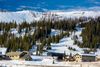
Colorado's deepest snow with none of the lift lines
Wolf Creek still offers the classic Colorado ski experience that’s drawn both families and wintertime thrill-seekers to the Rockies for the better part of a century.
Spend an evening in a mountain town pub anywhere in Colorado, and you’re bound to hear tales of the bygone ski bum glory days. Adventurous souls found their way west, posted up in an alpine cabin around Thanksgiving, and didn’t emerge until the wildflowers bloomed, having clocked 100 days on the mountain and three times as many toasts to a winter of powder. Once rumors of the stoke reached the coasts, however, the money started coming in—and the skiers who crafted the state’s dedicated wintertime culture kept getting pushed farther out.
Somewhere, somehow, the soul of skiing got caught in the shuffle. In the resort towns a couple hours west of Denver, $300 lift tickets and $28 cheeseburgers became the norm. That kind of sticker shock doesn’t exactly scream “Let’s do this!” to the travelers who built these towns or the line cook who can’t afford to live within an hour of his job. But the snow has kept flying above the Rockies despite these changes, and the people who care about finding the perfect powder turn are still chasing it.
Some of those passionate souls trying to maintain the glory days of Colorado skiing made their way to the San Juan Mountains of southern Colorado. At Wolf Creek Ski Area, ski culture remains as true and rugged as it’s portrayed in films like “Aspen Extreme” and “Out Cold,” free from the crowds and corporate consolidation that have swallowed resorts farther north. The drive to reach it along Highway 160 curves along winding switchbacks of Wolf Creek Pass, and as you climb higher toward the tree line, you can nearly taste the enthusiasm that awaits at the top.
Whether you come from South Fork to the east or Pagosa Springs to the west, it’s an adventure—and one that perfectly embodies what a ski trip is all about. Come here, and you’ll find the spirit of skiing is alive and well, and the best part is, there’s always a seat ready for you on the chairlift.
Making powder turns in Colorado’s deepest snow

Wolf Creek Ski Area receives an average of 430 inches of light, fluffy powder each year—more than Vail, Breckenridge, Aspen, or anywhere else in Colorado. What it lacks in high-speed six-person chairs and glimmering gondolas (you’ll find a whopping zero), it more than makes up for in the kind of skiing that got people hooked in the first place. With roughly 250,000 skiers visiting a season, you can find fresh powder not just in the afternoons but even days after a storm. The snowfall typically allows the resort to open in November, with the deepest years stretching into May.
I first skied Wolf Creek in 2003 while in college down in Durango, back when a student ticket ran $22 on one Wednesday a month, and the place was packed from 8 a.m. until the lifts stopped spinning. That rate has since tripled to $70, but is still nowhere near the three figures you’d pay for a lift ticket at the more well-known resorts. Adult tickets sit in the low $90s and cap around $105 on peak holidays, which means a family of four still gets everyone on the mountain for roughly what one walk-up ticket costs at bigger resorts. And at Wolf Creek, lunch is still a cheap burger at a shared table next to people who also drove past the resorts with the gondolas to get to the one with the snow.
Then there’s the terrain. Spread across its 1,600 skiable acres are some of Colorado’s most demanding runs, from the steep chutes off Knife Ridge to the open powder fields of Horseshoe Bowl. If you’re up for the work, hike the 20 minutes from the top of the Alberta Lift to Alberta Peak, where you can drop into 1,600 vertical feet of untracked snow back to the base.
Beginners aren’t an afterthought either: the Charity Jane Express, added in 2018, opened 55 acres of gentler terrain to go with the runs off the Raven and Bonanza chairs near the lodge.
It’s as good a mountain to learn on as it is to get humbled by. The mountain, along with the steep, switchbacked road to reach the parking lot, keeps most of the egos in check before you’ve even clicked in. Locals and out-of-towners share the upstairs pub, and there’s rarely a wisp of smugness to be found.
The choice to stay small
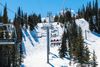
The Pitcher family has owned Wolf Creek since 1978, and to the delight of many locals, they’ve held the line against repeated pushes by outside developers to build a base village and luxury hotels at the top of the pass, just above the resort. Instead, they’ve kept the day lodge built in 1982, on the site the ski area moved to in the mid-1950s. But the idea of skiing here goes back to 1938, when a farmer named Kelly Boyce rigged a rope tow to an old Chevy truck near the summit and charged a dollar per ride.
The family’s ongoing refusals are what shape Wolf Creek’s identity among Colorado resorts. Back in the early 2000s, when I was there often, bumper stickers reading “No Pillage for the Village!” turned up on cars all over—in the lot, and in towns from South Fork to Durango. Locals didn’t want the resort to lose the independent, no-frills attitude that made it special.
Today, the fight continues. In 2024, the 10th Circuit Court of Appeals sided with the developers on an access road to a proposed lodge site, reversing earlier rulings that had favored conservation interests. But that decided one legal question, not the whole matter, and local and environmental opposition has kept coming since.
Experiencing southwestern Colorado

Because there’s still no slopeside lodging, Wolf Creek all but forces a road trip through the Four Corners—the high-desert region where Colorado, Utah, Arizona, and New Mexico meet. Overnighters should base themselves in Pagosa Springs, where The Springs Resort has more than 50 geothermal soaking pools strung along the San Juan River, plus a cold plunge in the river itself when you need to reset. For a quieter night, the Alley House Grill plates alpine bistro food in a historic home on the town’s main drag. Kick your ski boots off for the night there, or dive into alpine chic surrounds a few miles out at High Creek Lodge & Cabins.
The region itself has plenty of places to stop before or after a few ski days. Durango, one hour west of Pagosa Springs, is the hub of activity in the region. The draw is the Durango & Silverton Narrow Gauge Railroad: in summer it runs all the way to the old mining town of Silverton, and in winter, when mountain passes aren’t so passable, it turns around about halfway, trading the full route for close-up views of the San Juans. In Durango, the Strater Hotel has been welcoming guests since 1887, hosting the likes of President Gerald Ford and novelist Louis L’Amour. The hotel’s Diamond Belle Saloon still embodies the Western spirit that the town was built on, straight down to the cocktail servers’ outfits.
From Durango, head north on U.S. 550. The stretch past Silverton up to Ouray is the Million Dollar Highway, named for the views as much as the mining money underneath it. Hot springs dot the route. Alternatively, head west toward Mesa Verde National Park and the official Four Corners Monument; it’s the only place in the U.S. where you can stand in four states at once. Telluride and Purgatory are easy add-ons if you want more mountains or aren’t ready to stop chasing the perfect turn.

Places to stay
Pagosa Springs

Go further with the Expedia app
