
A cultural guide to Tirana, Albania
Discover why this Balkan city is one of Europe's most exciting emerging capitals, reinventing itself through art, architecture, and culture.
Your essential guide to the best things to see and do in Tirana. Find more travel inspiration for more amazing cities here.
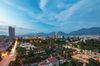
While a new generation of travelers is flocking to the pristine beaches of the Albanian Riviera, the country’s capital, Tirana, is much more than a stopover. Since Albania emerged in 1991 from decades of communist isolation under dictator Enver Hoxha, the city has transformed itself, painting gray apartment blocks in rainbow colors and turning symbols of Hoxha’s rule—including vast concrete bunkers and the giant Pyramid of Tirana—into powerful museums and cultural spaces. Today, with one of Europe’s youngest populations, Tirana has a creative confidence and youthful energy that feels infectious.
Late spring (April to June) and early autumn (September to October) are pleasant and warm for exploring, avoiding the peak of the summer heat and winter chill.
Art & Architecture
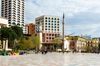
The story of Tirana’s many eras is written on its streets: Ottoman, Italian and communist-era buildings now jostle for attention next to striking contemporary towers, part of the Tirana 2030 masterplan to transform the concrete-heavy city into a bold forward-facing metropolis. Skanderbeg Square is at the heart of it all, named for national hero Gjergj Kastrioti (known locally as Skanderbeg) who revolted against Ottoman rule in the 15th century. On its northeast corner, the rippling balconies of the Skanderbeg Building are designed to be shaped like a bust of Kastrioti. The Center for Openness and Dialogue, a free gallery inside the prime minister’s offices, rotates exhibitions through the year, and the Pyramid of Tirana, once a monument to Enver Hoxha and now a cultural and tech hub, is free to climb for wide views over the city.
History is never far away in Tirana, though, and it’s only a short walk to the thick blast doors of Bunk’Art 2. One of a vast network of bunkers that Hoxha built all over the country, it is now a museum that documents the dark history of the communist regime and the Sigurimi secret police. The even larger bunker museum, Bunk’Art 1, sits on the outskirts of the city, while House of Leaves in the former Sigurimi HQ continues the story of the decades of surveillance. Today, Tirana shows a brighter face with street art and colorfully painted buildings. Simply take it all in,or tap into your own creativity on a photographer-led alternative city tour, visiting artist workshops, small galleries, and other tucked-away local secrets.


Food & Drink
Sandwiched between Greece and Montenegro, facing the heel of Italy’s boot across the Adriatic Sea, Albania is a delicious meeting point of Mediterranean and Balkan food culture. Qofte meatballs, flaky byrek pastry parcels filled with cheese, spinach, or meat, and tavë kosi (a baked lamb and rice casserole) are staples. A street food tour offers a taste of the city, with a side order of storytelling and history, while at tasting-menu restaurant Mullixhiu, ex-Noma chef Bledar Kola puts an inventive spin on classic Albanian dishes.
Raki—a fruit brandy made from grapes or plums with an anise flavor—is Albania’s national drink. You’ll be offered it all over Tirana, from artisan producers at Pazari i Ri’s market to every restaurant or house you visit. For a modern twist, cocktail bar Nouvelle Vague is renowned for its creative cocktails that blend native ingredients with small-batch raki. Artifact-filled Radio and Komiteti, both in the happening Blloku district, also shake raki in every which way. Gëzuar! (Pronounce it ‘guh-zoo-ar’ and raise a glass.)
Expert tips
The essentials
US travelers will need to transit at a European hub such as Frankfurt or Istanbul to fly to Tirana International Airport. Albanian is the official language, although English is becoming more widely spoken in Tirana, especially by younger Albanians—but përshëndetje (hello) and faleminderit (thank you) will always be welcome. The local currency is the Albanian Lek—it’s a closed currency so you’ll only be able to get some when you arrive. Tipping 10% in restaurants is customary, as is rounding up the bill or fare in cafes and taxis.
Getting around
From Tirana airport, take the shuttle bus, which runs every hour, 24 hours a day, or a taxi to get downtown; both take around 30 minutes. Uber doesn’t operate in Albania, but you can use local ride-hailing apps such as Patoko. Tirana is easy to explore on foot, and buses are cheap—a conductor rather than the driver will collect your fare. The ‘Unaza’ circular route loops around the main sights.
Accessibility
With plenty of old communist-era buildings, Tirana isn’t very wheelchair-friendly compared to Western Europe. Skanderbeg Square, the Blloku district, and parks are flat and accessible, but buses are not.

Outdoors
Tirana has ambitious plans to create an Orbital Forest of 2 million trees, but greenery is easy to reach already, with the Grand Park sprawling around a large man-made lake to the south of the city. The lake loop path is popular for walking, jogging, and cycling—this bike tour around Tirana finishes up with a drink at one of the lakeside cafes. For a loftier view of the city, take the 15-minute Dajti Express gondola up Mt Dajti. The top of the mountain also acts as the start of several hikes into the Dajti National Park, including a trail to the Maja e Tujanit summit with views over the turquoise Bovilla Lake. Day trippers can also take a hiking tour out of town to see the lake up close.
Hot tickets
The highlights of the city’s cultural year are the Tirana Photo Festival in July and the Tirana International Film Festival in September, which shows indie documentaries and regional Balkan stories at screenings across the city. Skanderbeg Square is also the hub of seasonal celebrations: on March 14 the city marks Dita eVerës (Summer’s Day, Albania’s pagan spring festival) with traditional cornmeal cookies (ballokume) and live music. November is the ‘Red and Black’ festive season with the city and its people draped in the colors of the Albanian flag for Independence Day (November 28) and Liberation Day (November 29), celebrated with concerts, cultural events and the ‘White Night’ (Nata e Bardhë) festivities. Tirana is also a great jumping-off point to some of the country’s other must-see events, including Gjirokastër National Folk Festival, Korça BeerFestival and the beach-and-beats Kala Festival.
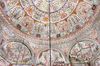
Tirana radiates from the area around Skanderbeg Square, which is home to the National History Museum, Clock Tower, and Palace of Culture. Other main sights are all within walking distance, including the fresco-painted Et’hem Bey Mosque, the medieval remains of Tirana Castle, and the Bunk’Art 2 museum.
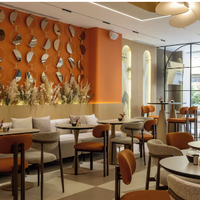
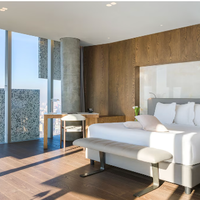
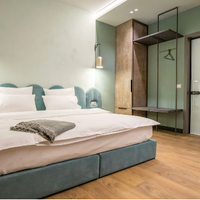
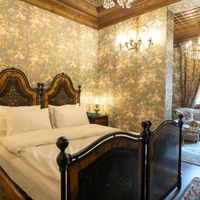
Just across the Lana River from downtown, ‘The Block’ was once sealed off to ordinary Albanians, a guarded quarter reserved for Communist Party leaders and closed to everyone else. Today anyone can wander in, past fashionable restaurants, boutiques and bars, as well as the Pyramid of Tirana, built in tribute to the former dictator and now a cultural hub.
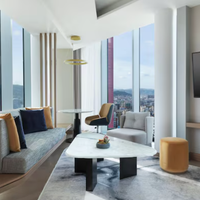
One of Tirana’s oldest neighborhoods known for its lively market, Pazari i Ri is also one of the city’s youngest and most happening areas dotted with cafes, bars, pop-up exhibitions and antique shops.

Fiona Kerr is a food-loving travel journalist and former features director at Condé Nast Traveller. Her writing has appeared in The Guardian, The Telegraph, Elle Decoration and The New York Times. When she gets to a new country, her first stop is usually the local supermarket.
Hotel deals in Tirana

Go further with the Expedia app
