“Hotel Barocco is an elegant boutique hotel overlooking Piazza Barberini in the heart of Rome. Its classic Italian style, luxurious interiors, and prime location make it a charming base for exploring the Eternal City.”
“Essaouira sits on the Atlantic coast, and its architecture shows it. The buildings here are built to handle ocean winds — thick walls, narrow streets, and courtyards that provide shelter. Riad Al Madina is one of the oldest buildings in the medina, with a central courtyard surrounded by painted archways and local tilework.
Historic coastal medina riad with Atlantic-facing architecture”
“At its center: a courtyard open to the sky, framed by arches and finished with mosaic work that shifts as the light moves. Calm and theatrical at the same time — exactly what Moroccan courtyard design has always intended. The mosaics aren't decoration. They're the main event. Glamorous craftsmanship in a form that has existed for centuries, scaled up without losing its integrity.”
“The estate sits in the Tuscan countryside with the kind of stillness that comes from deep roots. Local stone, regional proportions, a layout shaped by climate and land. It's the architecture of a way of living, not a set piece.If you're drawn to places that feel like they could only exist exactly where they are, this one is worth knowing about.”
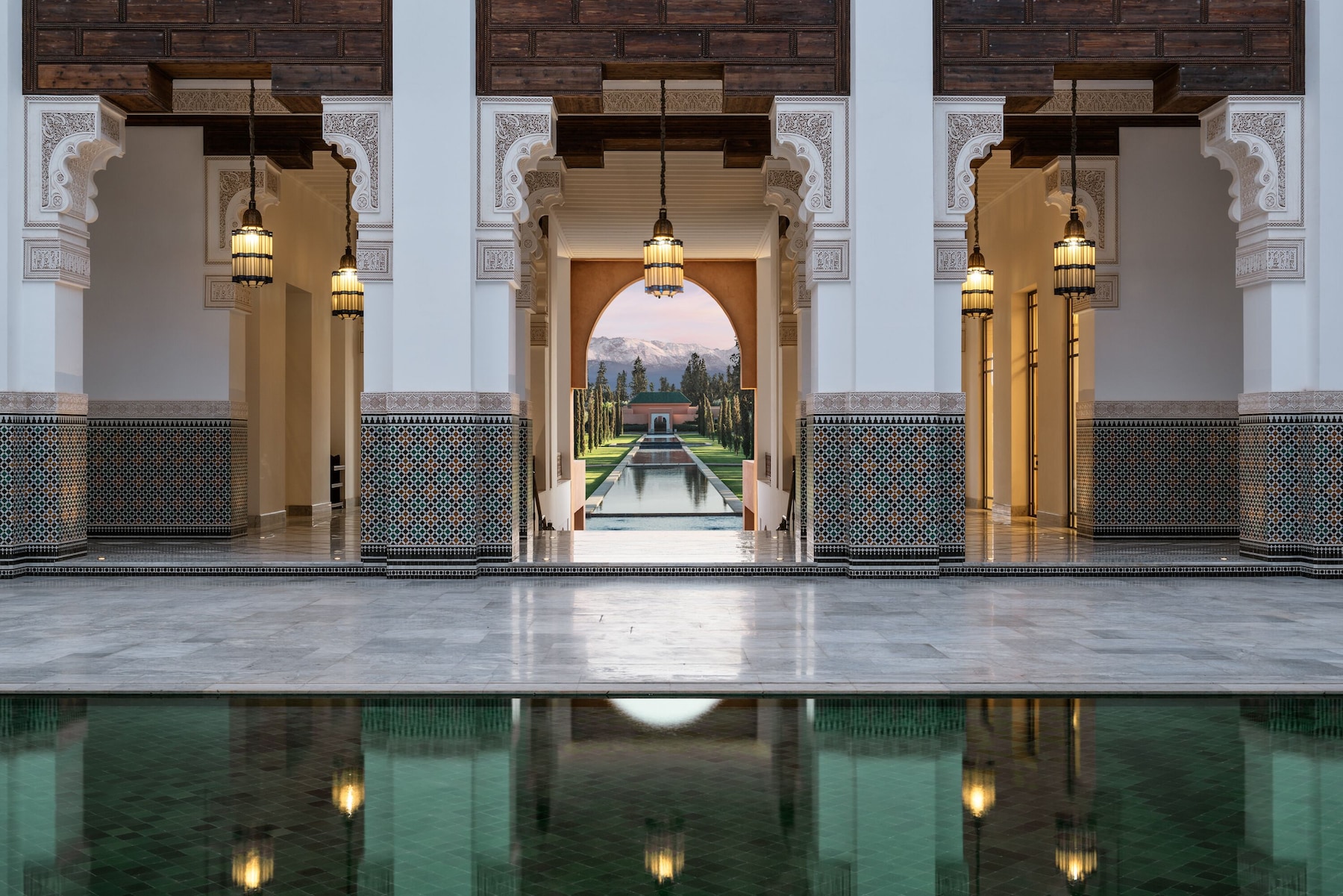
“The architecture follows the traditional pattern — rooms arranged around a central space, carved wooden details, classic tilework on the walls. What makes it different is how the contemporary touches sit alongside the old ones without competing. The proportions stay true to the original building.
Traditional medina riad with carved woodwork and classic Moroccan tilework”
“Built in the 19th century by the Bensouda family, Palais Faraj sits on a hill above the medina. Long abandoned, it was restored in 2012 by Fassi craftsmen who salvaged the original zellige tiles, hand-carved stucco, and painted ceilings — bringing the building back without erasing what time had left behind.
From the terraces, the view stretches across the medina and the surrounding hills.”
“A 17th-century palace in the Fès medina, built around a courtyard shaded by orange trees. The rooms were once traditional salons — original mosaic floors, painted wood ceilings, and hand-carved plasterwork still intact.
High walls, small exterior windows, and a central courtyard that catches the breeze.
17th-century palace with original mosaic floors and citrus courtyard”
“Colorful tiles cover the walls in patterns that took months to make. A fountain sits in the center, cooling the air just like it did centuries ago.
The rooms circle around this courtyard—the traditional Moroccan way of building.
17th-century traditional house with original tilework and courtyard.”
“An 18th-century merchant’s house in the heart of Marrakech’s medina, carefully restored over decades. Three traditional courtyards connect the rooms — each one shaded, tiled, and centered around a fountain.
The rooms sit behind thick walls that block out the noise of the souks. Inside, hand-carved plasterwork and painted cedar ceilings show the level of craft that went into buildings like this.”
“The 17th-century stone façade, turreted silhouette, and tall chimneys are what you arrive to. The River Calder runs nearby. What sets it apart is that the grandeur never becomes distant. This was a place occupied and shaped over centuries. That history is still present in how the building feels — not as atmosphere designed for guests, but as character that accumulated without anyone planning it.”