

OPEN PLAINS WHERE THE WIND RUNS WILD AND FREE
About
The heart of the Mother Road
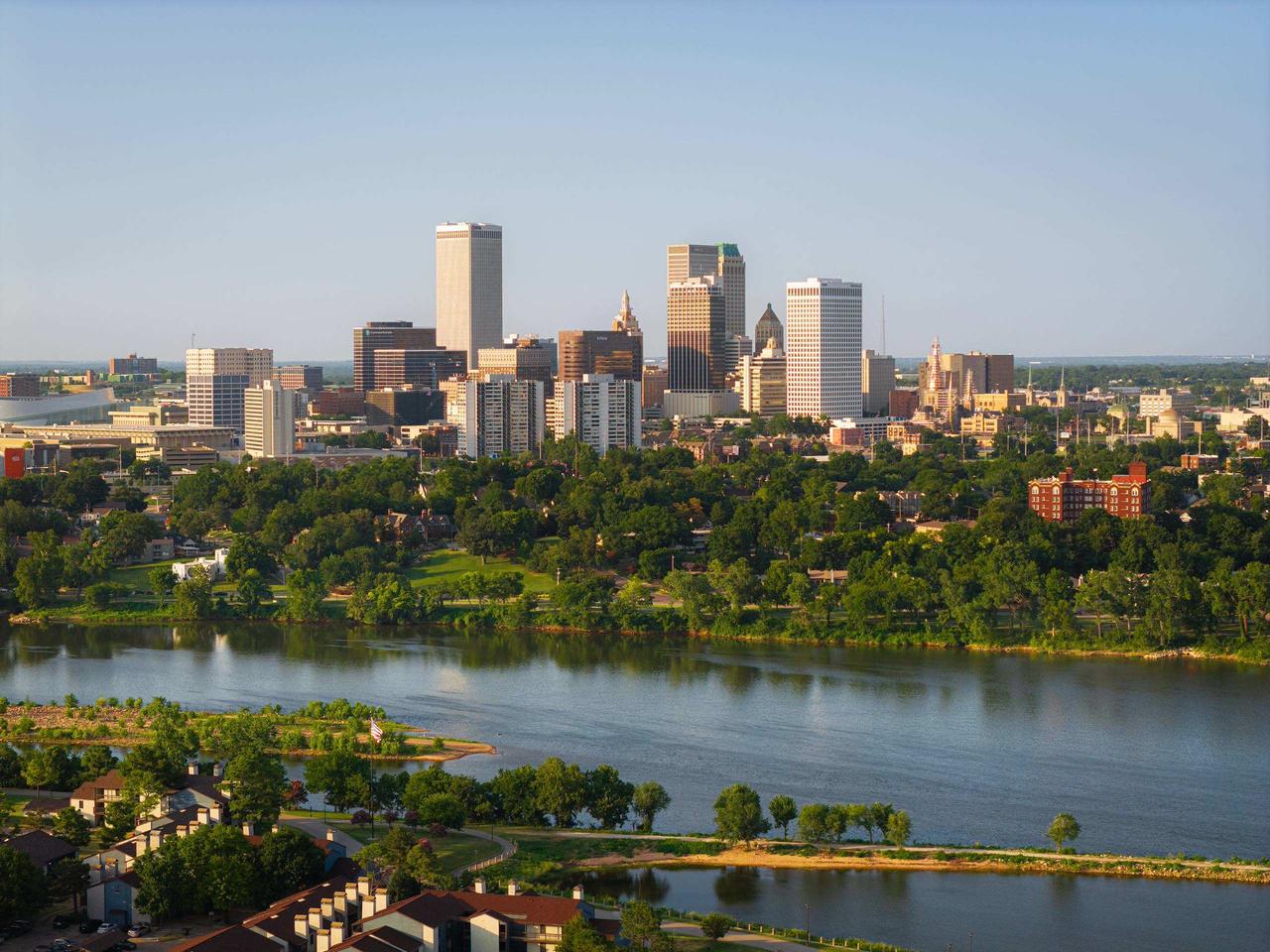
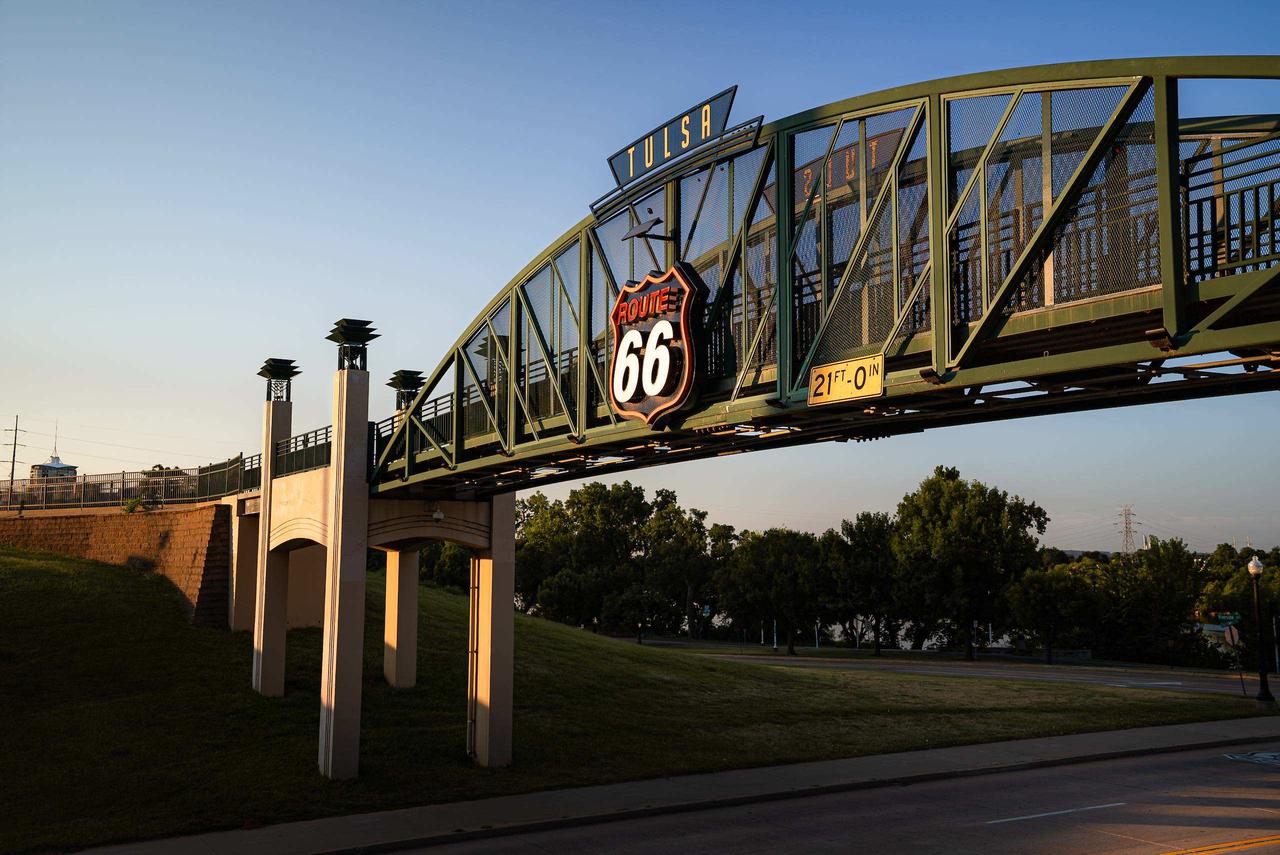
Oklahoma has more Route 66 than any other state, and that was no accident. A Tulsa businessman named Cyrus Avery sat on the federal board that laid out America's highway numbers in the 1920s, and he made sure the new Chicago-to-Los Angeles route came through Tulsa and Oklahoma City instead of farther north. He has been called the father of Route 66 ever since.
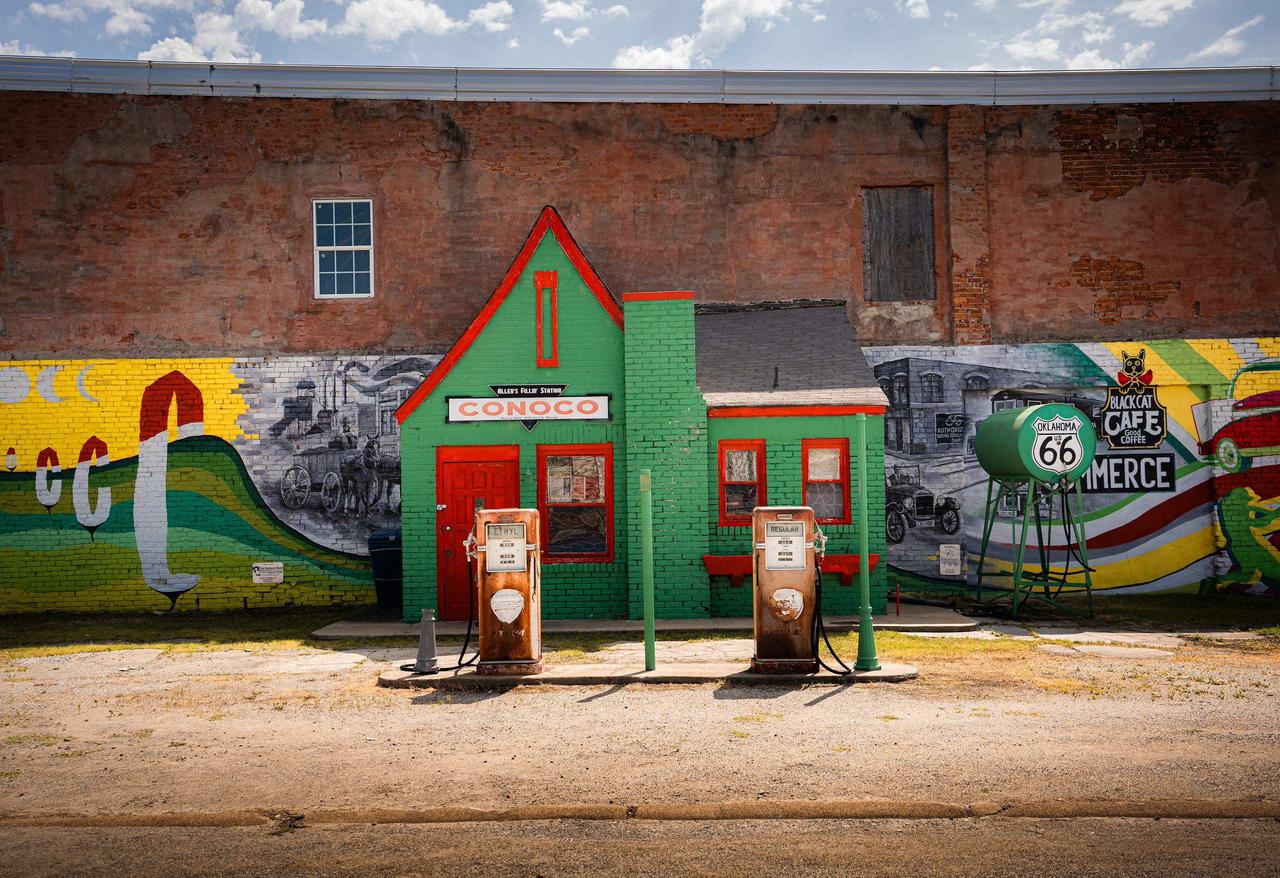
About 432 miles are still drivable, more than any other state can claim, and the road crosses the whole width of Oklahoma. It runs from the old mining towns in the northeast corner through Tulsa and Oklahoma City, then out onto the red plains toward Texas. Along the way, you can still drive a nine-foot strip of 1920s pavement, and a museum in Oklahoma City tells the story of the 39 tribal nations who live in the state today.


Roadside stories
A 21-foot
space cowboy
in Tulsa
A 1925
bridge over
Overholser
Where
Oklahoma City's
jazz began
The Carnegie
Hall of Western
Swing
The story of
39 tribal nations
Stretch your legs

A 21-foot
space cowboy
in Tulsa
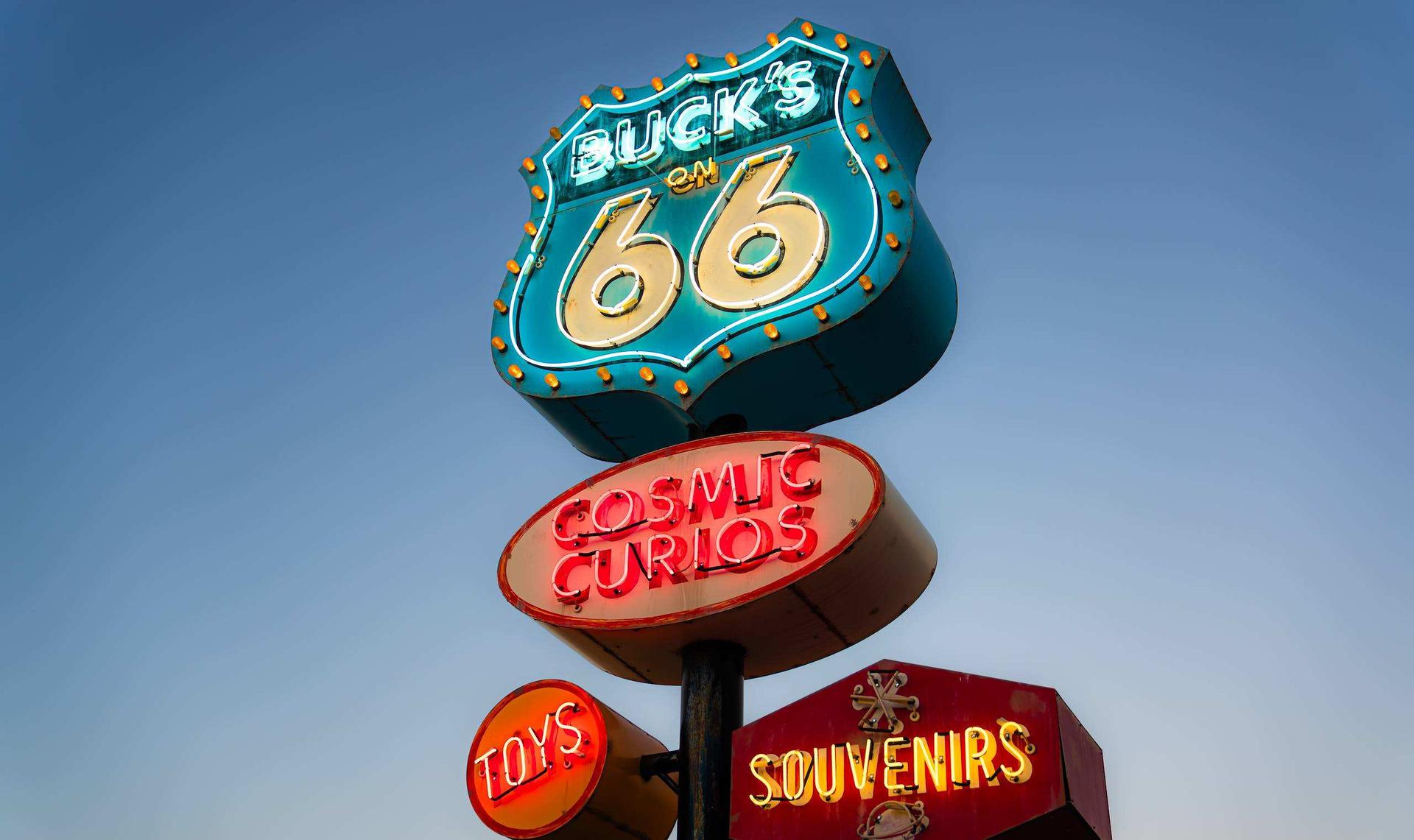
Buck Atom's Cosmic Curios
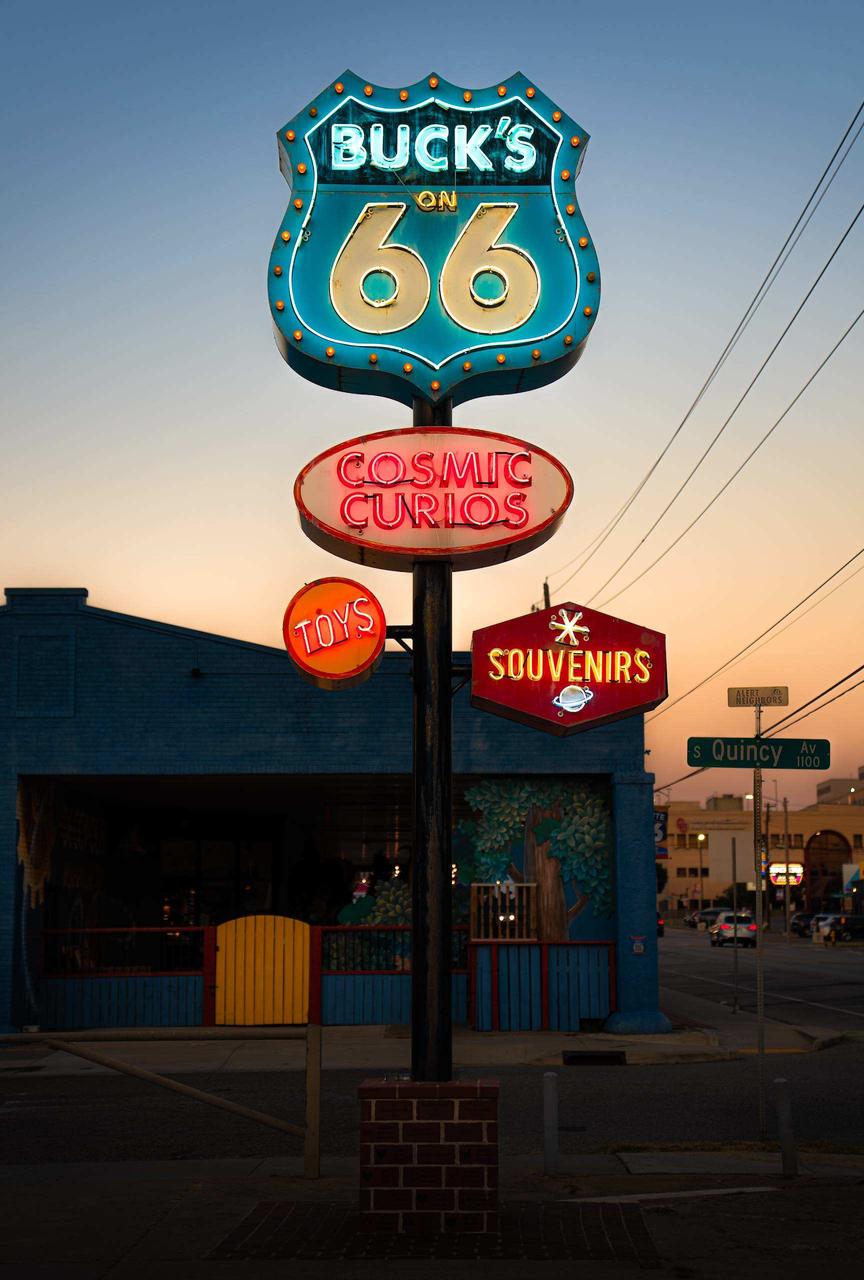
Mary Beth Babcock opened this souvenir shop in a restored 1950s station on Tulsa's 11th Street run of Route 66 in 2018. A year later, she raised Buck Atom, a 21-foot space-cowboy Muffler Man built by artist Mark Cline, giving one of the road's classic fiberglass giants a rocket-age turn. He has company now: a cowgirl, Stella, stands close by. Inside are Route 66 shirts, mugs, and work by local makers, and every October Buck gets a giant Halloween mask.
A 1925
bridge over
Overholser
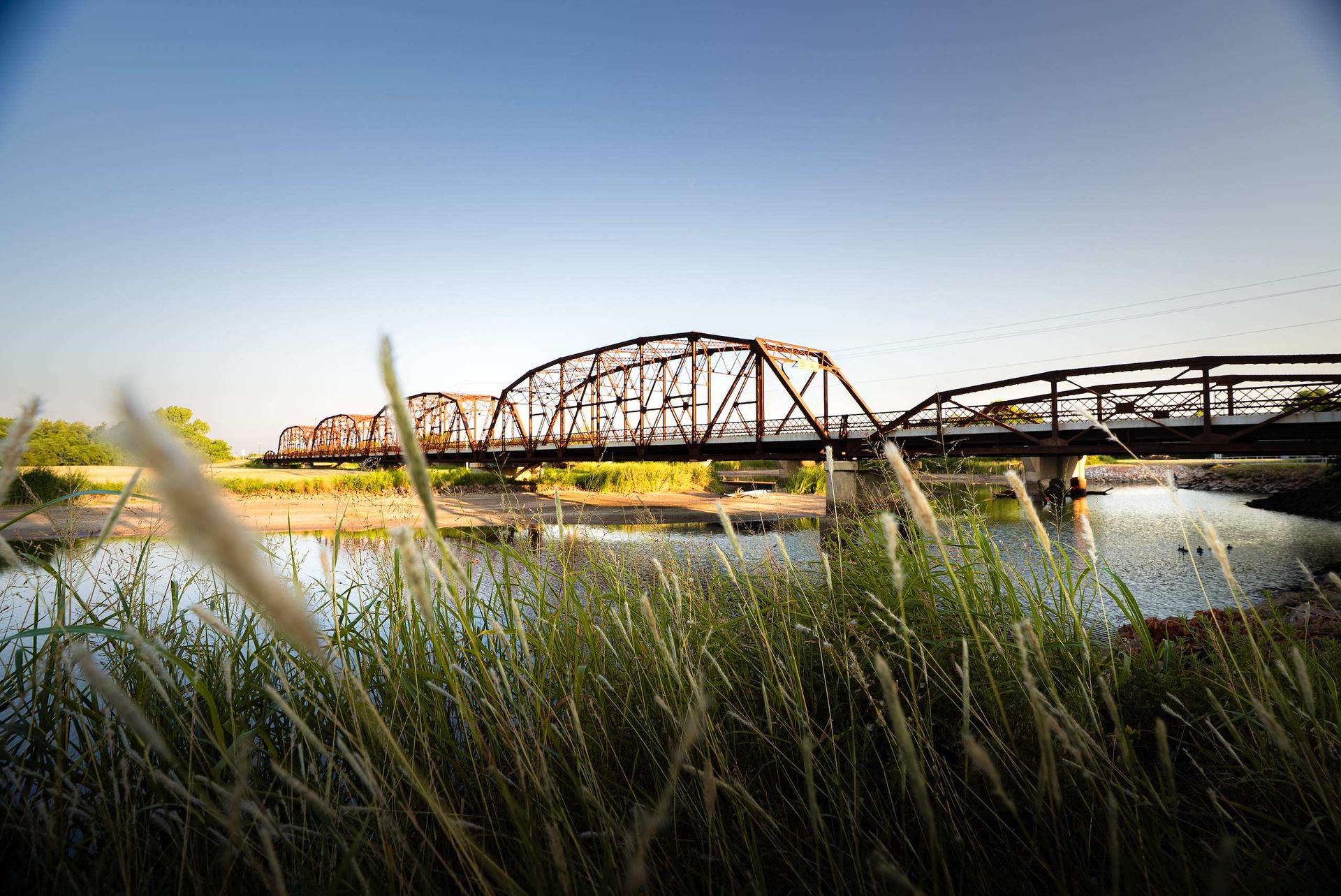
Lake Overholser
Lake Overholser, Oklahoma City's oldest reservoir, was made when the North Canadian River was dammed in 1919. Route 66's original alignment ran along the north shore and over the 1925 steel-truss Overholser Bridge, now on the National Register of Historic Places and open to walkers. Herons, pelicans, and weekend anglers hunt for fish in the shallows.
Where
Oklahoma City's
jazz began
Deep Deuce
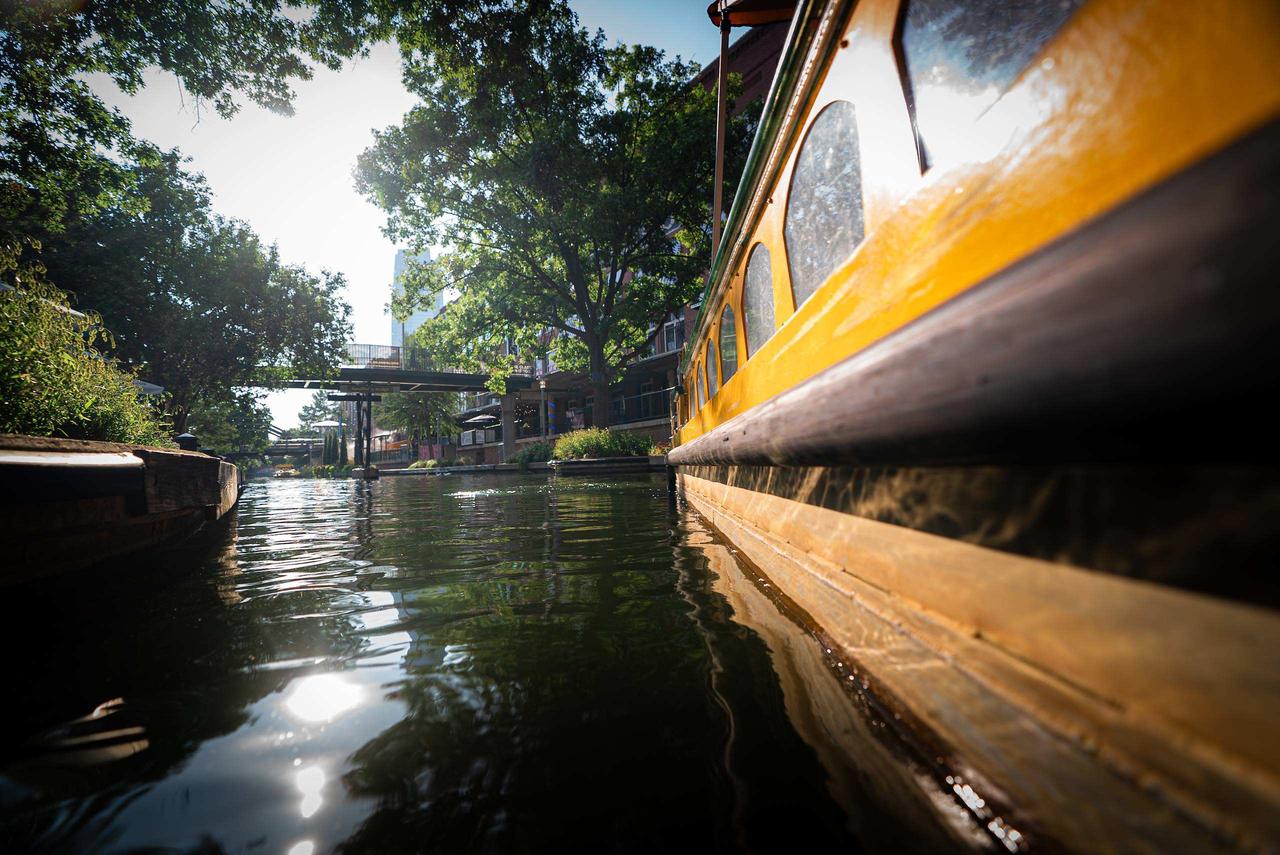
For half a century, the blocks around NE 2nd Street were a district of shops, churches, and music in the heart of Black Oklahoma City, known as Deep Deuce or Deep Second. In the 1920s and '30s, it was a center for jazz and blues musicians. Guitarist Charlie Christian came up here before making the electric guitar a lead instrument in the musical styles that followed his heyday, and singer Jimmy Rushing and the novelist Ralph Ellison grew up in the area. Redevelopment took most of the old buildings, but Charlie Christian Avenue keeps the name in place. Just south of Deep Deuce is the neighborhood of Bricktown. Take a ride on a water taxi in the canal, stop by a brewery, or grab a bite before getting back on the road.
The Carnegie
Hall of Western
Swing
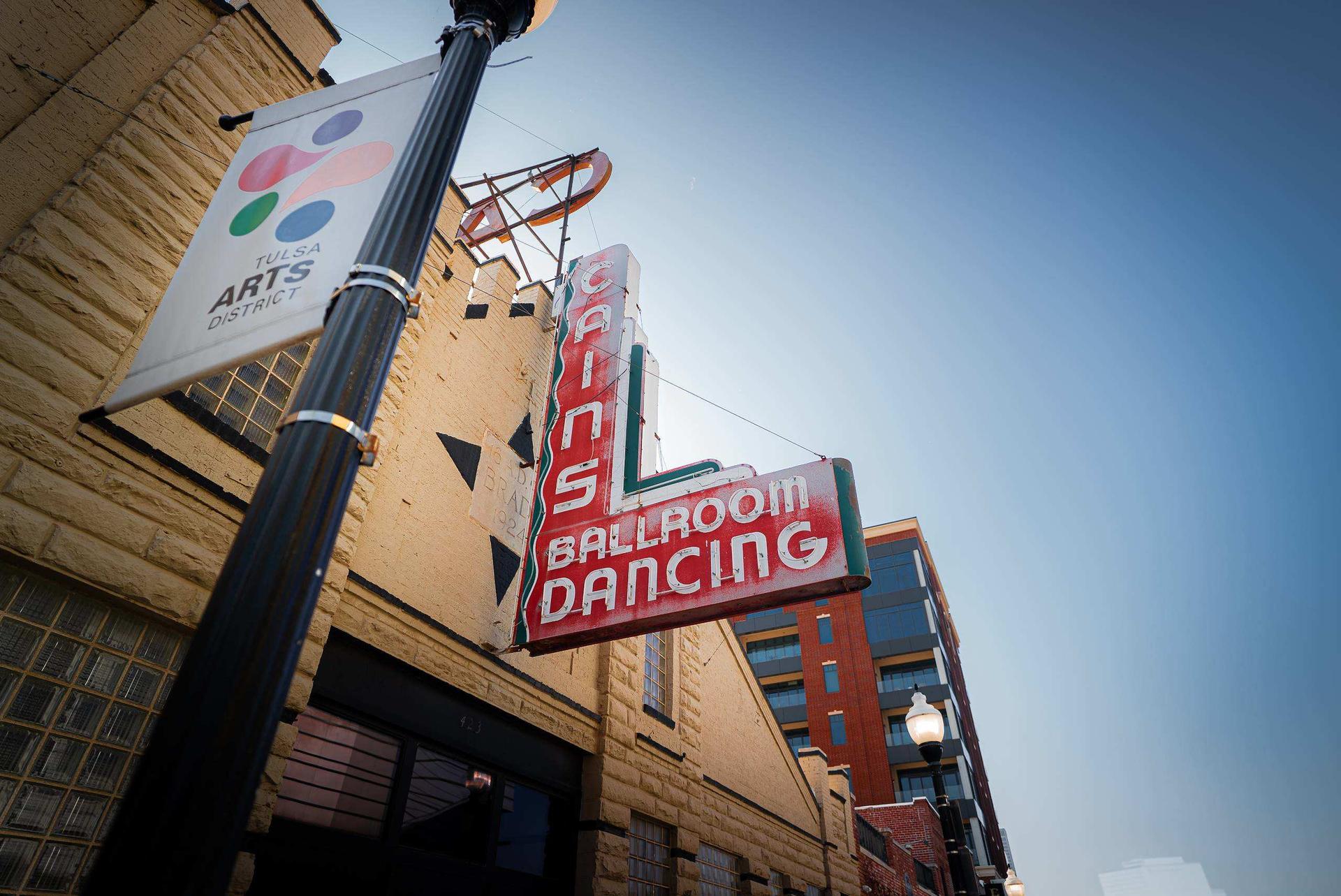
Cain's Ballroom
Built in 1924, Bob Wills and His Texas Playboys called Cain's home in the 1930s and broadcast Western swing from its stage. That earned Cain’s the title “Carnegie Hall of Western Swing.” The spring-loaded maple floor still flexes under a dancing crowd. In 1978, the Sex Pistols played here, one of only a handful of stops on their sole US tour, and touring acts still fill the room most nights. Portraits of Wills and his players watch from the walls.
The story of
39 tribal nations
First Americans Museum
On the bank of the Oklahoma River, the First Americans Museum tells the shared story of the 39 tribal nations in Oklahoma today, most of them taken to the state after being removed from their homelands across the country. At 175,000 square feet, it's the largest single-building tribal cultural center in the US. Its main exhibition, Okla Homma, hands the telling to the nations themselves, and the grounds are shaped around a great earthen mound aligned to the sun.

