


ANCIENT
LANDSCAPE
CARVED BY
SUN AND
TIME
About
A state of high canyons and old stone
Arizona has the longest unbroken stretch of old Route 66 anywhere, about 158 miles running west from Ash Fork through Seligman and Peach Springs to Kingman. The towns along it fought to keep the road. Williams, up in the pines, held out until 1984, the last town on the entire route to be bypassed by the interstate.
The road also drops a long way. Flagstaff and Williams are up at about 7,000 feet in ponderosa pine, and by the time it reaches the Colorado River at the state's western edge, it is down near 500 feet. In between, it crosses Hualapai land at Peach Springs, where the nation runs a lodge and a cultural center.


Roadside stories
Where trees
turned
to stone
A neon sign
above the
valley
Kingman's
fizzy roadside
legend
Screening films
since 1916
Part moai,
part tiki, all green
Stretch your legs

Where trees
turned
to stone
Petrified Forest National Park
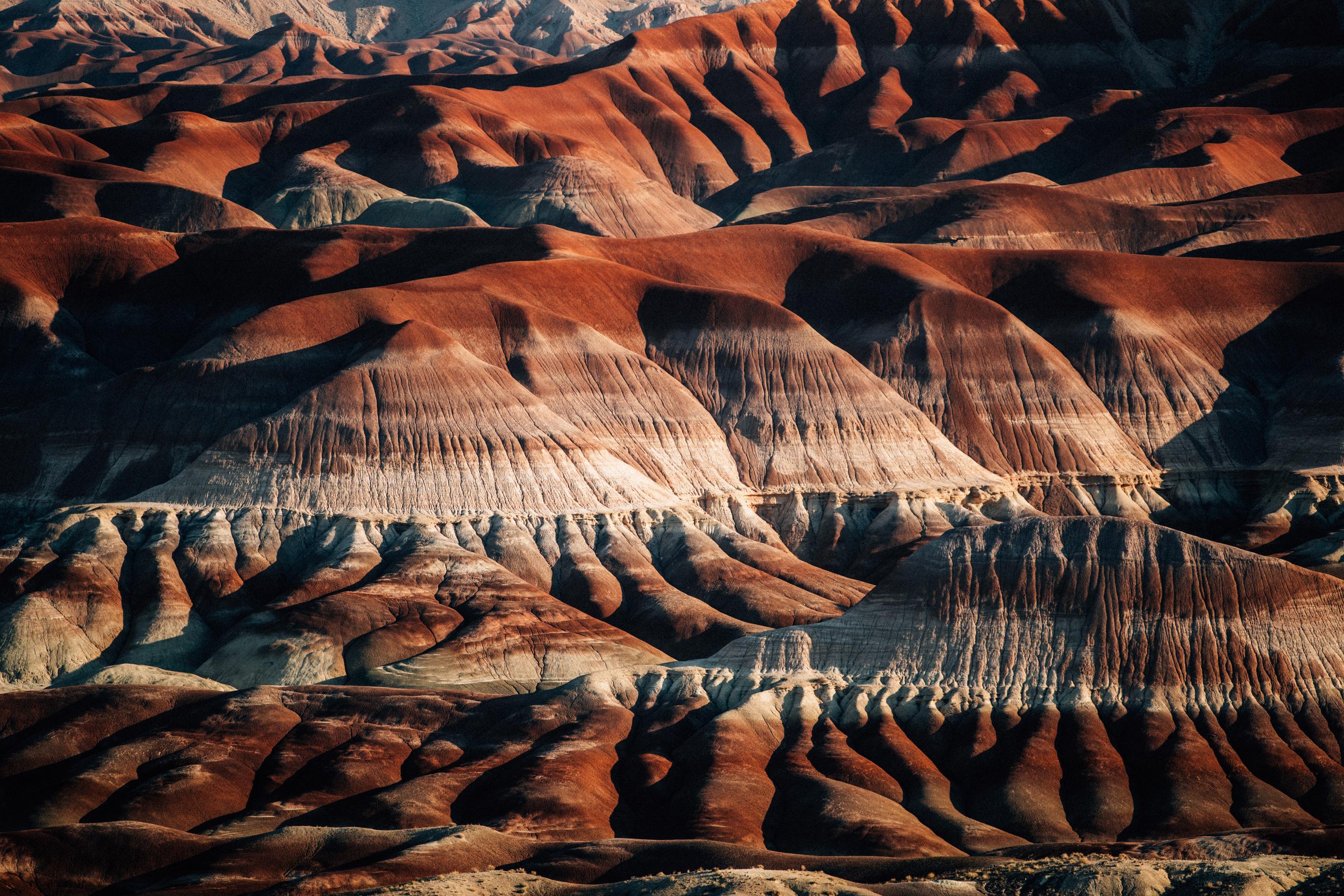
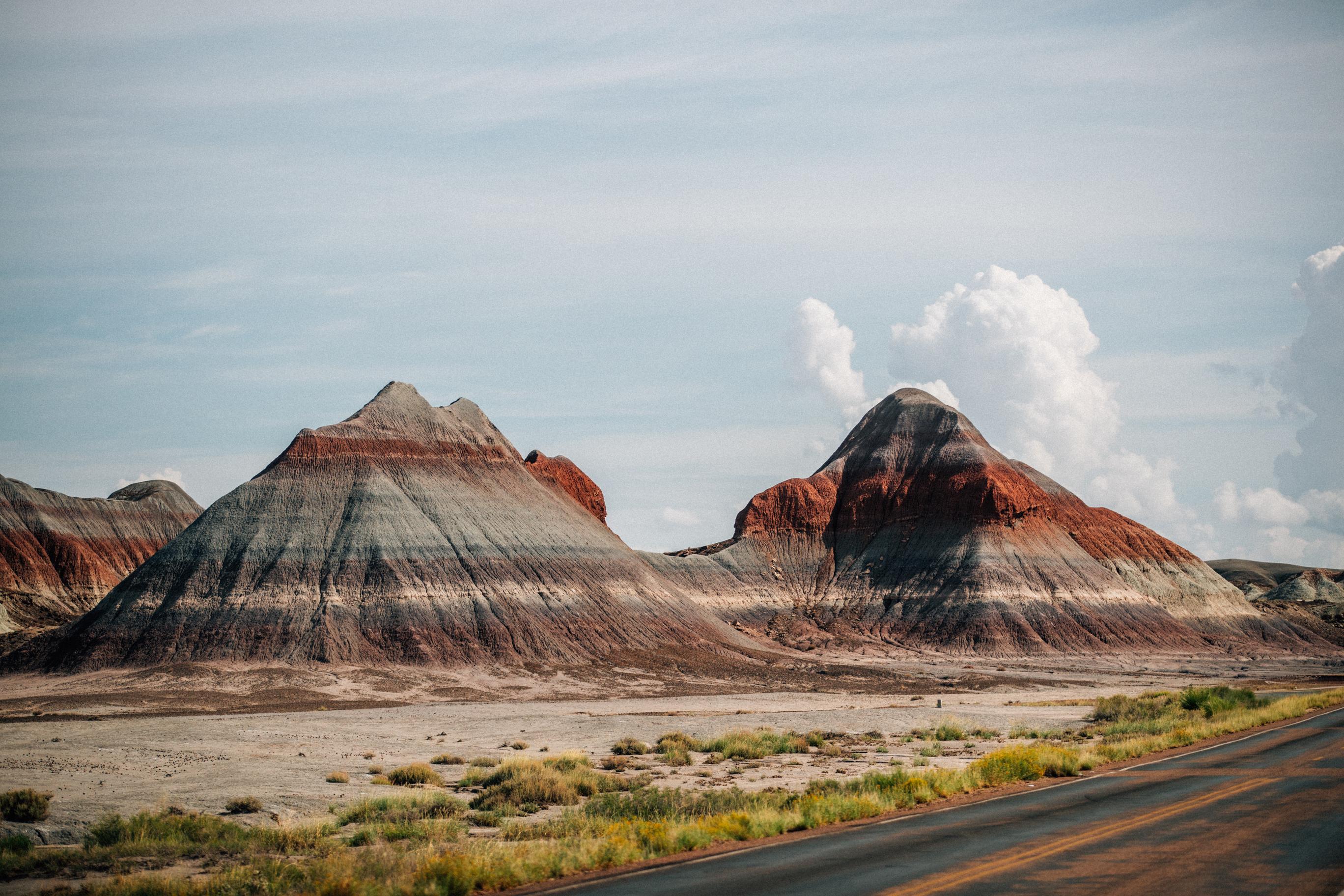
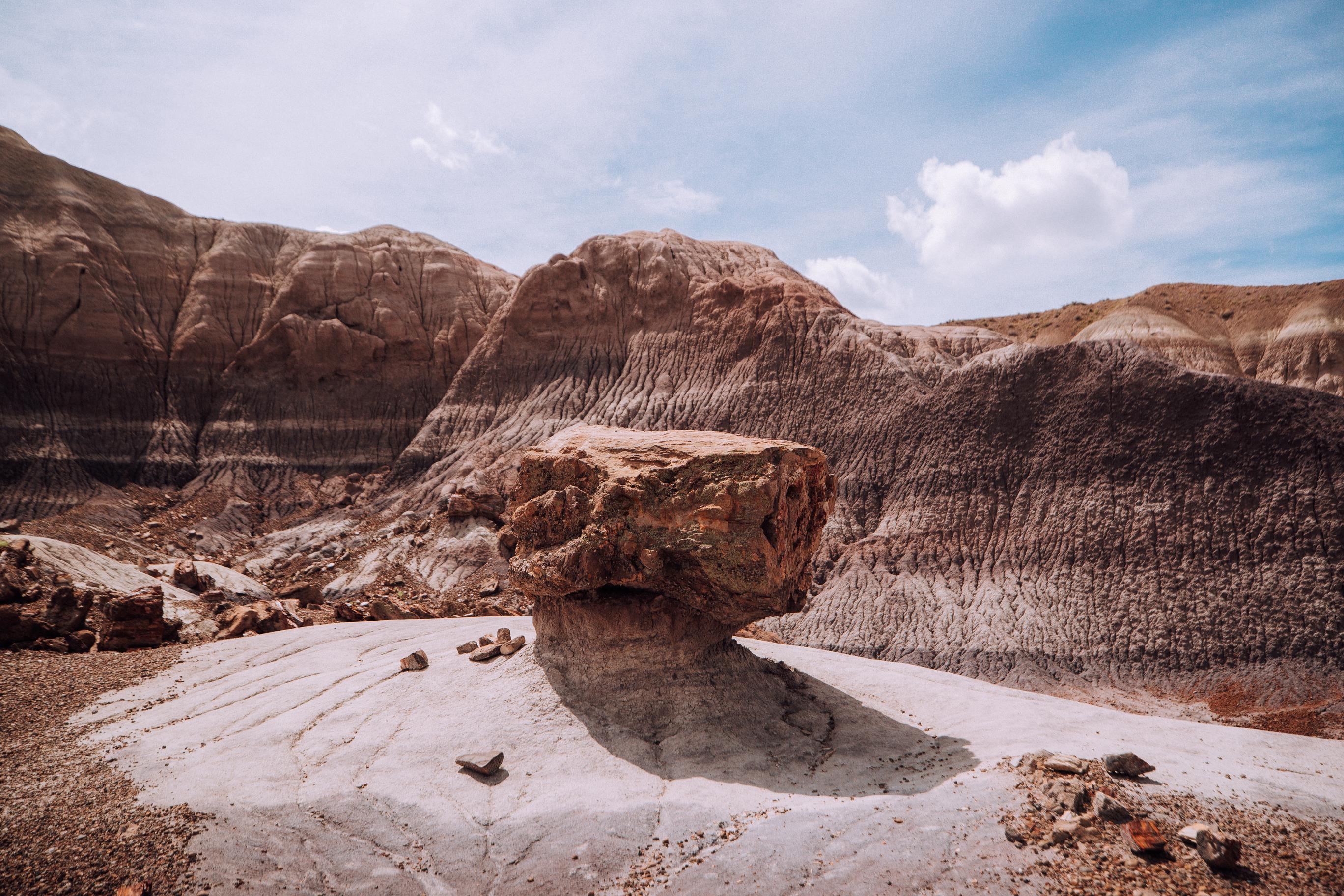
Petrified Forest National Park looks more like another planet than a forest. It sits in Northern Arizona, protecting one of the world’s largest collections of petrified wood — ancient trees that fell more than 200 million years ago and slowly turned to stone, leaving behind logs streaked with quartz in shades of red, purple, yellow, and blue. Much of the park sits within the Painted Desert, a vast region of colorful, eroded badlands, with scenic roads and short trails leading past striped hills, petroglyphs, and ancient Puebloan sites. Route 66 once crossed directly through the park before it was rerouted, marked by a vintage 1932 Studebaker. Admission to the park is $25 per car.
A neon sign
above the
valley
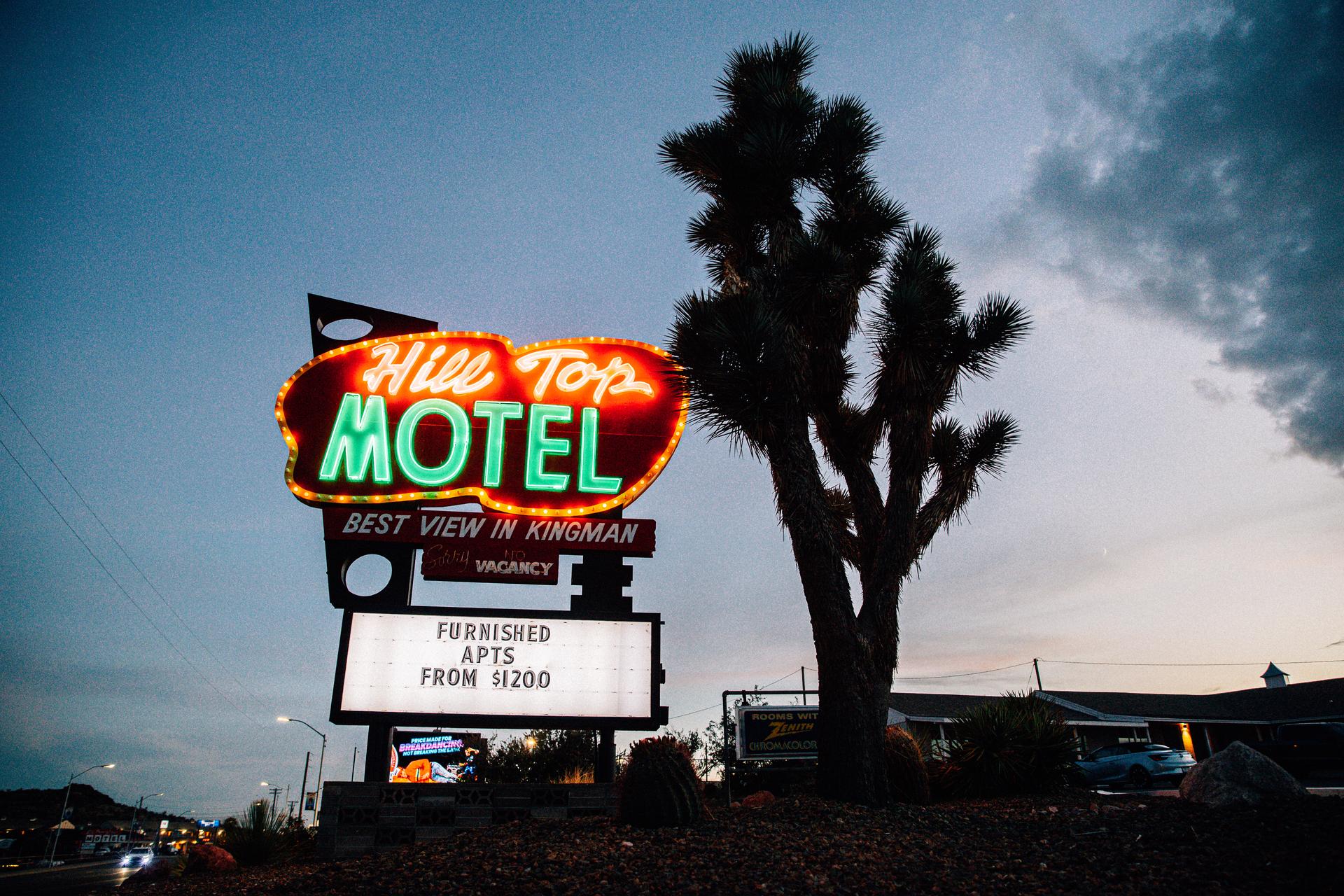
Hill Top Motel
In 1953, a contractor from Santa Monica named John Mescheid bought a rise on the east side of Kingman, and the next year he put a 20-room motel on top of it. A pool went in behind the building a few years later, and the neon sign out front promised the best view in Kingman—the pool deck delivered on that promise with views of the Hualapai Mountains across the valley. The motel has only rented out to long-term tenants since 2017, but the Hill Top remains a popular Route 66 stop for people who want to photograph the famous sign that still lights up at night. Pull over on Andy Devine Avenue at dusk, when the sign shines against the mountains, and it's clear why it might still have the best view in Kingman.
Kingman's
fizzy roadside
legend
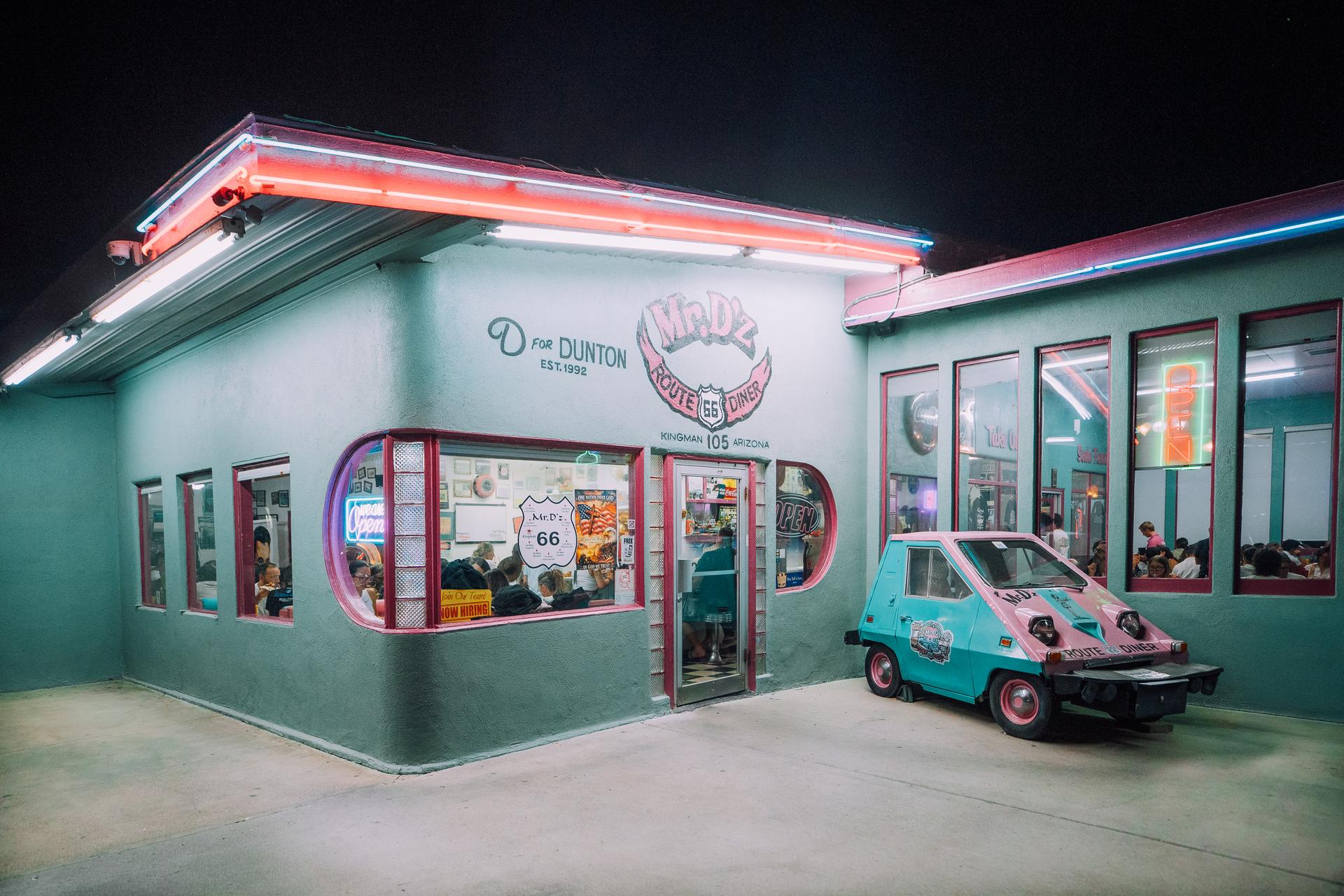
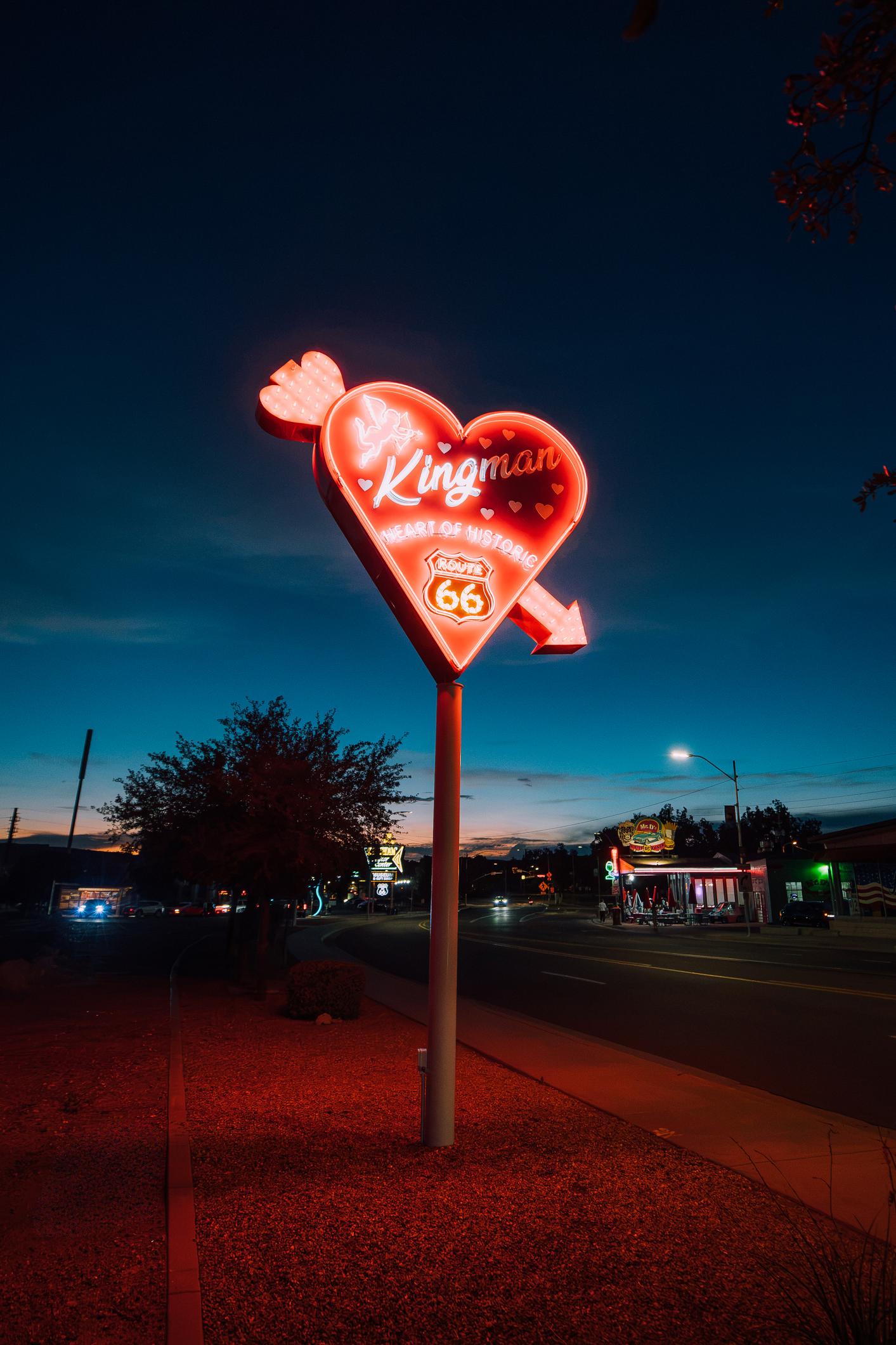
Mr. D'z Route 66 Diner
In Kingman, inside a 1939 filling station repainted hot pink and turquoise, Roy Dunton spent years chasing a root beer he'd tasted once at a fair—making batch after batch until the syrup matched his memory. That recipe still pours here, cold and sharp, and it's why you pull over: drink it straight or drowning in vanilla ice cream as a float. Burgers are also on the menu, but the root beer is the reason to stop. Grab a chrome stool across from the Route 66 Museum and have one on your way through.
Screening films
since 1916
Orpheum Theater
Downtown Flagstaff’s Orpheum Theater offers something many Route 66 landmarks can’t claim: the chance to experience a historic venue that still serves its original purpose. It opened as a theater and movie house in 1916, and the restored venue now hosts touring bands, comedy, film screenings, festivals, and local events beneath its vintage marquee. Its intimate size makes even major shows feel close and lively, so check the theater’s events calendar to see what’s playing before you come through.
Listen as Alex Timmons, Marketing Director and Assistant Talent Buyer at the Orpheum Theater, talks about the theater's resident ghost, Adeline.
Part moai,
part tiki, all green
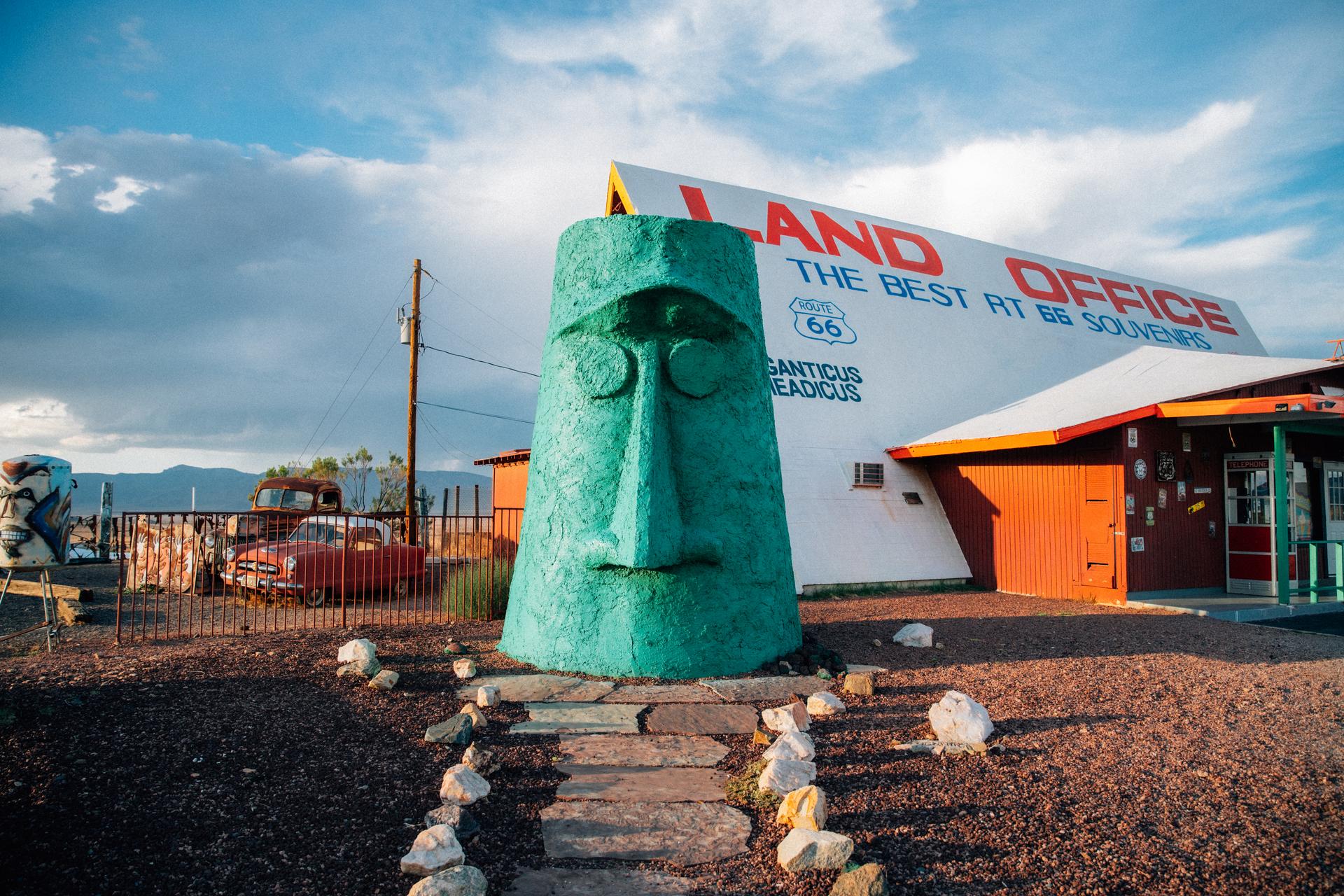
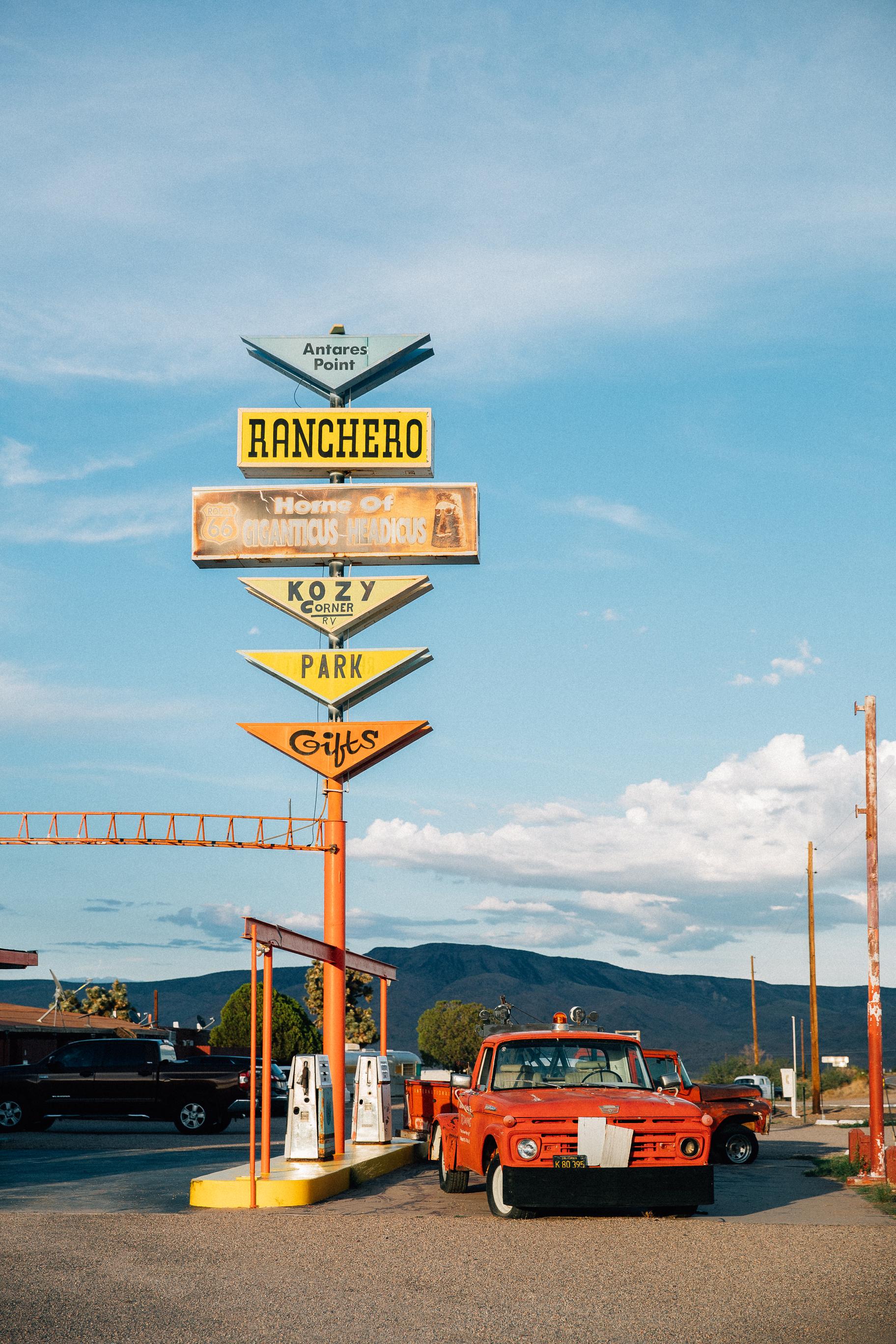
Giganticus Headicus
Gregg Arnold left New Jersey for the Arizona desert, bought a former trailer court on old Route 66, and in 2004 put up a 14-foot head--part Easter Island moai and part tiki--painted bright green and set so it looks half-sunk in the ground. He built it from cement over a frame of chicken wire, Styrofoam, wood and metal. It stands at Antares Point northeast of Kingman, on what's billed as the longest continuous curve on a US highway, among more of Arnold's sculptures.


Detour
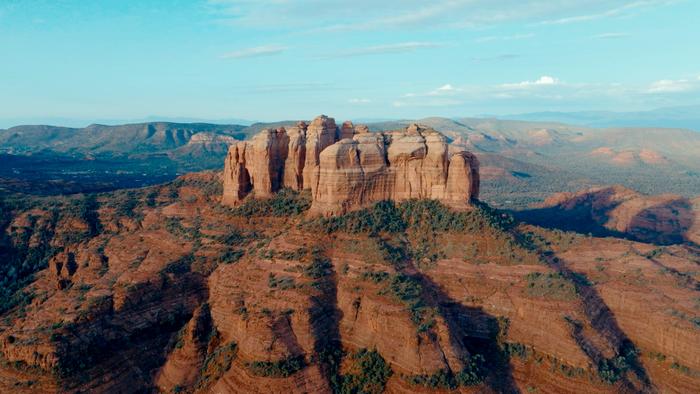
Sedona
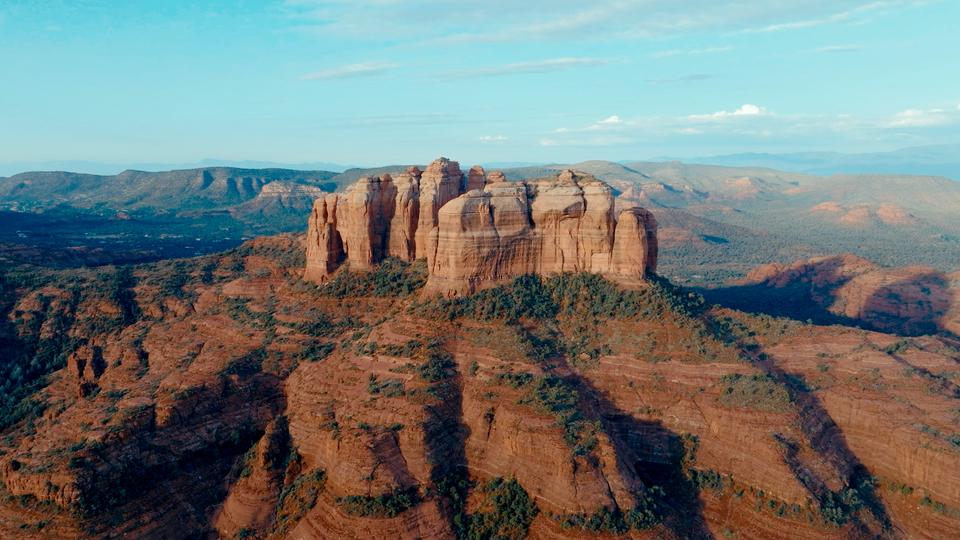
Sedona's red sandstone landscape has drawn artists for generations, and the town works hard not to compete with it. Trails run straight out of town into the rock, including a short, steep climb to a saddle below Cathedral Rock. In the canyons north of town, cliff dwellings built by ancestors of the Hopi still have their stacked stone walls and rock art.

Detour
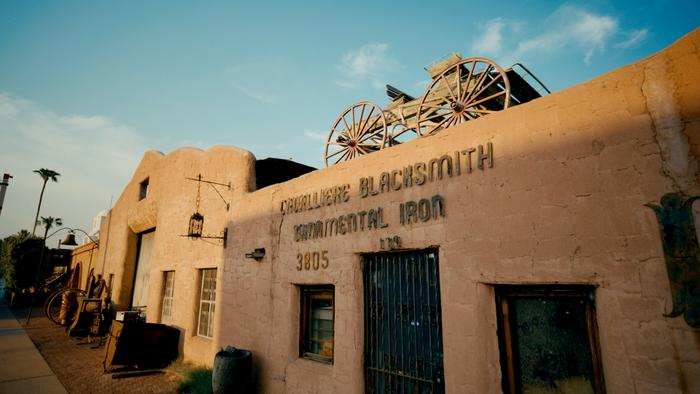
Scottsdale
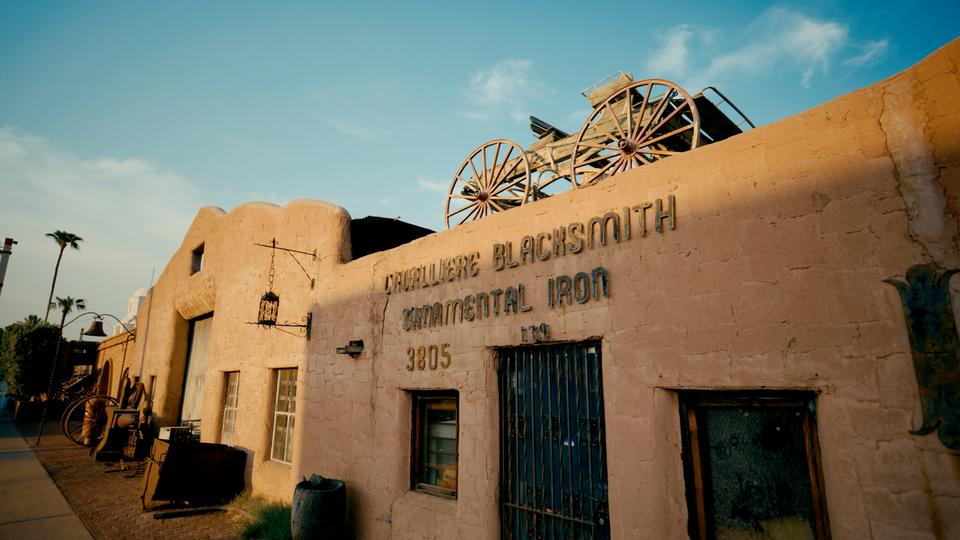
Scottsdale's Old Town still has its 1920s buildings, including a bank that failed in 1933 and came back as a saloon, where the old vault now chills the beer. On the city's eastern edge is the Salt River Pima-Maricopa Indian Community, whose museum tells the story of the people who dug the valley's first canals and the descendants who live there today. More than 30,000 acres of Sonoran Desert are protected around town, with hundreds of miles of trails open free from sunrise to sunset.
Detour
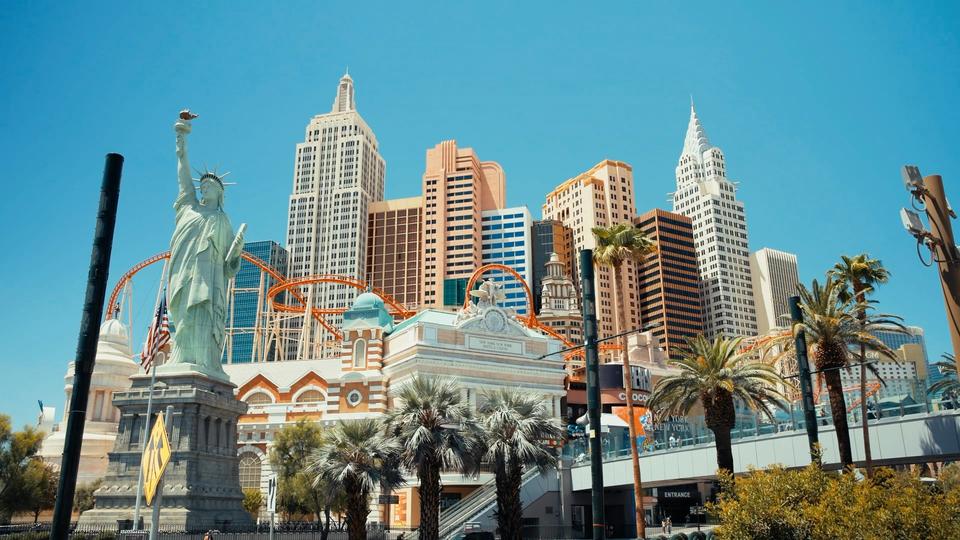
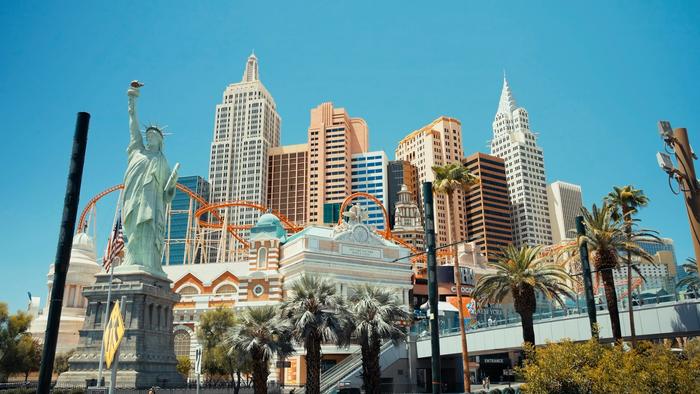
Las Vegas
Las Vegas started with water. Springs in the desert drew the Southern Paiute, then ranchers, then a railroad town in 1905, and the ground above them is now an 180-acre preserve with gardens and wetland trails. Downtown, Fremont Street had Nevada's first paved road and first casino license, and it has been closed to cars since 1994. Out on the north Strip, a 1972 diner full of neon and mirrors still runs all night.
