


MIGHTY
BLUE RIVERS
FLOWING
TOWARD NEW
HORIZONS
About
A land of rivers, hills, and music
The road got its number in Missouri. In the spring of 1926, a telegram went out from a Springfield hotel proposing 66 for the new Chicago-to-Los Angeles highway, and it stuck. West of St. Louis, the road left the river bottoms and headed into the Ozarks, through small towns that had grown up around the railroad and now had a highway going past the front door.
After Route 66 was decommissioned in 1985, Missouri kept its stretch on the map and named it a State Historic Route in 1990. There is still a lot left to see. The Wagon Wheel in Cuba has been renting rooms since 1936, the drive-in outside Carthage started showing films again in 1998, and the custard stand on Chippewa Street still draws a line down the sidewalk.


Roadside stories
The arch
that marks
the West
The route's
famous
frozen treat
Where
ragtime's king
once lived
Springfield's
quiet corner
of Japan
A theater
restored to
its former glory
Stretch your legs

The arch
that marks
the West
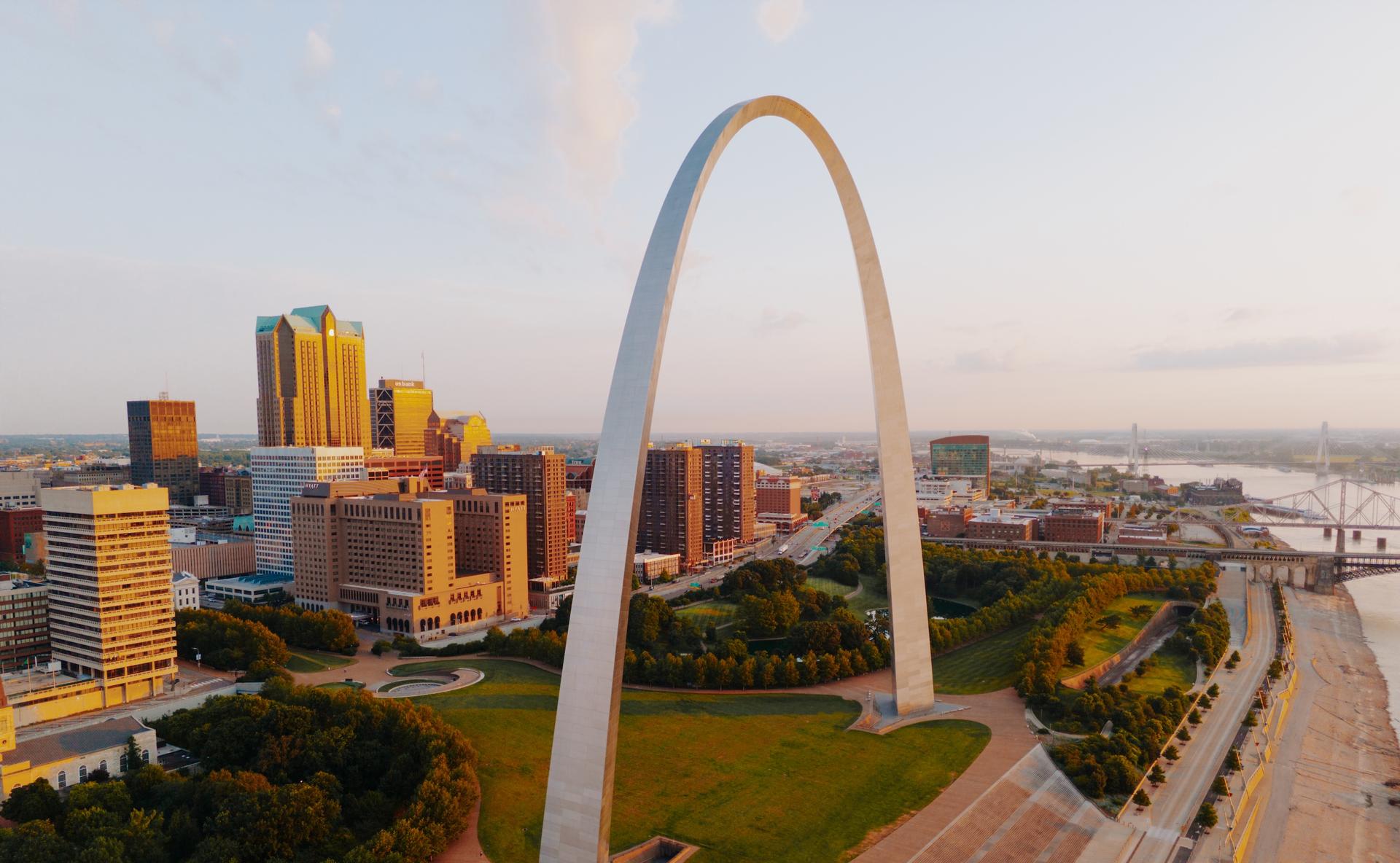
Gateway Arch National Park
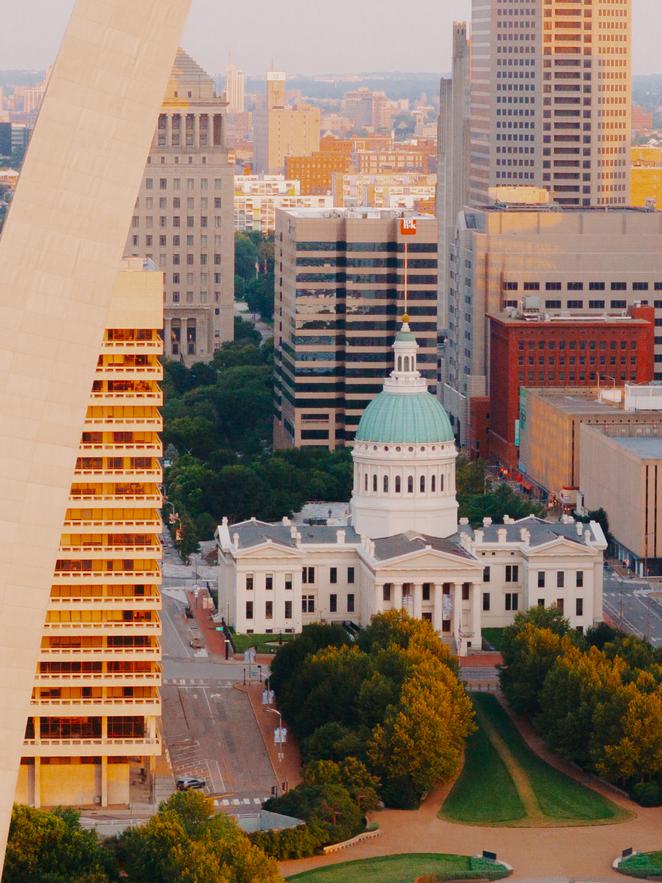
You catch Eero Saarinen's 630-foot arch from Route 66 as you cross the river, its stainless steel catching the light over St. Louis. Finished in 1965 to mark the country's westward expansion, it's the world's tallest arch and the tallest monument in the Western Hemisphere, as wide at its base as it is tall. A tram climbs inside each leg to a row of windows at the very top, where on a clear day the view runs about 30 miles, east across the Mississippi into Illinois and west over Missouri.
The route's
famous
frozen treat
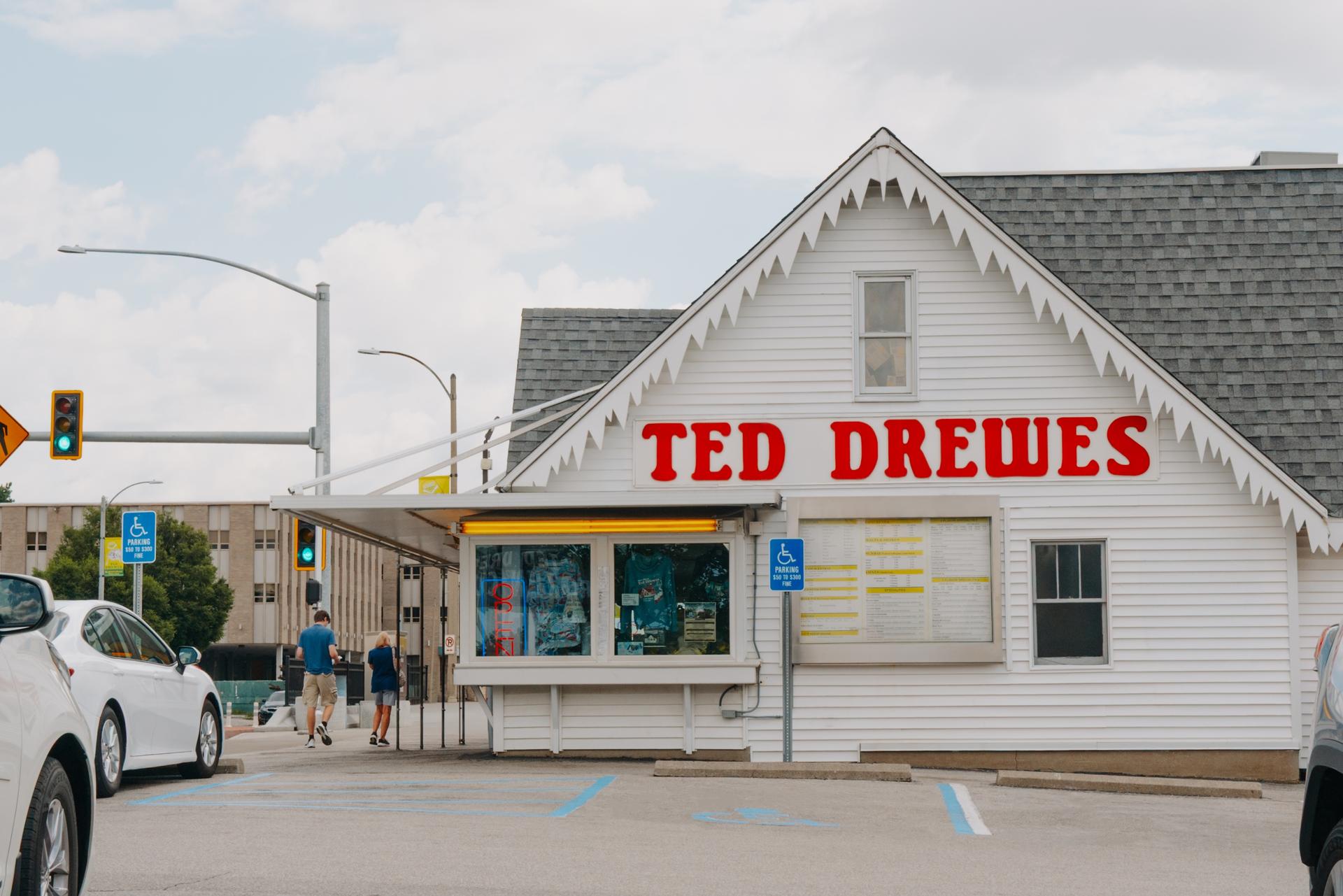
Ted Drewes Frozen Custard
Ted Drewes Sr. sold his first frozen custard in Florida in 1929, then brought it home to St. Louis, opening the Chippewa Street stand on Route 66 in 1941. Three generations on, the line still forms on the sidewalk. Order a "concrete," a custard so thick the server hands it over upside down to prove it won't drop. It runs seasonally, in the warmer months, and in December the lot turns into one of the busiest Christmas-tree stands in the city.
Where
ragtime's king
once lived
Scott Joplin House
Scott Joplin, the King of Ragtime, rented the second-floor flat of this brick rowhouse on Delmar Boulevard from 1901 to 1903, his most productive stretch when he wrote "The Entertainer" and "Elite Syncopations." It's the only Joplin residence still standing, saved from demolition by neighbors and made a National Historic Landmark in 1976. Now a state historic site, the flat is furnished to the period, and its player piano still plays paper rolls from that era, a few from Joplin's own performances.
Springfield's
quiet corner
of Japan
Mizumoto Japanese Stroll Garden
Springfield built this 7.5-acre stroll garden in 1985 with its sister city, Isesaki, Japan, and it's the oldest corner of the city's botanical gardens. Gravel paths loop past a koi lake and over a moon bridge, with a tea house, meditation garden and a 10-ton jade rock among the plantings. In 2004 the garden took the name of Yuriko Mizumoto Scott, who tended it for years and led hundreds of tea ceremonies here, sharing the customs of her native Japan. It's open seasonally, from April through October.
A theater
restored to
its former glory
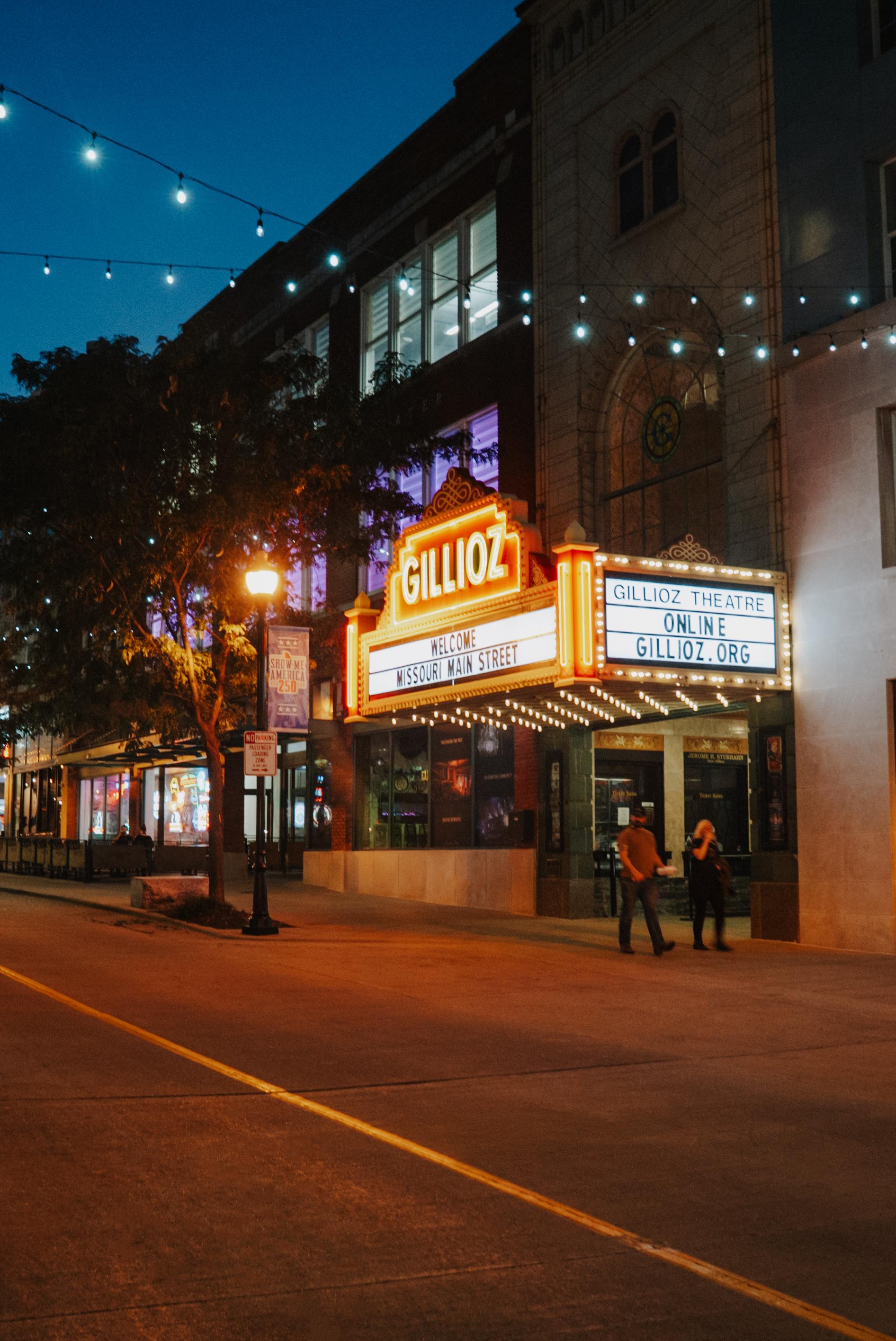
Gillioz Theater
M.E. Gillioz built bridges and roads across the Ozarks, and in 1926 he raised this downtown Springfield movie palace from the same steel and concrete, sparing wood for little more than the doors and handrails. It opened the same year a telegram from a nearby hotel gave the Chicago-to-Los Angeles highway its name: Route 66. Elvis allegedly watched a movie here in 1956 while in town for a concert. Dark from 1980, it reopened fully restored in 2006 and now hosts concerts, comedy, and films.


Detour
Branson
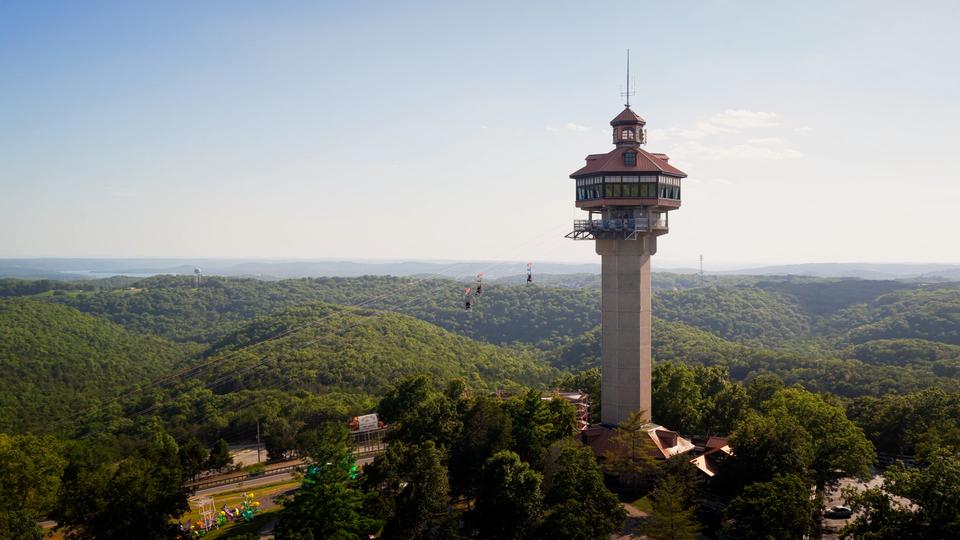
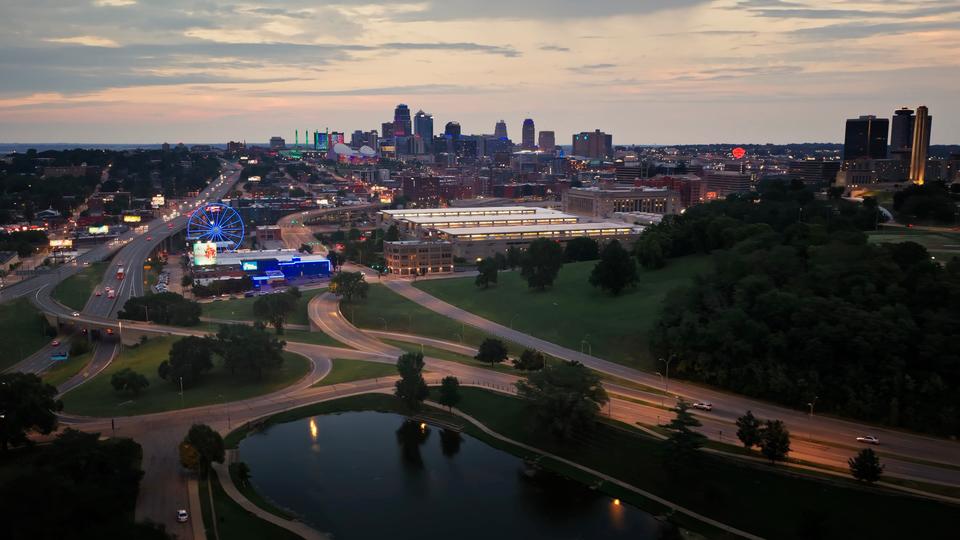
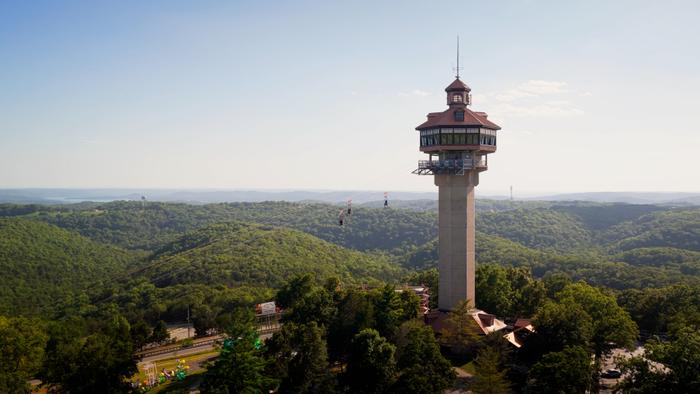
Branson's tourism started with a novel. Harold Bell Wright spent his summers with an Ozarks family in the 1890s and turned the people he met into characters, and the 1907 book sold millions and sent readers looking for the hills he had described. Then music stardom took over. The Presleys opened the first theater on Highway 76 in 1967, and about 50 theaters line the road now, with roughly a hundred shows in a given week and neon marquees running for miles.

Detour
Lake Ozark
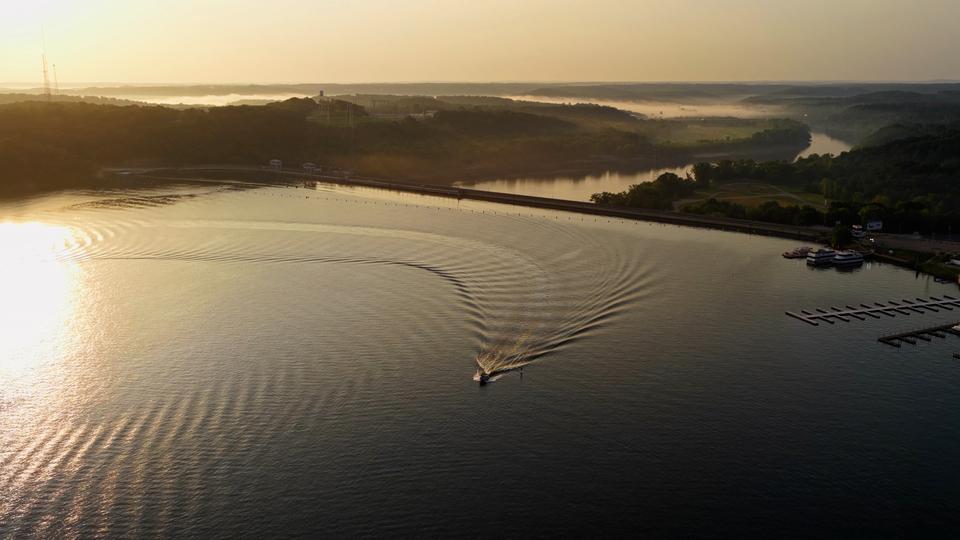
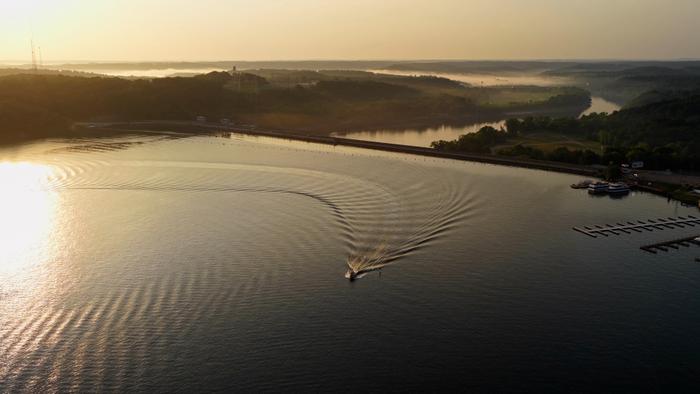
Bagnell Dam flooded five towns along the Osage River to make this lake, and the resort that grew on the new shoreline still runs on old-fashioned pleasures. The Strip is a walkable half-mile of arcades, fudge shops, and lakeside bars, busiest in the evening when the classic cars come out. Above the water at Ha Ha Tonka, the stone ruins of a 1900s castle stand at the top of a bluff, with trails running down to a spring and a natural bridge below.
Detour
Kansas City
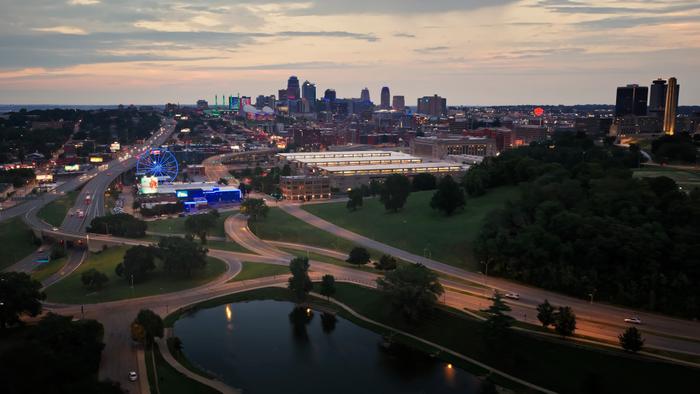
Kansas City is less than three hours north and easily fills a day. Jazz built the neighborhood around 18th and Vine a century ago, and the theater there has been open since 1912. One art museum doesn't charge admission and has four giant badminton birdies scattered across the front lawn. A city playground is built around an enormous fiberglass penguin. And a farmers market has been selling produce on the same downtown block since 1857.
