Bhubaneshwar Attractions
There are so many reasons people love visiting Bhubaneshwar. No matter your interests or age, there are loads of experiences and attractions to delve into. Secure your flights, pack your bags and prepare to make the most of this dynamic metropolis.
Learn what makes Bhubaneshwar tick with some of the most popular tours & day trips. Browse through our top {14 fun activities in Bhubaneshwar fun activities in Bhubaneshwar}, and book with ease knowing that we offer free cancellation and no added fees.

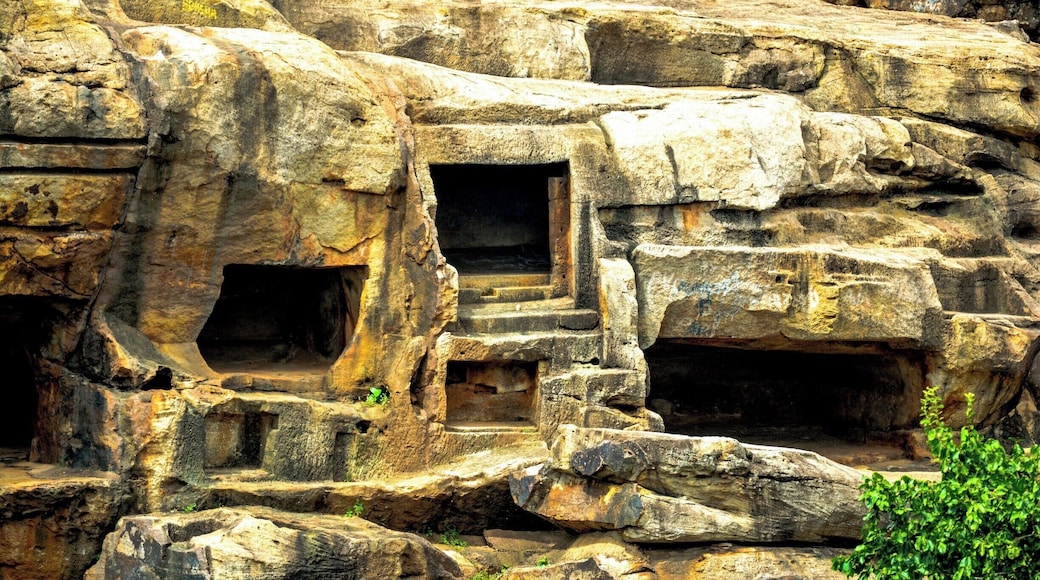
![Udayagiri and Khandagiri Caves are partly natural and partly artificial caves of archaeological, historical and religious importance near the city of Bhubaneswar in Odisha, India. The caves are situated on two adjacent hills, Udayagiri and Khandagiri, mentioned as Kumari Parvat in the Hathigumpha inscription. They have a number of finely and ornately carved caves built during 2nd century BCE.[1] It is believed that most of these caves were carved out as residential blocks for Jain monks during the reign of King Kharavela.[2] Udayagiri means "Sunrise Hill" and has 18 caves while Khandagiri has 15 caves.[3]
The caves of Udayagiri and Khandagiri, called lena or leṇa in the inscriptions, were dug out mostly during the reign of Kharavela for the abode of Jaina ascetics. The most important of this group is Ranigumpha in Udayagiri which is a double storeyed monastery. Other important caves include Hathi gumpha, Ananta gumpha, Ganesha gumpha, Jaya Vijaya gumpha, Mancapuri gumpha, Bagh gumpha and Sarpa gumpha.](https://images.trvl-media.com/place/501/0860dc1d-9b56-42f1-b339-d0811ae9f8f6.jpg?impolicy=fcrop&w=1040&h=580&q=mediumHigh)
![Udayagiri and Khandagiri Caves are partly natural and partly artificial caves of archaeological, historical and religious importance near the city of Bhubaneswar in Odisha, India. The caves are situated on two adjacent hills, Udayagiri and Khandagiri, mentioned as Kumari Parvat in the Hathigumpha inscription. They have a number of finely and ornately carved caves built during 2nd century BCE.[1] It is believed that most of these caves were carved out as residential blocks for Jain monks during the reign of King Kharavela.[2] Udayagiri means "Sunrise Hill" and has 18 caves while Khandagiri has 15 caves.[3]
The caves of Udayagiri and Khandagiri, called lena or leṇa in the inscriptions, were dug out mostly during the reign of Kharavela for the abode of Jaina ascetics. The most important of this group is Ranigumpha in Udayagiri which is a double storeyed monastery. Other important caves include Hathi gumpha, Ananta gumpha, Ganesha gumpha, Jaya Vijaya gumpha, Mancapuri gumpha, Bagh gumpha and Sarpa gumpha.](https://images.trvl-media.com/place/501/2282ce89-b81c-4283-b512-b77afc88809e.jpg?impolicy=fcrop&w=1040&h=580&q=mediumHigh)