
![The Arctic Circle is one of the five major circles of latitude that mark maps of the Earth. As of 16 February 2015, it runs 66°33′45.6″ north of the Equator.
The region north of this circle is known as the Arctic, and the zone just to the south is called the Northern Temperate Zone. The equivalent polar circle in the Southern Hemisphere is called the Antarctic Circle.
The Arctic Circle is the southernmost latitude in the Northern Hemisphere at which the sun can remain continuously above or below the horizon for 24 hours (at the June solstice and December solstice respectively). North of the Arctic Circle, the sun is above the horizon for 24 continuous hours at least once per year (and therefore visible at midnight) and below the horizon for 24 continuous hours at least once per year (and therefore not visible at noon). On the Arctic Circle those events occur, in principle, exactly once per year, at the June and December solstices, respectively. However, in practice, because of atmospheric refraction and mirages, and because the sun appears as a disk and not a point, part of the midnight sun may be seen on the night of the northern summer solstice up to about 50′ (90 km (56 mi)) south of the Arctic Circle; similarly, on the day of the northern winter solstice, part of the sun may be seen up to about 50′ north of the Arctic Circle. That is true at sea level; those limits increase with elevation above sea level, although in mountainous regions there is often no direct view of the true horizon.
The position of the Arctic Circle is not fixed. It directly depends on the Earth's axial tilt, which fluctuates within a margin of 2° over a 40,000-year period,[2] notably due to tidal forces resulting from the orbit of the Moon. The Arctic Circle is currently drifting northwards at a speed of about 15 m (49 ft) per year; see Circle of latitude for more information.
#snow](https://images.trvl-media.com/place/6140564/a9f9449e-bab4-40a6-a9a1-5356b0cc2aa8.jpg?impolicy=fcrop&w=1200&h=500&q=medium)
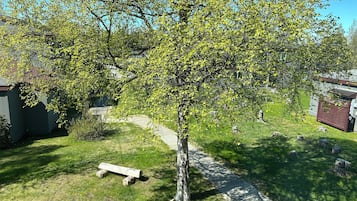
拍摄者: Sharrie Shaw
搜索尼基思基的公寓
查看这些日期的价格
尼基思基首选推荐出租式公寓




Kenai的出租式公寓
Classic AK Townhome 2BR/2BA10.0 分,总分 10,绝佳,(18)
“Was clean and quiet! Very quant stay”

Anthony G.
每晚 $194
新价格 $202
12 月 15 日 - 12 月 16 日
总价含税费




Kenai的出租式公寓
Fishy-Fishy Townhome, 2BR/2BA10.0 分,总分 10,绝佳,(31)
“It was everything we needed for a couple days stay. We had Thanksgiving with my parents in town so we didn't need to cook at all. It was great having two bathrooms and I loved that the rooms were at separate ends of the house and it was very quiet. We would stay there again!”
Connie Z.
每晚 $194
新价格 $202
12 月 23 日 - 12 月 24 日
总价含税费



每晚 $230
新价格 $234
12 月 15 日 - 12 月 16 日
总价含税费




Soldotna的出租式公寓
Ptarmigan Suite @ Keystone Retreat10.0 分,总分 10,绝佳,(2)
“Perfect stay at the Keystone Retreat! We have stayed in a several places in Alaska and this is now our favorite! What a view.... we stayed in the Ptarmigan Suite and it was amazing! The hosts, Sandi and Mark have thought of everything with great attention to detail- comfortable bed with hotel linens, access to private dock, professional fish packer, ice and storage for your big catch, snacks, and good coffee. Sandi was a wealth of information of the area and fishing. So happy we met you both. We……
Jill S.
每晚 $318
新价格 $322
12 月 15 日 - 12 月 16 日
总价含税费




9.4 分,总分 10,绝佳,(10)
“Nice place for 4 large people who basically just slept there. We had 5 and the host put an additional bed in and made it work. Thanks thanks Kristi. Also the host Kristi was very helpful and knows the area very well. She saved us a lot of time finding food, areas to see, and fish.”
Scott H.
每晚 $267
新价格 $267
12 月 20 日 - 12 月 21 日
总价含税费




每晚 $425
新价格 $465
12 月 15 日 - 12 月 16 日
总价含税费




9.4 分,总分 10,绝佳,(14)
“Nice and clean place and good c Communication”
Thomas S.
每晚 $271
新价格 $283
12 月 15 日 - 12 月 16 日
总价含税费




Soldotna的出租式公寓
Kenai Riverfront Cozy Studio9.8 分,总分 10,绝佳,(30)
“Everything great. ”
匿名旅客
每晚 $251
新价格 $267
12 月 31 日 - 2026 年 1 月 1 日
总价含税费











基于过去 24 小时内找到的、2 位成人 1 晚住宿的每晚最低价格。价格和供应情况可能会有所变动。可能需遵守其他条款。

尼基思基热门酒店点评
查看更多有关尼基思基的信息
尼基思基公寓信息
住客点评数 | 98 |
|---|---|
住宿 | 540 |
最低价 | $202 |
最高价 | $472 |
常见问题
Expedia 带您探索世界
- 安克雷奇自治市的家庭旅馆
- 安克雷奇自治市的度假屋
- North Peninsula Recreation Area附近的酒店
- 快乐谷的度假村
- 安克拉治阿拉斯加火车站的公寓酒店
- 安克拉治阿拉斯加火车站的公寓
- 安克拉治阿拉斯加火车站的民宿
- 安克拉治阿拉斯加火车站的度假屋
- 基奈国家野生动物保护区附近的酒店
- 坎宁安公园附近的酒店
- 阿拉斯加的民宿
- 阿拉斯加的村舍
- 阿拉斯加的游轮
- 阿拉斯加的家庭旅馆
- 阿拉斯加的度假屋
- 阿拉斯加的汽车旅馆
- 阿拉斯加的度假村
- 阿拉斯加的别墅
- 基奈半岛的酒店
- 斯特林的民宿
- 安克雷奇的农业旅游旅馆
- 安克雷奇的公寓
- 安克雷奇的民宿
- 安克雷奇的木舍
- 安克雷奇的公寓式酒店
- 安克雷奇的村舍
- 安克雷奇的家庭旅馆
- 安克雷奇的青年旅舍
- 安克雷奇的公寓
- 安克雷奇的度假屋
- 安克雷奇的汽车旅馆
- 安克雷奇的农场
- 安克雷奇的度假村
- 安克雷奇的别墅
- 从萨拉马托夫起飞的航班
- 从基奈半岛起飞的航班
- 从底特律飞往克奈的航班
- 从温哥华飞往克奈的航班
- 从佩洛塔斯飞往克奈的航班
- 从俄克拉荷马城飞往克奈的航班
- 从斯维达拉飞往克奈的航班
- 从康塞普西翁飞往克奈的航班
- 从波士顿 (BOS) 飞往安克雷奇 (ANC) 的航班
- 从巴尔的摩,马里兰 (BWI) 飞往安克雷奇 (ANC) 的航班
- 从广州 (CAN) 飞往安克雷奇 (ANC) 的航班
- 从华盛顿 (DCA) 飞往安克雷奇 (ANC) 的航班
- 从达拉斯 (DFW) 飞往安克雷奇 (ANC) 的航班
- 从费尔班克斯 (FAI) 飞往安克雷奇 (ANC) 的航班
- 从香港 (HKG) 飞往安克雷奇 (ANC) 的航班
- 从休斯敦 (IAH) 飞往安克雷奇 (ANC) 的航班
- 从首尔 (ICN) 飞往安克雷奇 (ANC) 的航班
- 从纽约 (JFK) 飞往安克雷奇 (ANC) 的航班
- 从拉斯维加斯 (LAS) 飞往安克雷奇 (ANC) 的航班
- 从洛杉矶 (LAX) 飞往安克雷奇 (ANC) 的航班
- 从奥兰多 (MCO) 飞往安克雷奇 (ANC) 的航班
- 从安大略 (ONT) 飞往安克雷奇 (ANC) 的航班
- 从芝加哥 (ORD) 飞往安克雷奇 (ANC) 的航班
- 从波特兰 (PDX) 飞往安克雷奇 (ANC) 的航班
- 从北京 (PEK) 飞往安克雷奇 (ANC) 的航班
- 从费城 (PHL) 飞往安克雷奇 (ANC) 的航班
- 从上海 (PVG) 飞往安克雷奇 (ANC) 的航班
- 从罗利 (RDU) 飞往安克雷奇 (ANC) 的航班
- 从罗切斯特 (ROC) 飞往安克雷奇 (ANC) 的航班
- 从西雅图 (SEA) 飞往安克雷奇 (ANC) 的航班
- 从旧金山 (SFO) 飞往安克雷奇 (ANC) 的航班
- 从盐湖城 (SLC) 飞往安克雷奇 (ANC) 的航班
- 从卡尔加里 (YYC) 飞往安克雷奇 (ANC) 的航班
- 从多伦多 (YYZ) 飞往安克雷奇 (ANC) 的航班
- 从奥勒松 (AES) 飞往基奈 (ENA) 的航班
- 从安克雷奇 (ANC) 飞往基奈 (ENA) 的航班
- 从亚特毛特卢阿克 (ATT) 飞往基奈 (ENA) 的航班
- 从布洛克岛 (BID) 飞往基奈 (ENA) 的航班
- 从八莫 (BMO) 飞往基奈 (ENA) 的航班
- 从康塞桑杜阿拉瓜亚 (CDJ) 飞往基奈 (ENA) 的航班
- 从夏洛特 (CLT) 飞往基奈 (ENA) 的航班
- 从乔巴山 (COQ) 飞往基奈 (ENA) 的航班
- 从古里提巴 (CWB) 飞往基奈 (ENA) 的航班
- 从尤金 (EUG) 飞往基奈 (ENA) 的航班
- 从卡利斯佩尔 (FCA) 飞往基奈 (ENA) 的航班
- 从加尔维斯顿 (GLS) 飞往基奈 (ENA) 的航班
- 从花卷 (HNA) 飞往基奈 (ENA) 的航班
- 从安拉阿巴德 (IXD) 飞往基奈 (ENA) 的航班
- 从马杜赖 (IXM) 飞往基奈 (ENA) 的航班
- 从库拉穆图 (KOU) 飞往基奈 (ENA) 的航班
- 从Kota (KTU) 飞往基奈 (ENA) 的航班
- 从吉隆坡 (KUL) 飞往基奈 (ENA) 的航班
- 从诺伊克索特 (NUI) 飞往基奈 (ENA) 的航班
- 从旧金山 (SFO) 飞往基奈 (ENA) 的航班
- 从罗斯卡波国际机场 (SJD) 飞往基奈 (ENA) 的航班
- 从悉尼 (SYD) 飞往基奈 (ENA) 的航班
- 从维罗纳 (VRN) 飞往基奈 (ENA) 的航班
- 从维捷布斯克 (VTB) 飞往基奈 (ENA) 的航班
- 从阿拉斯加州 (WWA) 飞往基奈 (ENA) 的航班
- 从休斯敦 (IAH) 飞往谢尔登角 (SXQ) 的航班
- 从兰伯特圣路易国际机场 (STL) 飞往谢尔登角 (SXQ) 的航班