
Alan Cumming's New York, downtown to uptown

Alan Cumming's New York, downtown to uptown
Alan Cumming's New York, downtown to uptown
Alan Cumming's New York, downtown to uptown
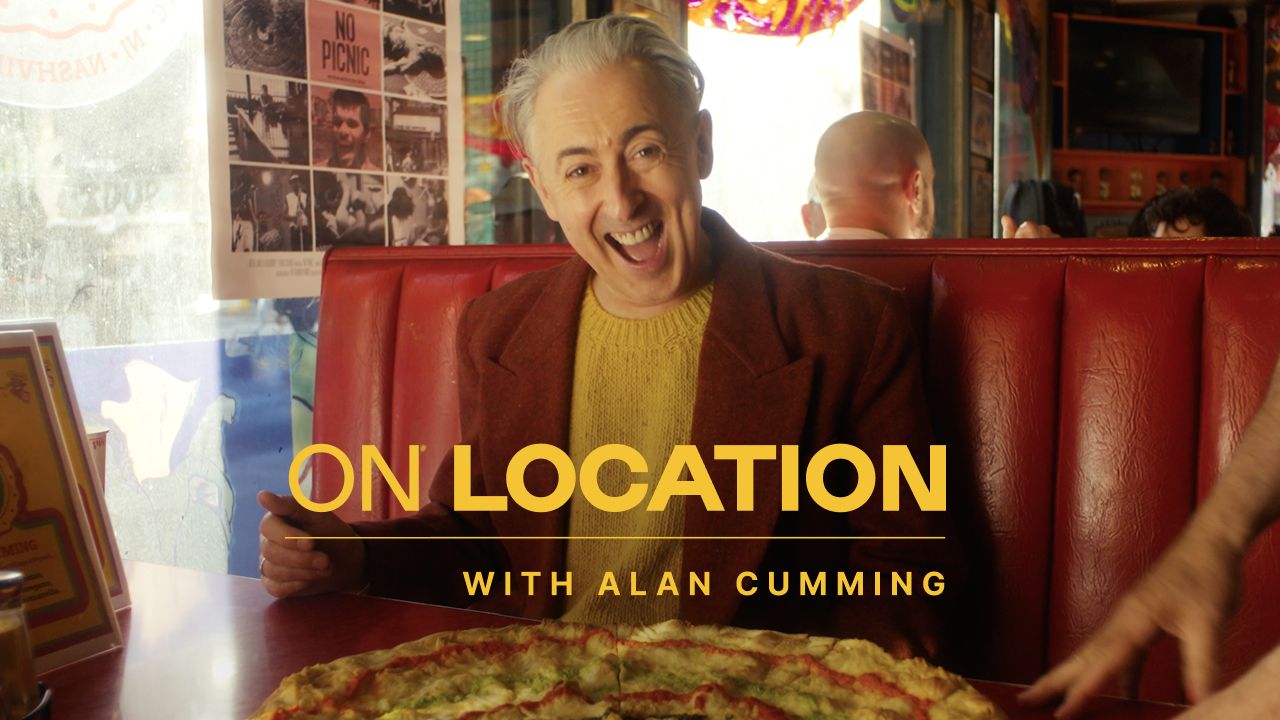
“I have two pieces of advice for you about walking around New York City,” says Alan Cumming. “First of all, look up. It’s a vertical city. So don’t look at your phone.” And the second? “Walk fast. This is New York, baby. You’ve got places to go.”
He would know. The Scottish actor has spent close to 30 years moving through the city at full speed, and few people are better cast as its guide. Most US audiences know him right now as the caped host of Peacock’s The Traitors, a role that has won him back-to-back Emmys, but his résumé runs much wider: a Tony for his Emcee in Cabaret back in 1998, a second as a producer on A Strange Loop, an Olivier, a Golden Globe, multiple books, and a cabaret bar of his own in the East Village. He arrived for the first Cabaret run and effectively never left.
What makes him a useful guide isn’t the awards, though. It’s that his New York refuses to sit still and blends high and low seamlessly. In a single day, he might move from an experimental black-box theater downtown to a chili-pepper-lit hole-in-the-wall to a tuxedoed supper club uptown, treating all three as equally his. “New York has got this huge amount of people and ideas squashed into this one finite land mass, the widest spectrum of experiences,” he says. “It’s like you’re inside a movie.”
What follows is a culture lover’s route through the city, downtown to uptown, with his recommendations threaded throughout and plenty of room to wander beyond them.
So, look up and keep up.
Theater and live performance
Cumming’s New York starts downtown, where performance happens in basements, storefronts, and rooms that hold a few dozen people. His own contribution to the downtown scene sits on East Sixth Street: Club Cumming, the cabaret bar he co-owns, is a narrow room that hosts drag, live music, readings, and comedy most nights of the week. The cast of Catseven came through and danced the Jellicle Ball. The room delivers the kind of night the neighborhood has specialized in for decades.
The anchor of that scene is La MaMa, a few blocks south on East Fourth Street. Founded in 1961 by Ellen Stewart, a former fashion designer who became one of the central figures of Off-Off-Broadway, La MaMa helped launch the careers of Sam Shepard, Harvey Fierstein, and Lanford Wilson. Today, it spreads across multiple stages on a single landmarked block, with shows that don’t often fit into a mainstream category, including puppet shows, experimental dance, and The Poetry Electric, a performance that blends spoken word with music and movement.
From there, downtown opens up fast. A short walk away, the Public Theater on Lafayette Street is where Hamilton and A Chorus Line began before moving uptown to Broadway, and its attached cabaret room, Joe’s Pub, is one of the best small music venues in the city. Performance Space New York, on First Avenue, has staged boundary-pushing work since the 1980s. For something more intimate, the storefront theaters around the East Village and Lower East Side, from the Cell Theatre to the Connelly Theater, keep the experimental tradition alive through music, dance, and performance.
This concentration of venues downtown is the point for Cumming. “I think I realized when I came to New York that many of the qualities that I had been sort of derided for were all things that people here were fascinated by,” he says. The same openness, he adds, is why so many stages can fit into so few blocks: “New York has the highest concentration of incredible art and performance that you can see in the whole world.”


The hole-in-the-wall city
Some of the most rewarding meals in New York happen in one-room places with the owner working the counter, and Cumming is evangelical about the layers of small, longstanding East Village restaurants shaped by the waves of immigrants who settled here.
One of the most eye-catching is Panna II Garden on First Avenue, where the ceiling is hidden under a year-round canopy of multicolored chili-pepper lights, and the bring-your-own-bottle policy keeps every table feeling like a party. The restaurant is a holdout from a stretch of East Sixth Street that was once home to a string of Bangladeshi-run restaurants. Only a couple of those restaurants survive today, and Panna II Garden has had a resurgence in popularity over the last few years.
A few blocks away, Veselka has been the neighborhood’s Ukrainian restaurant since 1954. It stays open past the 4 a.m. bar-closing time on weekends, filling stomachs with a bowl of borscht or a plate of pierogi at all hours. Mamoun’s has been folding falafel into pita since 1971 and claims to be the city’s oldest falafel shop. For something even smaller, B&H Dairy is a sliver of a kosher lunch counter on Second Avenue with about a dozen stools wrapped around an open vegetarian kitchen serving mushroom-barley soup and thick slices of challah griddled in butter.
For Cumming, the cultural mix is the whole point. “All these different people living alongside each other, but also still being able to retain their own identity from the land they come from, and sharing that with everybody,” he says.
"I just think that's such a testament to what New York has become."

Where nature meets design
Manhattan may be a concrete jungle, but one of its most famous draws has far more trees and open space than buildings. Millions of people visit Central Park every year to stroll, run, row a boat on the pond, or sit and people-watch in a green space as the city goes by. There are pockets across its 843 acres that allow you to discover something new each time. Cedar Hill, a sloped clearing on the east side near 79th Street, fills with sledders in winter and sunbathers with books in hand in summer. The Bethesda Terrace and Fountain complex at 72nd Street is anchored by Emma Stebbins’s 1873 Angel of the Waters sculpture. The commission made her the first woman in New York City to be paid for a public sculpture.
Exit the park on the east side at East 82nd Street, and you’ll hit Museum Mile—a 23-block stretch of the city with a high concentration of museums and cultural institutions. Cumming gravitates to the Metropolitan Museum of Art and, inside it, to the Arms and Armor wing, where medieval European weapons, Japanese samurai armor, and a central court of mounted knights fill a single hall. The Met holds some 2 million objects across 17 acres, and the visitors who get the most out of it tend to pick a lane rather than attempt the whole thing in a single day. Arms and Armor is one of the many sections worth seeing, alongside the Egyptian Temple of Dendur, the Costume Institute, and the rooftop garden that opens seasonally with a view over Central Park.
The Met sits at the foot of Museum Mile. This stretch of Fifth Avenue also holds the Guggenheim, where the building’s white spiral is as much the draw as the art, and the Neue Galerie, which has a collection of Austrian and German work anchored by Klimt’s gold-flecked portrait of Adele Bloch-Bauer. A few blocks south, the Frick Collection reopened in 2025 after a five-year renovation. Visitors today can see the family’s refurbished second-floor rooms, while Vermeers and Rembrandts hang in a Gilded Age mansion that feels as much like a private home as a museum.
Just as you can sometimes find the most character in the city’s smaller, hyper-focused restaurants, the smaller, specialized museums have some of the biggest draws. The Morgan Library, in financier J.P. Morgan’s former Madison Avenue home, keeps Gutenberg Bibles, Shakespeare folios, and illuminated manuscripts in a marble study. At the northern end of the Mile, where Fifth Avenue runs into East Harlem, El Museo del Barrio has anchored the neighborhood known as El Barrio since 1969, when Puerto Rican artists and parents founded it in response to the major museums downtown that were overlooking Latino work. Its collection now spans 800 years of Latin American, Caribbean, and Latino art. In upper Manhattan’s Fort Tryon Park, straddling Washington Heights and Inwood, the Met Cloisters reassembles medieval European monasteries stone by stone, and admission is included with the same ticket as the main Met. Downtown, the Tenement Museum explores the lives of immigrants and refugees in tenement housing through historic buildings in the Lower East Side.

Upscale in Uptown
Uptown is where the city dresses up. Cumming has done short runs at Café Carlyle, the supper club tucked inside The Carlyle at East 76th Street and Madison Avenue, which has booked singers since 1955. Bobby Short held the stage here for decades; the lineage runs from Eartha Kitt, who called the room her performing home, through Judy Collins and Debbie Harry to Cumming’s own cabaret evenings. The Cole Porter songbook from the 1930 Broadway musical The New Yorkers is never far away. “I happen to like this town,” Cumming sings. “I like the sight and sound and even the stink of it.”
The Carlyle holds a second draw one floor down. Bemelmans Bar, named for the Madeline illustrator Ludwig Bemelmans, who also painted the bar’s playful murals, has live piano and jazz nightly and pours a famous martini under a gold-leaf ceiling. There’s a cover charge once the music starts, and it’s worth it. Together, The Carlyle’s two rooms are a full expression of an older, glamorous side of New York.
That feeling extends to dinner tables, too. Daniel, Daniel Boulud’s flagship on East 65th Street, has been the neighborhood’s fine-dining benchmark since 1993, and the multicourse tasting menu is an event in itself. Le Veau d’Or on East 60th Street originally opened in 1937 and was long a French bistro mainstay before closing in 2019. The team behind Frenchette refurbished the restaurant and reopened it in 2024, with its memorabilia-lined walls and prix fixe classics intact. Both require reservations well ahead of time, and for good reason.
For glamour with a different view, The View rotates atop the Times Square Marriott Marquis. The city’s only revolving restaurant, reborn under restaurateur Danny Meyer as a supper club, completes a slow 360-degree rotation over the time it takes to eat dinner. It’s immediately clear that Uptown still knows how to make a night feel like an occasion—a quality Cumming clearly loves.
A NYC Itinerary




A cultural guide to New York
Places to stay
New York City

Go further with the Expedia app
