
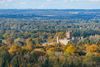
Where was Downton Abbey: The Grand Finale filmed?
Follow in the footsteps of Downton Abbey’s final scenes and uncover the stunning historic locations that frame its last elegant goodbye
Since it first aired, Downton Abbey filming locations have been a visual feast of lush landscapes and sumptuous interiors. Grand buildings have impressed and enchanted viewers of all ages, delighting and astounding us in equal measure. Downton Abbey: The Grand Finale is no exception, but where were all these incredible settings filmed? As we get more used to CGI and television sets, it sometimes comes as a surprise when we discover that those places we saw on the big screen are real. But that’s the case here. The interiors and exteriors are real places in Great Britain that fans can visit and see for themselves. Walk in the footsteps of the Crawley family and relive the most dramatic moments from The Grand Finale by seeing where it was filmed.
01
Highclere Castle
The real Downton Abbey
Highclere Castle plays the part of the iconic Downton Abbey, as it has since the show first aired back in 2010, over fifteen years ago, if you can believe it. It’s said that Julian Fellowes, who created the show, had Highclere Castle in mind as the setting from the beginning, and it’s easy to see why. To this day, it still looks as grand and impressive as ever, bringing fans of the show that warm sense of familiarity when they see its towers rising over the impeccably landscaped grounds.
The Highclere estate in Newbury dates back to the 6th century, making it almost 1300 years old, though the building you can see today was only built in 1679 and then renovated to its current form in the 1800s by renowned architect Charles Barry, while the grounds were designed by world-famous Capability Brown. It’s situated in Hampshire in the south of England and surrounded by the beauty of the Downs.
While the Crawley Family is the creation of Julian Fellowes, the house itself is the country seat of the Earls of Carnarvon and has been in their family for centuries, since before George III created Henry Herbert as the 1st Earl of Carnarvon in 1793. Despite it still being privately owned, the house is open to visitors for themed tours, including Downton Abbey tours, if you book in advance.
The history of the house is fascinating. As stated, the earliest records of the estate date back to medieval times, and it was included in the Domesday Book. King Edward II is even recorded as having stayed there. Art imitated life in season two of the show, during the First World War, as Downton Abbey became a convalescence home, Highclere Castle was transformed into a hospital, with the Lady Carnarvon of the time serving as a nurse to victims of the war.
02
Basildon Park
The rooms that witnessed the highs and the lows
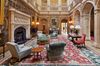
Just over half an hour from Highclere Castle is the filming location that provides the setting of Grantham House in the movie and the show. Basildon Park appeared previously in the series and returned for Downton Abbey: The Grand Finale to bid farewell to the franchise. While the exterior might not seem familiar to fans, the interior will, though they might be surprised to find the rooms they associate with a London townhouse surrounded by a huge park and gardens rather than St James’s Square.
Basildon Park itself, located in Reading, has featured in many period dramas over the years, so fans of the genre will be in heaven. This imposing building, with its Palladian exterior, has featured as Netherfield Hall in the 2005 film Pride & Prejudice, starring Keira Knightley and Matthew MacFadyen. It also appeared in Bridgerton, The Crown, and Marie Antoinette, meaning that, as well as historical importance, it also has modern cultural significance.
On the inside, many rooms will be recognized by Downton fans. The dining room and the drawing room have both featured heavily in the show and movie. Walk through the very rooms where the Crawleys made their home, stand where Lady Rose prepared for her debutante season, and see where characters played cards, greeted visitors, and had grand dinners.
Now owned by the National Trust, it’s open to visitors, though the hours vary by season. The grounds span 400 acres, great for walks and photography. There are some formal gardens as well, including a rose garden designed in the 1700s.
In the best traditions of the National Trust, there is, of course, a tearoom on the premises, offering delicious coffee, cakes, and lunch to visitors. There’s even a little shop for buying souvenirs and gifts you can take home to remember your visit or surprise any fans who couldn’t make the trip.
03
Claydon House
The iconic grand ballroom
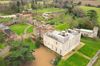
Buckinghamshire is home to the Georgian gem that is Claydon House. While this is not as major a filming location as some others, it plays a pivotal role in the movie as Petersfield House, where Lady Petersfield’s ball takes place.
When touring the house, guests can see the staircase on which Lady Mary made her grand entrance and step into the grand ballroom where her divorce was shockingly revealed to society. The dramatic surroundings are suitable for such a dramatic scene, as they were asked to leave lest they cause a (further) scandal.
The house itself is no stranger to scandal. It was rebuilt in the 1700s as a testament to wealth, luxury, and social status. The grand building was the brainchild of Ralph Verney, 2nd Earl Verney, and he planned a structure of such extravagance that it would put his neighbors to shame. Sadly for him, it would never be complete, as he fell into financial difficulties before his dreams could be realized. Some parts were even removed after his death. What stands today is a fraction of his vision and seems rather austere when compared to other stately homes, though still impressive.
It’s within the manor you’ll find the true magic, and you’ll understand why the interiors were chosen for such a grand setting. Intricate carvings, elegant furnishings and decor, and double-height ceilings offer a spectacular experience for visitors. Magnificent fireplaces and doors bracketed by Corinthian columns, as though every new room is an ancient temple. The ceilings and wallpapers are adorned with designs and embellishments that are a feast for the eyes. Tours are available in the morning, and those who visit in winter might find a magical Christmas experience waiting for them.
At Claydon House, visitors can discover the rich history of the Verney family, who have lived on the estate for over 400 years. History buffs will love to hear about the fraught time of the English Civil War and learn the estate’s connection to Florence Nightingale. There are two cafes on the estate, as well, and a number of independent businesses sell goods there, offering interesting and unique items.
04
Ripon Races, Yorkshire
A historical racecourse in idyllic North Yorkshire
The location team had some difficulty finding a place that would suit the Ascot Races in the movie. Many of the racecourses in the UK have been modernized in the last century, bringing more up-to-date facilities, certainly, but making them unsuitable for filming a movie so rooted in history as Downton Abbey: The Grand Finale. Luckily, they were able to scout out this charming racecourse up in Yorkshire to bear the mantle of “Ascot” for the movie.
There is a certain irony that Downton Abbey and the village, which are in Yorkshire within the world of the show, were filmed in southern counties, while Ascot, which is in the south of England, was represented by a racecourse in Yorkshire. But the setting couldn’t be finer. Situated in the gorgeous, green Yorkshire countryside, Ripon Races has all the charm necessary for a world of that period, and it’s easy to imagine, when you visit, that you’ve stepped back in time. It’s been hosting races for 300 years, after all.
It’s also located right by the city of Ripon, which may not have featured in the movie itself, but has a lot of historical charm to offer. With a population of less than 20,000, it’s not as large as you might expect, and its town square and charming, old-fashioned buildings are wonderful, as is the cathedral, which has a history dating back to the 7th century.
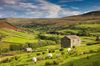
Ripon, and its racecourse, lie on the doorstep of the Yorkshire Dales National Park, well worth a visit for those with a love of beautiful countryside and who want to experience Yorkshire and see its villages. Picturesque stone buildings huddle between rolling hills and green valleys, broken up into patchwork by drystone walls, providing an enchanting setting for a walk or a photograph.
These iconic locations from the final installment in the Downton Abbey canon bring the world of the series to life in incredible ways. They also help visitors understand in more depth the historical events and context against which the movie was set. While, of course, fans will love stepping into the world of their favorite show, there’s plenty for non-fans as well. Each of these locations is interesting in its own way. Secure a hotel, book a tour or activity, and prepare your best posh English accent for your adventure into the glitz, glamour, and drama.
Disclaimer: This content is not affiliated with or endorsed by the producers of Downton Abbey: The Grand Finale.