
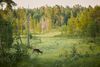
Foraging Lapland under the midnight sun
Under the midnight sun, Lapland's forests give up berries, herbs, and mushrooms around the clock — and the meal that begins outside changes how the trip ends.
I pull my wool hat tighter over my ears and bury my red nose in my scarf. It’s well below freezing in Swedish Lapland, and I’m following a petite woman with short blonde hair, colorful mittens, and a wicker basket into the forest to search for winter berries or anything else wild that might be used in teas, tinctures, salves, or baked goods. I’m here to experience something real in nature, something that connects me to not only the culture of Lapland, but also my deeper self.
Forager Eva Gunnare runs Essense of Lapland tours and experiences and is something of a celebrity in these parts. She brightens as she tramps through the knee-deep snow, paws at the ground, and exclaims, “Here is some bog bilberry! I’m going to let you taste. Come closer!” I do as she says and am delighted by the flavor. Then she hands me an evergreen cluster of leaves and whispers, “This is the lingonberry bush; sometimes you can find berries.” The snow crunches under her boots, and she finally reveals what’s in her basket: hot tea made from foraged berries. I let the wine-colored deliciousness warm my belly as the snow glitters in the breeze. It’s nature-thick magic.
Summer is short, but incredibly generous, and nature gives everything at once.
I met Gunnare in winter, but summer is when her foraging truly flourishes. Lapland’s ground gives up everything at once on long summer days: cloudberries in July, lingonberries and chanterelles by August, herbs that grow almost around the clock under a sun that barely sets.
Foraging with a Sámi-rooted guide
Gunnare is a mother of a Sámi son and has lived her life rooted in Sámi culture —including deepening her knowledge through a one-year course at the Sámi Education Centre in Jokkmokk.
What I’ve learned traveling across Lapland is that Sámi culture has more in common east to west across Sápmi—the Sámi homeland, which stretches over northern Sweden, Norway, Finland, and Russia—than it does north to south within any single country. Reindeer herding still shapes the seasonal calendar in many Sámi communities today.
“It’s a joyful activity—almost like a treasure hunt,” Gunnare says.
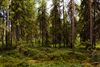
The act of pulling a berry off a bush is its own kind of clarity in a modern food system built on packaging and air freight. In a world full of buzzwords like “farm-to-table” and “locally sourced,” searching for fresh food in the wilderness and eating directly from nature involves all our senses and ties a meal to a season and a specific patch of forest.
Nature has plenty to give when you know what to look for, and Sweden’s right of public access, called allemansrätten, rewards everyone with the right to enjoy the outdoors, including the right to pick wild mushrooms, herbs, and berries. (In Finland, it’s called jokaisenoikeus, or “everyman’s right.”)
“Mushrooms have become more popular to forage, whereas in the past they were mainly considered reindeer food,” Gunnare says. Curiosity has also widened around wild herbs and flowers like fireweed and yarrow for syrups, teas, seasonings, and salads. The plants that grow here are among the most nutrient-rich anywhere due to the long, cold winters followed by summer light that seldom quits, she adds.
Plan your trip
When to go
The foraging window opens in late May with birch sap, fireweed, and spring herbs, but the heart of the season runs from early July through late August. Cloudberries ripen for just a few weeks in July. Lingonberries, blueberries, and the first chanterelles follow in August. Mushrooms peak from late July to early October.
Where to base in Swedish Lapland
Jokkmokk, near the Arctic Circle, is the cultural heart of Swedish Sápmi and Eva Gunnare’s home base—a good choice if Sámi food traditions are central to your trip. Gunnarsbyn, about an hour north of Luleå, puts you within reach of Aurora Safari Camp on the Råne River.
Where to base in Finnish Lapland
Rovaniemi is the easiest entry point and the home of Helios Tour, which runs a three-hour forest foraging tour that finishes with a mushroom soup cooked over an open fire. Levi and Sirkka, a couple of hours north, sit closer to the wild fells and quieter forests.
What you can pick—and what you can't
Sweden’s allemansrätten and Finland’s jokaisenoikeus give everyone the right to walk on most public and private land and to gather wild berries, most herbs, and unprotected mushrooms. The rules also draw clear lines: no trespassing on cultivated land or close to private homes, no picking protected species, and no damage to trees or wildlife.
At Aurora Safari Camp on the Råne River, co-owner Naila Sher builds summer stays around guided foraging walks that feed straight into open-fire cooking.
“This can include preparations such as wild mushroom pasta, chanterelle toast, or homemade jams served with freshly made waffles,” Sher says. “Meals are enjoyed outdoors in the unique setting of the river and midnight sun, creating a relaxed and memorable atmosphere centered around nature and togetherness.”
In Finland, as in all of Lapland, foraging is part of everyday life — families spend long summer days picking berries, mushrooms, and other natural ingredients for jams, cakes, and hearty meals.
“In Lapland, foraging feels different because the wilderness is so untouched,” says Elena Arkhipova, general manager and guide at Helios Tour. “The plants grow 24 hours a day, which makes the berries sweeter and the experience very special—you can forage late at night.”
"You remember the place, the light, the feeling."
Food tends to taste better when you pick it yourself. I’ve sampled berries while hiking in the mountains, nibbled mint and other leaves to whittle away time on a trail, and learned that pulling food directly from the ground gives you a real sense of place, weather, and community. It also doesn’t require any special skills — just a guide who can show you which plants are which, and a basket.
“Wild blueberries are one of the easiest berries for visitors to recognize, and guests are often fascinated when they see that the inside is deep purple and quickly stains their fingers,” says Sini Jin, an Arctic guide at Nordic Unique Travels. “For many of them, this is completely different from the blueberries they know from supermarkets.”
Jin goes on to say that picking berries may seem simple, but the moment connects each visitor to Finland because they are tasting nature as well as seeing it.
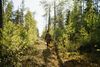
Päivi Hiukka, owner of Polar Lights Tours and a wild food chef, adds that foraging is just as much about being immersed in nature. “I have a deep love for the purity of Finnish nature and its quiet, healing power,” Hiukka says. “Everything grows slowly here, under the midnight sun, and that creates flavors that are incredibly clean, strong, and full of life. You are not just tasting food; you are tasting the land itself.”
For Hiukka, who cooks with what she gathers, the trip from forest to table is the point. “You step outside, gather what you need, and bring it straight to the table,” she says. “As a chef, this is the most honest way to cook.”
A treasure hunt under a sun that barely sets, a basket that fills as you walk, a meal cooked on the ground you picked it from. Everything tastes better when you’ve worked for it. As Hiukka says, “You remember the place, the light, the feeling.”

Wendy Altschuler is a seasoned travel and adventure writer with work published in Travel + Leisure, Forbes, Business Insider, Parents, New York Times, Time Out, and many others. She has been a travel expert on WGN-TV and WLS radio. Her book, Perfect Day Chicago, highlights fun things to explore in The Windy City’s diverse neighborhoods.
Places to stay