
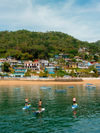
Spend a day on Taboga Island
With the best swimming and sunbathing close to Panama City and a rich landscape and colorful history to explore, Taboga Island is the perfect day trip.
For a truly memorable vacation in Panama, including a day trip to Taboga Island is a must for your itinerary. This sleepy 4.6 square mile island, located a short boat ride south of Panama City, is a popular tourist hot spot for locals from the mainland and international travelers alike.
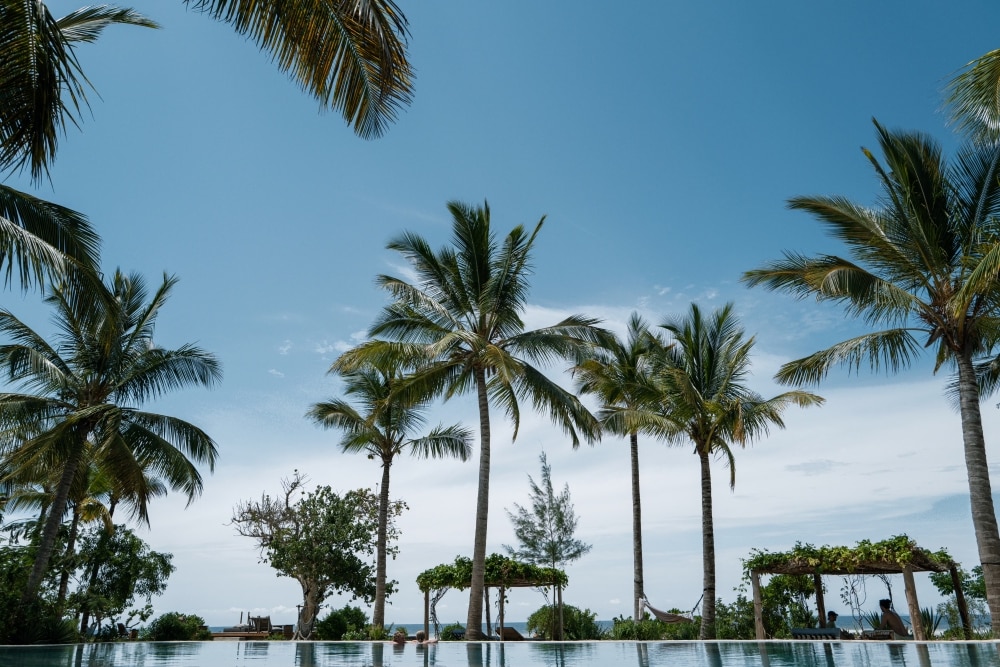
With its breathtaking beaches, chill atmosphere, and average daily temperatures of 82 degrees Fahrenheit, it’s a great place to relax, swim and get away from it all. Ideal for sun worshippers and lovers of the outdoor life, the family-friendly island also entices visitors with its abundant plant and wildlife—it’s known as the “Island of Flowers”—and with myriad tales from a rich cultural history dating back to the 1540s. As well as one of the oldest churches in the western hemisphere, it has also been home to several famous characters, including notorious conquistadors, ruthless pirates, and for a short stint, a famed French painter by the name of Paul Gauguin.
Alongside its rich history is its renowned fresh local cuisine, which includes an abundance of freshly caught seafood and fresh fruit. A trip here, even if just for a few hours, is well and truly worth it.

A food lover’s guide to Panama
Getting there with a view
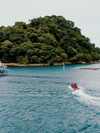
Getting to Taboga Island for a day trip is simple enough—you’ll need to take a boat from Panama City. Ferries are the most cost-effective option with several companies offering a service to the picturesque island from Amador Causeway. Schedules start from 8 a.m. with the last return journey around 4 p.m. on weekdays and 5:30 p.m. at weekends. The 12-mile journey takes 30–45 minutes, depending on which operator you choose. You can also reserve a ticket and spot on the beach with an all-inclusive Beach Day Pass which usually includes the ferry trip, a beach chair, lunch, and two drinks.
Whether you choose to travel by catamaran or conventional ferry boat, you will not be disappointed by the journey, let alone the destination. As you depart, you’ll be greeted by spectacular views of the Panama City skyline, the Bridge of Americas and the Panama Canal. Marvel at the size of some of the largest ships in the world as they wait to enter the canal, dwarfing your seemingly tiny, but comparatively speedy, craft as you motor past.
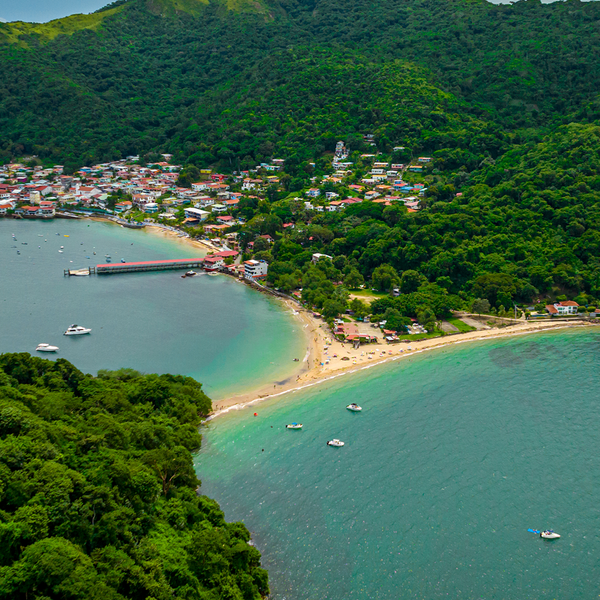
As you approach Taboga Island and its colorful homes will soon come into view, nestled in the hills surrounding its two main beaches. Bear in mind that you’ll be journeying in the wake of historical conquistadores and plundering pirates like Henry Morgan, who sacked Panama City in 1671, and the considerably more peaceful French artist Paul Gauguin who became so smitten with the isle while recuperating from illness there that he considered buying a home (and is commemorated with a plaque on the beach).
When you step off the ferry and breathe in the fresh sea air, take in the smells of grilling seafood skewers and freshly cut papaya, and first experience the peace and quiet of tranquil island life (a stark contrast to the noise of Panama City you’ll have recently left behind).
Take it all in with a tour
Whether you want to make your own way to Taboga Island or would rather spend your day trip with other tourists on an organized tour, there are plenty of options available to suit all preferences and pockets. Among the most popular are all-inclusive catamaran tours to the island from Panama City. These planned timetabled excursions take the stress out of traveling under your own steam and provide the opportunity to just kick back, chill, and relax.
For those who prefer doing their own thing there are a host of tours available on the island itself from local operators and guides who can provide insightful knowledge into the prime spots to see and share insider knowledge on the island’s history and culture. Boat tours, whale and dolphin-watching, kayaking, snorkeling, 4x4s, fishing, hiking, biking, and walking tours are all offered and take in the island’s two prominent peaks—Cerro Vigia and Cerra de la Cruz—where you can see a World War II bunker and large cross as well as great views of the island and Panama Bay.
While here,you’d be remiss not to immerse yourself in the island’s abundant tropical rainforest vegetation and diverse flora, orchids (they weren’t kidding when they nicknamed it “Island of Flowers”), ferns, and liana, and a wide variety of fruit trees. Check out the local wildlife, too.
The island is a designated Important Bird Area (IBA) and includes brown pelicans, cormorants, egrets, and herons among its population, as well as a variety of iguanas and geckos. But do keep an extra watchful eye out for tarantulas and the aptly named Green Poison Dart Frog. Both are unlikely to cross your path but, if they do, do not pick them up!
Sun. Swim. Repeat
One of Taboga Island’s unique selling points—especially with visitors from the mainland—is having the closest beaches to Panama City. Veracruz Beach, a 30-minute drive down the coastal road, is officially nearer but is mainly renowned for its seafood rather than its beach life and swimming, partly through being closer to the busy Panama Canal. It’s a sign of the enduring popularity and enhancing appeal of Taboga Island that every day you will see locals and tourists alike taking the ferry over to Isla Taboga for a taste of relaxing island life.
As you arrive at the dock on the island you have a simple choice—left or right? Left takes you to Playa Honda and right to Playa Restinga. Playa Honda, the sandier of the two beaches, overlooks Taboguilla Island to the east and Panama Bay while Playa Restinga, which has a rockier surface, provides great northern-facing views of the Panama City skyline.
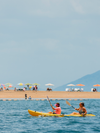
Both offer warm Pacific Ocean water, perfect for swimming, fishing, and fun family activities, though medium and high tide is recommended as the surface is less rocky then. Umbrellas and recliners are available for rent and, in the huts dotted along the seafronts, you can hire paddle boards, kayaks, and jet skis. You can also sample delicious local fare from nearby booths and restaurants and purchase local mementoes and arts and crafts from nearby stalls and wandering beach vendors.
The beaches are less busy from Monday to Friday when locals from Panama City are back at work so expect more competition for the sun loungers (and ferry seats) at the weekend.
Visit the historic Parroquia San Pedro de Taboga
The historic Parroquia San Pedro de Taboga is believed to be the second oldest church in Latin America and was officially declared a historical monument in 1996. The quaint, modest, white-walled building is Taboga’s most notable landmark, and its bell tower and silhouette are instantly recognizable, shyly peeking out from underneath the town’s brightly colored skyline, as you approach the island by boat.
The historic structure is a treasure trove of local history and culture and if its walls (rumored to include the ashes of pirates) could talk, you can only imagine the tales they’d tell. From the island’s port it’s just a short walk uphill on a concrete path to the church, located at the end of a village square complete with a basketball court where locals regularly congregate for a game, or just to chat, or enjoy a coffee from an adjacent cafe.
The church’s external modesty is contrasted inside where its walls are adorned with religious icons, paintings, statues, carvings, and typical adornments you’d expect in a building that has watched over the island and its flock for approaching 500 years. In turn, the locals keep it well decorated with flowers. If you’re feeling adventurous you can climb the steps to the bell tower—be warned it’s a physically difficult and narrow climb for one person at a time—and from up there you can, if you crane your neck a little, enjoy 360-degree views of the island, its hills, verdant rainforest, and sparkling seas. For an equally inspiring view, open the church’s wooden doors, take a deep breath, and look back out at the island from the way you’ve just come.
A snorkeler and diver’s paradise
As picture-postcard-pretty as Taboga Island can be with its lush vegetation, brightly colored houses, clear seas, and sandy beaches, a mask and snorkel (and probably flippers too) will reveal a whole new exciting side of the island.
Taboga translates as “many fish” and when snorkeling in the island waters and along its rocky coastline you’ll discover that it more than lives up to that name, offering a kaleidoscopic glimpse of undersea life you’ve likely only seen in an aquarium. You’ll likely find blowfish, trumpet fish, parrot fish, eels, stingrays—and maybe even sea turtles—all zipping in and out of the rocks and coral, as you gently swim by.
Venture out a bit further into deeper waters, ideally with a guide unless you’re an experienced snorkeler or scuba diver, and you can investigate one of the numerous shipwrecks that are scattered around the coastline. While you’re unlikely to find any hidden pirate treasure these days, you will discover an even wider variety of diverse marine life and plants amongst the ruins.
You can bring your own gear, if you have it, but it’s easier and less cumbersome to rent it on the island. A local guide with a boat is also a worthy investment as they can show you all the best spots and provide insight and commentary into what you are seeing, as well as keep an eye on the currents.
Whatever the activities you choose, you can be confident that Taboga—and its always chill and convivial locals—will provide a warm welcome and the enduring hospitality that the island has become renowned for.
Images courtesy of Visit Panama.
Taboga Island hotel deals


Go further with the Expedia app
