

Panama: the nature edit with conservationist Bennison Sherrod
From Azuero's forested coast to the cloud forests of Chiriqui, Bennison Sherrod explores the biodiversity, stewardship, and protected parks in the nature found across Panamá.
The jungle on Panamá‘s Azuero Peninsula wakes up in layers of sound: wrens and flycatchers, the squawks of parrots and macaws, the sharp calls of capuchin monkeys and the deep bellows of howler monkeys echoing through the canopy. For Bennison Sherrod, who has lived in Panamá for 13 years, that shifting soundscape is part of daily life. Originally from Texas, she has spent more than 20 years across Latin America, the last 13 of them in Panamá.
She and her husband built their home on the peninsula’s southern coast using permaculture principles, and their son is growing up to the sound of the forest. Sherrod works as a permaculture practitioner and nature host, and her days move between the land she tends, the nearby river, and the protected forests of Cerro Hoya National Park, which is one of the peninsula’s most important conservation areas.
In Panamá, cloud forest, rainforest, mangrove and reef can sit within a single trip. A sunrise in the highlands can become an afternoon beside sea turtles on the coast.
The western highlands around Boquete are where cloud forest meets coffee country, with trails leading up Baru Volcano, Panamá‘s highest peak. Travelers usually reach the region with a one-hour flight from Panama City to David, followed by about 40 minutes by road into the mountains. Central Panamá offers something different: Santa Fe National Park spreads across more than 72,000 hectares of rainforest and river valleys in Veraguas province, threaded with dozens of waterfalls. Founded in 1557, the town of Santa Fe sits at the park’s edge.
On the Caribbean side, Bastimentos Island National Marine Park in Bocas del Toro protects more than 13,000 hectares of reef and mangrove, with tropical forest spilling down to beaches where sea turtles nest between April and October. Isla Colón, the archipelago’s main island, is a 45-minute flight from Panama City, with water taxis carrying visitors on to Bastimentos and the smaller cays.

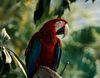
Sherrod is a permaculture practitioner and nature host. Her work is rooted in ecosystem stewardship: tending plants on her property, helping extend a wildlife corridor toward nearby Cerro Hoya National Park, and volunteering with a conservation effort to protect the critically endangered great green macaw in Azuero. Part of her role is to scan the sky for the birds, record sightings, and follow their patterns.
She once spotted seven macaws flying together, which she had been told was nearly impossible to see. “Well, not where I live,” she says.
That familiarity shapes the way Sherrod talks about wildlife in Panamá. Turtles surface offshore, coatis move through the undergrowth and monkeys call from the trees. She regularly encounters jaguarundi and once witnessed a troop of howler monkeys loudly announcing a newborn baby.
Travelers can engage with the same landscape with some planning. Cerro Hoya National Park, at the southwestern tip of the peninsula, is one of Panamá‘s least-developed protected areas, reached by 4x4 from Tonosi on the Los Santos side or through the Mariato district in Veraguas. Day visits don’t require permits, but the park is remote, so most visitors arrange guided trips ahead of time. The forest shelters howler monkeys, the endemic Azuero spider monkey and scarlet macaws, while Playa Malena, on the peninsula’s western Pacific coast, runs a long-standing turtle conservation program that welcomes visitors during nesting season.
Pro Eco Azuero, a conservation nonprofit working in Pedasi since 2010, takes a similar long view. Partnering with smallholder farmers and rural schools, it has planted close to 100,000 native trees across more than 15 farms to rebuild the peninsula’s dry forest, now reduced to about 7 percent of its original cover. The Azuero spider monkey, a critically endangered subspecies found only on this peninsula, is its guiding symbol, and the work centers on stitching together an ecological corridor for the species to survive. International volunteers can take part in planting days from May to August.
You often do not have to look far. Wild cat species, like jaguarundi, make their home in Cerro Hoya, as well as three monkey species. Restored wildlife corridors filled with native and fruiting trees tend to bring animals close.

your senses come alive. You’re not distracted and you really are in the present moment
Exploring Tierras Altas and Boquete
In western Panamá, the landscape shifts once again. Within the province of Chiriqui, the destinations of Tierras Altas and Boquete invite travelers into a world of cloud forests, farmland, and river valleys surrounded by some of the country’s richest mountain ecosystems. Farther into the region, La Amistad International Park extends that sense of scale across protected forest on the Panamá–Costa Rica border.
The region lies roughly six hours west of Azuero along the Pan-American Highway, or a short flight from Panama City to David followed by a winding drive into the mountains. Chiriqui is one of Panamá‘s key agricultural regions, thanks to its volcanic soil and cooler temperatures. Around Boquete, that connection to the land shapes where travelers stay as much as what they eat. Eco-lodges sit close to forest trails, while coffee plantations offer a window onto the care behind one of the country’s best-known exports.
Sherrod points to the knowledge of the Indigenous Ngäbe-Buglé communities in Chiriqui, where coffee production, farming and relationships with the land remain closely linked. In Tierras Altas and Boquete, coffee is one of the clearest ways to see how stewardship and livelihood meet.
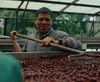
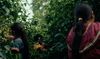
Coffee is one of the best-known products of the destinations of Tierras Altas and Boquete in the province of Chiriqui, and several producers offer tours where you can walk the fields, learn how the beans are picked and processed, and taste the finished roast. The best time to visit is during harvest, from December to March, when the shrubs are heavy with bright red cherries.
Among the region’s most prized varieties is geisha, which is known for its distinctive floral character that’s often described as tea-like. Its rarity and reputation have helped make it one of the country’s most celebrated exports. “When people take time and take care of the land, it shows in the product,” Sherrod says.
Sherrod recalls watching pickers move through the fields with practiced precision. “They know exactly which ones are ready, which ones should stay on the branch for another week, and which ones need to come off now,” Sherrod says.
Adventure in Tierras Altas and Boquete, Chiriqui
Beyond coffee tours and farm visits, the destinations of Tierras Altas and Boquete also offer a more active way to experience the region. Outfitters in the wider Boquete area offer canyoning, rappelling, zip-lining and white-water rafting, with routes on the Chiriqui, Caldera and Gariché rivers chosen according to experience level.
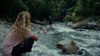
For hikers, the two-mile trail to Agua Viva waterfall offers another way into the landscape, beginning in the rolling hills near Caldera. The route climbs steadily through forest, where moss, orchids and bromeliads cling to the trees.
“As you’re coming down this hill, you can hear the waterfall before you can see it, and it starts to sound like thunder,” Sherrod says. “The mist almost feels like it’s coming toward you.” A pool with open swimming sits at the base.
For a bigger challenge, head to Barú Volcano National Park to see Baru Volcano, Panamá‘s highest peak. The protected area spans forest and high-altitude grasslands, and supports a wide range of birdlife. The climb to the summit is strenuous, with a significant temperature drop between the trailhead and the windy top, but the reward is a sunrise view over both the Pacific Ocean and the Caribbean Sea on clear mornings. You can also take a 4x4 to the summit for the view without the overnight hike.
Sherrod sees Panamá as a place that can appeal to many kinds of travelers, and she has comfortably explored the country independently. In regions such as Azuero and Chiriqui, guided walks, short hikes, and slower stays make it easier to experience nature with a sense of reassurance as well as immersion. Walking through the forest or along an empty beach, Sherrod says, “your senses come alive. You’re not distracted and you really are in the present moment.”
For Sherrod, one of Panamá‘s strengths is how easily families can experience nature together. Much of what makes the country appealing for adult travelers works just as well for children, partly because so much sits close together. A short flight from Panama City to David, followed by the winding drive into Boquete, brings families into the cooler air of the Chiriqui Highlands.
Around Boquete, Tree Trek’s hanging bridges carry walkers over the cloud-forest canopy, where howler monkeys and birds are often in view. The Pipeline Trail in Barú Volcano National Park offers a gentler forest walk, while bee and butterfly farms give younger travelers something more hands-on. As children get older, local outfitters add canyoning, rafting and zip-lining to the mix. What Sherrod values most is that the landscape rewards attention: children are encouraged to slow down, notice what is around them and see the life unfolding in front of them.
While the days start with the jungle waking up, by evening, the soundscape changes again. Birds quiet down, insects begin to hum, and frogs take over, turning the forest over to another kind of chorus. In Panamá, nature rarely stands still. Often, the difference is simply arriving at the right moment to notice.
Can’t-Miss Panama Highlights



Where to stay
Panama