
Zadar, held between history and horizon
On Croatia’s Dalmatian coast, Zadar keeps everything close. Historic streets, modern waterfront landmarks, nature parks, and easy island hopping come together in a stay that feels naturally balanced.
Zadar, on Croatia’s Dalmatian Coast, is a city where the Adriatic is always within reach. Sea air moves through its stone streets, the waterfront stays active from morning swims to evening strolls, and every day ends with a sunset over the water. History in this 3,000-year-old city is part of the daily backdrop, alongside a coastline that invites you to slow down and get out in nature.
Whether you come for a long weekend or build it into a broader Dalmatian trip, your days will be shaped by Ancient Roman landmarks, local cuisine, and easy escapes to islands and protected parks.


Layers of ancient heritage in a historic core
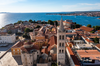
Zadar’s history shows itself in architecture resistant to time—the Roman Forum, medieval churches, and Venetian defensive walls where the city meets the sea. From the 7th century A.D. to 1797, Zadar served as the administrative center of the Dalmatian region, and its significance is palpable today. Here, your proximity to history is best enjoyed on foot with time to stop, look up, and take in the layers built over centuries.
Start on the cobblestone streets of Poluotok, the Old Town Peninsula, with coffee at a café near the ruins of the Roman Forum. Walk a few minutes down the road to the oldest church in Old Town Zadar - the pre-Romanesque Church of St. Donatus, which dates back to the 9th century. From there, explore the nearby Cathedral of St. Anastasia, built on the site of a 4th-century Christian Basilica with a Romanesque Catholic facade added in the 12th and 13th centuries. End your day with a stroll alongside the UNESCO-listed City Walls of Zadar, known locally as Muraj.
Built by the Venetian Republic in the 16th century, this fortress is an architectural triumph that features impressive aspects like the Land Gate, which once acted as the main entrance to the city. Round out your time exploring the legacy of this ancient city by taking in the panoramic views of the Adriatic Sea.

Where light and sound meet the sea
Zadar’s sunsets are best experienced by the Adriatic Sea. Start at Greeting to the Sun (Pozdrav suncu), an interactive installation by architect Nikola Bašić set directly into the waterfront. The 72-foot-wide circle is built from 300 multi-layered glass panels that collect solar energy during the day, then power a light display as evening settles in.
While the Greeting to the Sun uses natural light for its art, the adjacent Sea Organ (Morske orgulje) plays with sound and the sea. Also designed by Bašić, hidden pipes beneath a series of marble steps capture the movement of waves to create musical notes that rise and fade with the tide; sit on the steps any time of day to be enveloped in the naturally composed soundscape. Opened in 2005, the installation serves as a relaxing backdrop when you want to slow down and connect with the water in a novel way.
Outside of Bašić’s art installations, you can head to Zadar’s beaches for low-key swims, waterfront walks, and relaxing afternoons in the sun. You’ll often see people sunbathing on towels laid out by the shore and on bathing decks that stretch into the water. Head to Kolovare for its famous 30-foot diving platform and swims near the city center, or explore Borik in northern Zadar for more beach time along the coast.

Protected nature inland and on islands
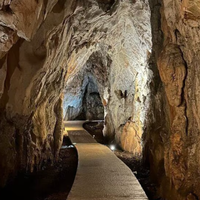
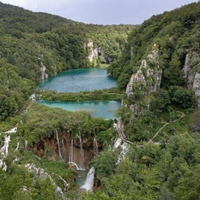
Zadar’s natural highlights extend well beyond the shoreline to three nearby nature parks— Telašćica, Vrana Lake, and Velebit, which is home to Paklenica National Park. Head to the latter for more than 100 miles of hiking trails through forested canyons, past limestone caves like the wondrous Manita peć, and up mountain peaks about one mile above sea level. For a quieter reset, Vrana Lake Nature Park is Croatia’s largest natural lake and an ornithological reserve where you can spend half of your day swimming and the other half spotting a wide variety of water birds local to the region. If you want wilder scenery, the Zrmanja River Canyon has rugged limestone landscapes and accessible rafting within reach of town.
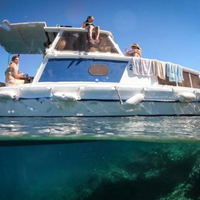
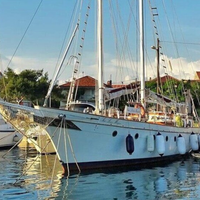
You can also easily depart from Zadar’s docks for a day of island hopping. Dugi Otok is the largest of Zadar’s islands, where you can admire 530-feet vertical cliffs and swim in the salty, therapeutic Lake Mir in Telašćica Nature Park. Ugljan and Pašman islands are close enough to Zadar for a spontaneous ferry ride, with swimming coves, seaside walkways, and low-effort cycling between villages. Plan a simple day on the islands of Silba and Olib, where a beach and long lunch at one of the small village restaurants feel like a simple luxury. For a history-forward detour between island days, drive about 10 miles north to Nin, a small town closely tied to early Croatian history still known for its salt-making tradition, plus long, uncrowded beaches
Seasonal dining and a strong cultural calendar
Zadar’s food culture and lifestyle are at their best when you start with a market, then follow your appetite. At Zadar Market, seasonal produce, olive oil, and everyday Dalmatian staples set the tone for the day, whether you take a tour or a self-guided stroll. From there, lean into the coast’s staples: Adriatic seafood, pršut (Dalmatian prosciutto), and local wine and Maraschino liqueur, which originated in the city and is defined by the region’s sour marasca cherries. Make it a point to seek out Paški sir, cheese made with milk from the indigenous sheep on the small island of Pag.


Zadar’s cultural calendar is especially active in summer, with concerts, open-air performances, and exhibitions. Zadar Jazz & Blues Festival is a seasonal highlight, with live sets that are easy to pair with an evening in the Old Town. Classical music’s signature moment in the city is Musical Evenings at St. Donatus, a summer series that brings ensembles and soloists into the Church of St. Donatus and other city venues after dark. For exhibitions, check what’s currently on at the National Museum Zadar or the Museum of Ancient Glass, a specialist museum with an archaeological collection of ancient glass artifacts. For a prestige collection in the Old Town, visit SICU (The Permanent Exhibition of Ecclesiastic Art)—often called “The Gold and Silver of Zadar”—housed in the Benedictine Convent of St. Mary.






Hotel deals in Zadar


Go further with the Expedia app
