

Molly Burke: “Being blind won’t stop me from traveling”
From visiting art galleries to browsing boutiques, Molly Burke reveals the experiences that make travel most meaningful for her
Molly Burke is a content creator who just happens to be blind. She also just happens to be a regular traveler who doesn’t let disability prevent her from exploring the world.
“I get asked all the time why I enjoy traveling if I can’t see. People have this narrow mindset of what tourism is—it’s literally called sightseeing, that’s how we describe tourism—so people are confused why I love to travel so much,” says the 29-year-old Canadian influencer and accessibility advocate, whose YouTube channel has almost 2 million subscribers.
“For me, travel is about experiencing culture through food and fashion because they’re things I’m passionate about that are unique to cultures. I go to local boutiques, eat at local restaurants. I’m not there for the views, I can’t see them. That’s not my experience and that’s okay. I experience it in a way that’s just as beautiful.”
But she’s come a long way. “When I lost the majority of my vision in 2008, a charity granted my dream to go to Paris,” she recalls. “It was one bright spot in a dark time. I went back in 2018 to honor the 10-year anniversary and do things I didn’t feel I could in 2008.
“The first time, my vision loss was too fresh to feel I could go to an art gallery, because all I’d focus on was what I was missing, not what I was experiencing. So I went back and stood in front of the Mona Lisa even though I couldn’t see it, to have that moment of power for myself.”
Of course, travel isn’t without its challenges. If her guide dog Elton John travels with her, she has to fly premium economy, and many countries require months of paperwork—but some destinations are more accessible than others.
“Tokyo is my favorite city. It was on my bucket list and I can honestly say it exceeded expectations. It’s the most accessible city I’ve ever been to. I couldn’t read it because it’s Japanese braille, but everything has tactile markings and the sidewalks are wide, straight, clean, and smooth. With Europe, cobblestones, narrow sidewalks, cracks and bumps, twisty winding roads and older buildings are inherently going to be less accessible.”
“My experience as a blind woman isn’t relatable for most people,” she continues. “Most people will never understand living life as a blind person, but people can understand eating French bread in Paris or shopping from Issey Miyake in Japan. It allows me to be at a dinner table and talk to strangers about things that they can relate to. So even though they don’t relate to my lived experience, we can still share experiences. That’s empowering for me to feel connected to the world—even though there are so many ways in which I am inherently disconnected to the world.”
Molly Burke’s travel tips
Book a hotel with character
“Because I can’t do as much as other people, I need to recuperate, so I like a boutique hotel. When it’s a generic hotel, every room in every city feels the same, and I’m not having a new experience. My hotel recently in Paris was old and quirky, with textural fabric on the walls, a tiny elevator and long skeleton keys for the rooms, whereas the hotel in Tokyo was neon-lit and super modern with multi-textural patterns and a different vibe, which is now how I remember those places.”
Be in the moment
“Be open to whatever is meant to come your way. I’m a go-with-the-flow traveler, not somebody who structures my days. As a disabled person, I don’t know how I’m going to feel and sometimes things are draining or overwhelming, or jet lag hits me harder. I don’t want to create this plan and be disappointed when I can’t follow it. I’m focused on meeting people and having interesting conversations, stuff that just happens. If you’re scheduling every moment, you’re not open to experiences that might be the most enriching.”
Minimize travel stress
“I try my best to avoid red-eye flights because it does not set me up for success when I land. My ideal time to travel is mid-afternoon, and I’m absolutely somebody who gets to the airport two to three hours early, even with domestic flights. Why stress yourself out when you’re going on vacation, or even worse, a business trip?”

Summer travel dreams are made of this
Be flexible—and assertive
“In Barcelona, my dog couldn’t work because of a crazy heatwave we weren’t expecting. Always be willing to ask for help. I’ve learned I need to be assertive in telling people how to help me instead of assuming they’ll know. I’ll say, ‘I had X, Y, Z bad experience, so this is why I’m asking X, Y, Z of you—to make sure that doesn’t happen again.’”
Do an organized city tour
“On day one, I take a city bus tour—it’s the most touristy thing to do, but it gives a snapshot overview of the city you’re in. For blind people, they’re so descriptive, and it allows you to think, ‘I really want to go back to that neighborhood we saw on the bus tour.’ You can hone in on what interests you from there.”
Experience things your own way
“There are ways to do things in a way that feels right and enjoyable for you. I didn’t get to look at Gaudí’s architecture in Barcelona, and there is no way I could have conceptualized it the way I could when I got to actually touch it. It was mind-blowing, so incredibly beautiful. Art galleries can feel hard to enjoy as a blind person, so look for multisensory art experiences. A lot of cities now have them—I just went to one in Seattle.”
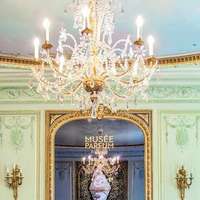
Handily situated next to the Palais Garnier, the Fragonard Perfume Museum is a sensory journey through the origins and evolution of fragrance. Not only is it free, it’s pretty underrated and little-known, so there aren’t the tourist hordes you find at other Paris museums. Starting in ancient Egypt, it journeys through to 20th-century perfume making in the town of Grasse, where classic French perfume houses (including Fragonard) still have their headquarters. There’s a small gift store to do a spot of “treat yourself” shopping of their classic scents.
The Musée Louis Braille is a trip out of town (30 minutes from Gare de ’Est), but it’s one well worth making for an all-round delight on the senses. Explore the inventor of braille’s childhood home and enjoy wandering the Garden of the Five Senses with more than 500 plant varieties to be smelled, eaten and touched, including everything from chili peppers to peppermint to paper reed (with a smell reminiscent of castor oil). The museum explores the evolution of literary learning for blind and visually impaired people.
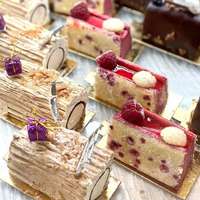
You can’t move in Paris for fabulous boulangeries, and you’re never more than a few yards away from the taste and smell of the finest baguettes in France, so it’s no mean feat to make the best one of them all. Chef-boulanger Taieb Sahal has achieved just that. Awarded (deep breath) Le Grand Prix de la Baguette de Tradition Française de la Ville de Paris in 2020, for his divine crusty, airy version, he sells them at his boulangerie Maison Julien in the 17th arrondissement. This artisan bakery also does a pretty special petit déjeuner and some rather jaw-dropping patisserie, too.
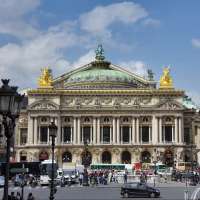
Whatever your cultural persuasions, it’s absolutely worth the wonders of taking in a show at France’s national opera house, the Palais Garnier. Take a guided tour of the building’s incredibly grand glories and brush up on your knowledge of 19th-century French theater architecture. Tactile models are available for the visually impaired during tours, and they offer audio descriptions for many of the ballets and operas.
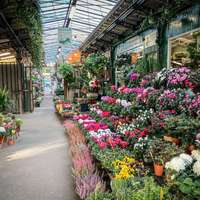
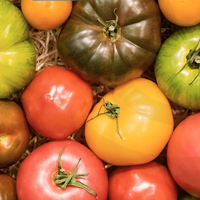
Close to Notre Dame cathedral (set to reopen to the public in December 2024) in Île de la Cité, the superb Marché aux Fleurs makes for an enjoyable stroll. Attracting locals and visitors since the early 1800s, it’s a sensory delight. Unusually for a market, Marché aux Fleurs is open daily and for long hours between 8am and 7:30pm. If you want some gourmet French goods with your floral displays though, you’d be best placed to try the food and flower market Marché President Wilson (Avenue du Président Wilson, 75116, Wednesday through Saturday from 7:30am to 1:30pm) outside the Palais de Tokyo, where local chefs go to stock up on their meat, fruit, veggies and the best fromage and vin.
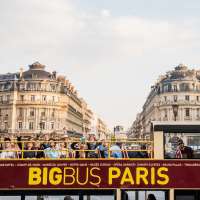
An open-top bus tour can be a great way to orient yourself with a new city—particularly somewhere as vast as Paris—and learn about the history and culture of a new place. Book a ticket for Big Bus Tours and you can hop on and hop off at major points of interest all over the city.

Lara Kilner is a lifestyle journalist who has contributed to The Times, The Telegraph, and more. She has traveled extensively through five continents, but her most memorable trip was the one on which she met her Malaysian husband.

Go further with the Expedia app
