
Where Was the Odyssey Filmed?
Discover Christopher Nolan’s The Odyssey filming locations across Europe and find unique and unspoiled sites and scenes, worthy of Homer’s epic poem.
In his cinematic retelling of Homer’s legendary poem, director Christopher Nolan has chosen filming locations as epic and evocative as the ancient tale itself. From the volcanic islands of Sicily to the mist-shrouded moors of Scotland, each site echoes the mythic journey of Odysseus, rich in natural drama, historical depth, and timeless atmosphere. Exploring filming locations take you on a thrilling journey from unique historic sites, picturesque islands, and sun-drenched beaches in Greece and Italy to Iceland’s otherworldly landscapes and Scotland’s mythical glens. The rugged cliffs and untouched beauty of the Mediterranean South evoke the spirit of the Homeric legend while haunting ruins and volcanic sceneries further north offer cinematic grandeur and mystery, perfect for scenes of exile, enchantment, and return. Each location mirrors challenges and victories faced by Odysseus and his crew. The director’s decision to film in these places underscores his dedication to capturing the essence of Homeric storytelling. They are living, breathing extensions of the story, chosen to immerse audiences in a world where myth meets reality. Join us as we trace the footsteps of Odysseus across Europe’s most legendary filming sites.
01
The Peloponnese, Greece
Where the story began
If you’re going to film a period movie in an authentic location, you need to make your way to the Peloponnese region in Greece, where Homer’s story originates. The Peloponnese is a large peninsula in southern Greece, connected to the mainland by the Isthmus of Corinth, and located about a 1.5–2-hour drive from Athens. The area is known for its rich history, dramatic landscapes, and ancient ruins that create a stunning and genuine backdrop for a Homerian epic.
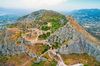
In the Peloponnese, one of the most prominent filming locations for the film was at an archaeological palace site in Acrocorinth that’s among the most impressive and historically significant fortress sites in the country. Towering 1,800 ft above sea level, it dominates the landscape above Ancient Corinth, offering breathtaking views and a storied history. First fortified in the 7th–6th century BCE, it was continuously occupied from archaic times to the early 19th century. Acrocorinth served as a key defensive stronghold controlling access to the Peloponnese. Over centuries, it was occupied and modified by Greeks, Romans, Byzantines, Franks, Venetians, and Ottomans, each leaving architectural and cultural imprints. When you enter the site, you pass through three massive, fortified gates, each with unique architectural features like towers, bastions, and crenellations. At the summit, you’ll find the Temple of Aphrodite. This ancient sanctuary was later converted into a church and then a mosque. Explore the Byzantine cisterns and fountains, as well as mosque and minaret ruins, remnants from the Ottoman period. The complex also includes the castle of Villehardouin, a medieval fortress. If you’re into landscape photography, you’ll be glad to know that on clear days, you can see the Corinthian and Saronic Gulfs, Mount Parnassus, and even Aegina and Salamis islands from the site.
Another key filming location of the film in the Peloponnese region is the Messenia area, which boasts stunning mountains, fertile plains, and a long coastline along the Ionian Sea. Messenia invites visitors to explore its history, natural beauty, and authentic Greek culture. It’s believed that the movie scenes featuring the character of Cyclops Polyphemus were filmed in Nestor’s Cave in Voidokilia beach. This horseshoe-shaped beach with turquoise waters is considered one of Greece’s most beautiful. Another Messenia location to appear in the movie is the picturesque coastal town of Pylos (also known as Navarino). It’s a true treasure trove of mythology and legends, built on two hills with spectacular views. It’s a great base for exploring Messenia’s archaeological sites, castles, and beaches, so check into one of Pylos’ amazing luxury resorts, cozy guesthouses, and apartments or discover hotels around the general Messenia region to find an ideal stay for your adventures.
02
Favignana, Sicily, Italy
Rugged island gem with history
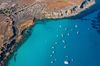
Favignana, part of the Egadi Islands off Sicily’s northwest coast, serves as a significant shoot location for the film in Sicily. Known as “Goat Island” thanks to the wild goats that once roamed there freely, Favignana is steeped in Sicily’s history and myth. Its connection to Odysseus’s adventures makes the island a fitting choice for recreating scenes from the epic poem. Scholars have long speculated that this island was referenced in Homer’s story, and it’s believed to be one of Odysseus’s landing spots during his journey, and where he and his crew replenished their supplies. Its dramatic cliffs and azure waters perfectly mirror the challenges faced by Odysseus and his men.
Nature lovers can discover Favignana’s varied and rugged terrain that features mountainous inland areas, woodlands with typical Mediterranean flora, especially pine trees, and a rocky coastline. The island’s stunning beaches, such as Cala Rossa, Cala Azzurra, and Cala del Bue Marino, would certainly offer a Hollywood-worthy backdrop for any scene. Caressed by the Favonian breeze, the first two beaches are surrounded by limestone cliffs and sandy seabed, while the third has a predominantly sandy shore. All three feature breathtaking, crystal-clear waters where locals, visitors, and cast members alike would enjoy a cooling plunge. The island is mostly ideal for cycling, so you can rent a bike or scooter near the ferry port and experience the island at your own pace. Most beaches and sights are easily reachable by bike.
History buffs love exploring the area around the ruins of the Castle of Santa Caterina, located on Favignana’s highest peak. The castle was originally built as a watchtower during the Saracen Domain in the 9th century, and later became a fort, a prison, and a military outpost. The hike to the hilltop is steep and relatively challenging, but you’ll be rewarded with a spectacular panoramic view of the island. Or visit the Ex-Stabilimento Florio, a historic tuna cannery that is now a museum showcasing Favignana’s rich maritime and fishing heritage. It’s a fascinating look into the island’s past and its connection to the tuna industry.
Don’t miss the charming Favignana town center. You’ll find artisan shops, cafes, gelaterias, and relaxed piazzas. To unwind after a long day of exploring, take a seat at one of the restaurants and order a plate of fresh seafood, arancini (deep-fried, stuffed rice balls), or granita (traditional Sicilian frozen dessert made from water, sugar, and natural flavorings, typically fruit or nuts), and just watch the world go by.
If you’d like to stay overnight, Favignana offers a wide range of hotels, resorts, guesthouses, and villas catering to different budgets and travel styles. Whether you’re looking for luxury, eco-friendly stays, family-friendly hotels, or charming local accommodations for a romantic getaway, you’ll find plenty of options.
03
Aeolian Islands, Sicily, Italy
Ancient legends and volcanic beauty
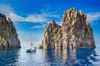
The Aeolian Islands, north of Sicily in Italy, renowned for their volcanic landscapes, highlight Sicily’s natural beauty and historical ties to Ancient Greece. The Aeolian Islands rumored to feature in the movie include Lipari, Basiluzzo, and Vulcano.
Lipari is the largest of the islands and popular with those who love nature, sea, and history. In Homer’s epic, Lipari is believed to be the mythical island of Aeolia, the home of Aeolus, the god of the winds. Aeolus gifts Odysseus a bag of winds to aid his journey home. His crew, curious and unaware of its contents, opens the bag, releasing the winds and blowing the ship off course, and thus delaying their return to Ithaca. The ideal backdrop for this scene would be at Pietra del Bagno, a fairytale-like cliff overlooking the sea, not far from Lipari town.
Archaeological finds, including Mycenaean pottery, suggest strong cultural ties to mainland Greece. History enthusiasts can study these treasures at the Lipari Castle and Citadel, which houses the Aeolian Archaeological Museum. For more urban delights, the picturesque Lipari Old Town boasts cobblestone streets lined with pastel buildings, flower-filled balconies, and artisan shops great for photography, shopping, and sampling local cuisine.
If you’re looking for a base for your island-hopping adventure or would like to stay longer, the island has a wide variety of hotels, resorts, guesthouses, and vacation rentals, ranging from luxury to budget-friendly options.
Basiluzzo Island, the smallest of the eight Aeolian Islands, is a volcanic islet located about 2 miles northeast of Panarea. Since 1991, it has been designated an Integral Nature Reserve, meaning landing is prohibited to preserve its fragile ecosystem. While you cannot set foot on the island, you can book boat tours from Panarea, Lipari, or Stromboli that pass by Basiluzzo, allowing you to admire its dramatic cliffs and lava formations from the sea. Its underwater Roman structures are also visible from boats. The “Cave of Love” and other coves offer postcard-perfect views and swimming spots. It’s easy to see why the dramatic waters surrounding the raw, unspoiled environment on Basiluzzo would be perfectly suited to reimagine the heroic adventures of Odysseus.
It’s difficult to imagine a better choice than Vulcano to represent the mythic tale of a legendary hero. This island is the closest to the main Sicily Island in the Aeolian chain, and it’s dominated by the dormant volcano that gives the island its name, said to have been the forge of the god Hephaestus. Vulcano is celebrated for its natural hot sulfur springs and dark volcanic beaches. One fantastic filming site would be the Grotta del Cavallo (“Cave of the Horse”), accessible only by boat. With its winding tunnels and pools, it offers a mysterious and enchanting setting that may become one of the key locations in Odysseus’s new cinematic journey.
The top things to do on Vulcano offer an exciting mix of adventure, relaxation, and natural beauty, making it ideal for a day trip or a longer stay. Strap on your hiking boots and trek to the Gran Cratere, the large volcanic crater. The hike takes about 1–1.5 hours and rewards you with panoramic views of the Aeolian archipelago. You’ll see fumaroles (steam vents), sulfur deposits, and surreal volcanic landscapes. After your hike, soak in the mud baths (Laghetto dei Fanghi). These natural thermal pools are rich in minerals and believed to have therapeutic properties, a wonderful remedy for aching muscles. Or you can relax on the black sand beaches such as Spiaggia delle Acque Calde and Spiaggia di Ponente. They feature volcanic black sand and warm waters, ideal for sunbathing, swimming, and snorkeling. Vulcano’s hotels and accommodations range from luxury resorts to budget-friendly guesthouses, featuring spa experiences, beach access, or proximity to hiking trails.
04
Iceland
Natural wonders and cinematic settings
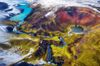
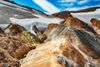
Iceland is often chosen as a filming location for its otherworldly landscapes, dramatic natural traits, and unique light conditions. It’s been featured in numerous high-profile films and series, including Game of Thrones, Interstellar, The Secret Life of Walter Mitty, and Batman Begins. It’s believed that the Icelandic Highlands and the Landeyjahöfn region are among the most prominent filming locations in The Odyssey and that they appear in the movie’s key scenes.
The Highlands of Iceland are a vast, remote, and rugged region that covers much of the island’s interior. They are one of the most geologically active and visually dramatic landscapes in the world, making them a magnet for adventurers, photographers, and filmmakers. The area is dominated by volcanoes, glaciers, lava fields, geothermal areas, and desert-like plains. The terrain is shaped by millennia of volcanic activity, creating surreal vistas. Major draws here are areas like Landmannalaugar, which features rhyolite mountains in shades of red, orange, green, and blue, while Kerlingarfjöll and Askja offer steaming vents, hot springs, and snow-capped peaks. The Highlands are mostly accessible only in summer (June–September) due to snow and rough terrain, and roads are often unpaved, requiring 4x4 vehicles and careful planning. For a comfortable adventure, book a guided tour of Landmannalaugar, Kerlingarfjöll, or Askja. To stay overnight in the area, check into a private lodge or cabin at the Highland Base Kerlingarfjöll and take in the peaceful Icelandic wilderness while enjoying modern amenities. Or look for lodgings near Kerlingarfjöll for unique accommodation.
The crew and cast of this epic movie have also been spotted in Landeyjahöfn on the southern coast of Iceland. While not a bustling tourist hub, Landeyjahöfn offers picturesque views of the surrounding cliffs and coastline. It’s a great spot for photography and a peaceful stop before heading toward new adventures from the ferry terminal that provides a convenient gateway to Heimaey in the Westman Islands (Vestmannaeyjar). It takes only a 40-minute ride to reach the volcanic wonders of these remote islands. The ferry terminal is seasonal, operating mainly in summer. It’s highly recommended to book ferry tickets in advance, especially during summer or if bringing a car or camper. Buses run from Reykjavík to Landeyjahöfn, stopping at towns like Selfoss, Hella, and Hvolsvöllur. Or you can book a guided tour from Reykjavik to the Westman Islands for a more carefree visit.
05
Scotland, UK
Where ancient ruins and wild coasts awaken the spirit of the movie
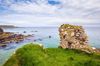
The film’s director presumably brought his filming crew to Scotland’s iconic shores and moors to add visual drama to the scenes in his movie. The misty lochs, glens, and mountains, changing skies, and soft northern light provide breathtaking backdrops for any film genre, and they are cinematic in scale and mood.
Filming crews have been sighted in Findlater Castle on the Moray Coast in Aberdeenshire. It’s a dramatic and historically rich ruin, perched on a rocky promontory overlooking the Moray Firth. The name “Findlater” comes from the Gaelic fionn leitir, meaning “white cliff”. Findlater’s isolated, windswept location, crumbling stonework, and epic coastal views make it an excellent setting for epic historical dramas. History lovers, hikers, and photographers flock here due to its medieval architecture, cliffside views, and storied past. The ruins include vaulted chambers, stone causeways, and remnants of towers, all surrounded by sheer drops to the sea.
The earliest record of a castle at Findlater dates to 1246, with significant fortifications added by King Alexander III in the 1260s to prepare for a Norwegian invasion led by King Haakon IV. In the 15th century, Walter Ogilvy received royal permission to rebuild the castle, which was later embroiled in political intrigue involving Mary, Queen of Scots, and the Gordon family. By the mid-17th century, the Ogilvy family had moved to Cullen House, and Findlater Castle was abandoned. Built on a 50-foot-high cliff, the castle was accessible only via a narrow isthmus with drawbridges, moats, and bastions for defense. Today, you can access the castle by walking from the Barnyards of Findlater farm along a grassy path to the cliffs. The site is unmanaged and remote, so caution is advised due to steep and slippery paths. To stay near the castle, book a room in a comfortable hotel or a cozy guesthouse near Moray.
Another Scottish filming location is rumored to be the Culbin Forest on Scotland’s northeast coast between Nairn and Forres. This vast and diverse woodland is known for its coastal dunes, pine forests, and rich wildlife. The dunes are a rare and fragile environment ideal for peaceful walks and photography. Bring your binoculars as the area is celebrated as a bird sanctuary and resting spot for migrating birds. It also attracts wading birds and other shore species, especially around Buckie Loch and The Gut. You might spot winged fauna such as ospreys, woodpeckers, and crossbills, as well as earth-bound creatures like red squirrels and roe deer. The trails around Culbin Forest are well-marked and suitable for all ages.
Culbin was once a fertile estate known as the “garden of Moray,” but between the 12th and 17th centuries, it was gradually buried by shifting sands due to deforestation and erosion. By 1694, the village of Culbin was completely engulfed, becoming one of Scotland’s most mysterious lost settlements. Today, you can explore the legends, environmental changes, and cultural heritage of the area in exhibitions like Culbin Stories at Elgin Library. For a cozy overnight (or longer) stay in the area, head to Forres’ hotels and guesthouses.
The film draws cinematic power from a tapestry of mythic landscapes across Europe. From the volcanic drama of Sicily’s islands and storied history of the Peloponnese region to the windswept landscape of Scotland and outlandish charm of Iceland, each location evokes the timeless spirit of Homer’s poem and contributes to a visual journey as epic as Odysseus’s own. These filming sites aren’t just backdrops. They’re characters in the story, echoing themes of exile, wonder, and return. Whether you’re a movie buff, history enthusiast, or traveler seeking mythic beauty, these destinations invite you to step into legend.
Ready to follow in our hero’s footsteps? Start planning your own journey through the landscapes of this highly anticipated movie.
Disclaimer: This content is not affiliated with or endorsed by the producers of The Odyssey.