
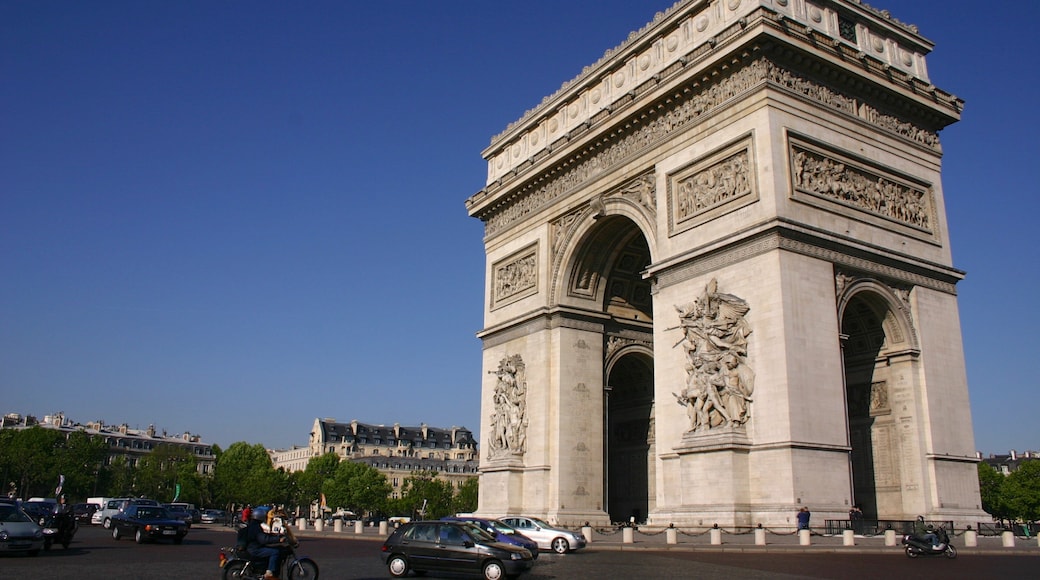
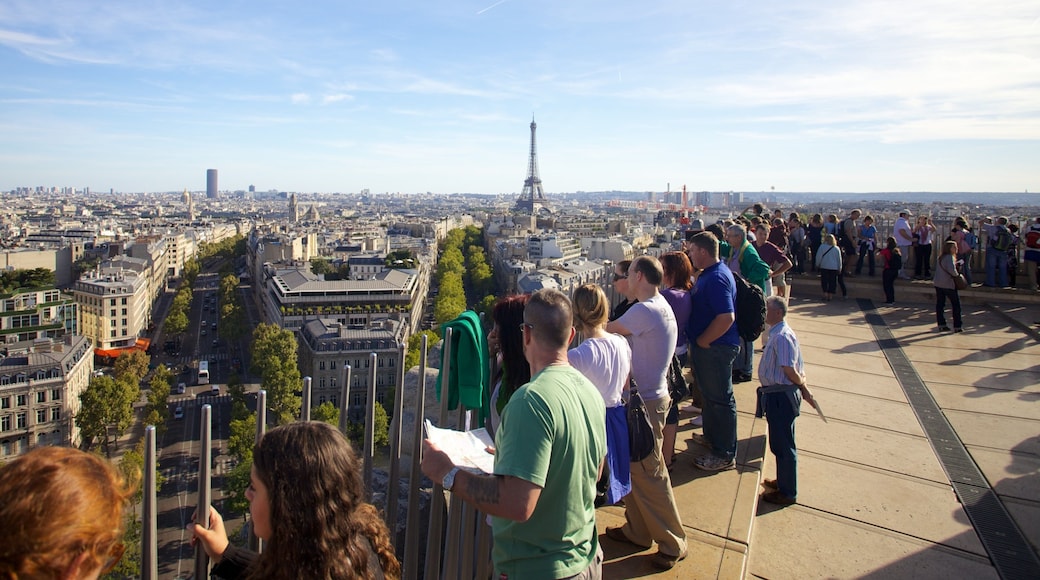
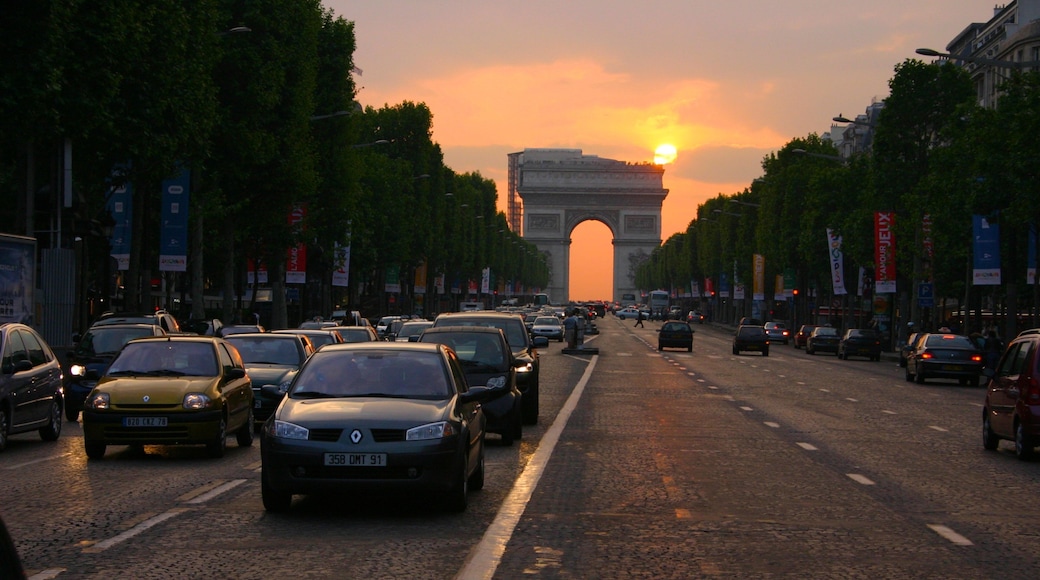
An imposing monument at the center of a busy traffic intersection, the archway rises majestically above the city, with coveted city views.
While the vista from 164 feet (50 meters) above Paris will lure you to the top of the Arc de Triomphe, there’s much to see at the base of this landmark. It stands in the Place Charles de Gaulle where 12 straight avenues, including the Champs-Élysées, intersect and form “the star” of the city.
Although this is a busy intersection at the center of the city, you can easily reach the monument via car or sidewalk via the picturesque Champs-Élysées. There’s also enough pedestrian-only space around the arch to admire its architecture and decorative artwork from a safe distance.
There is an admission fee to reach the top of the arch via 284 steps or the elevator. Once there, you’ll find a museum, gift shop and views down the Champs-Élysées. The surrounding streets are particularly beautiful in the early evening when the city’s lights begin to sparkle.
It’s free to explore the base of the arch. Four massive pillars beneath an attic form a vaulted passageway so wide a pilot flew his plane through it in 1919. In 1920, the body of an unknown soldier was buried here and an eternal flame was added in 1923, in remembrance of those who died in World War I. The flame is rekindled in a daily ritual at 6:30 p.m.
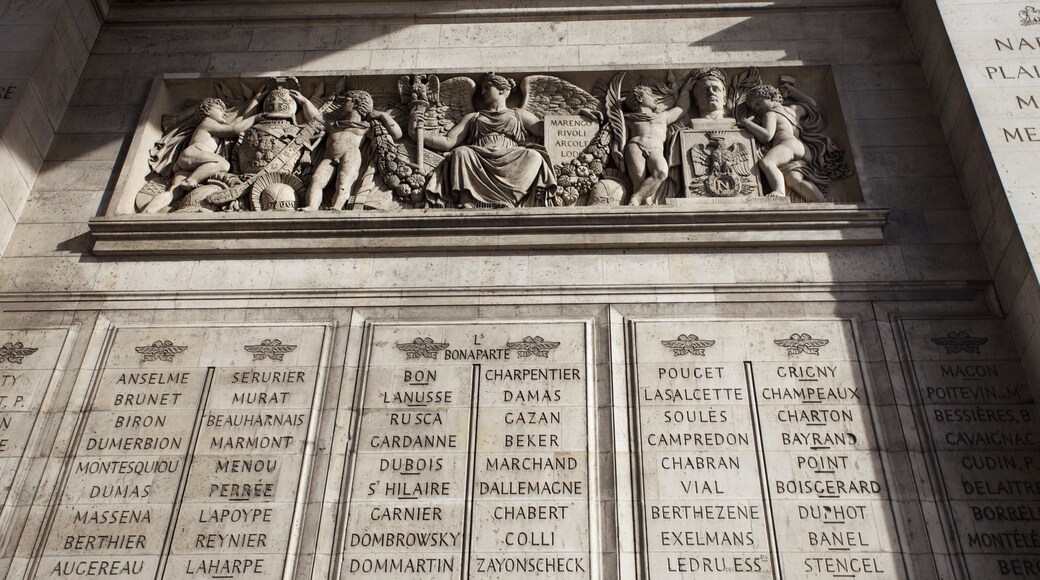
The arch is a memorial to all those who fought for France, but particularly those in the Napoléonic wars. Its inner sides and top are engraved with the details of various wars and the 558 generals who fought in them. Each of its four pillars is decorated with a sculpture in relief. The most famous is Francois Rude’s The Departure of the Volunteers of 1792. It depicts everyday French people ready to defend their country, lead by the allegorical figure of Liberty. This work so encapsulated the patriotic zeal of the nation that it became known as La Marseillaise, after the national anthem.
Napoléon I commissioned the arch after his victory at Austerlitz in 1806. He promised his army they would “return home through arches of triumph”, but died before his grand tribute was completed in 1836.
The Arc de Triomphe is located in the 16th arrondissement on Paris’ Right Bank. It’s open daily, but one of the best days of the year to visit the arch is July 14th, Bastille Day. The Bastille Day parade follows the length of the Champs-Élysées and a huge flag billows from the arch’s crown creating a colorful photo op. This monument is easily accessible via bus, subway, railway or on foot. Driving is a bit trickier, as parking can be difficult to find.