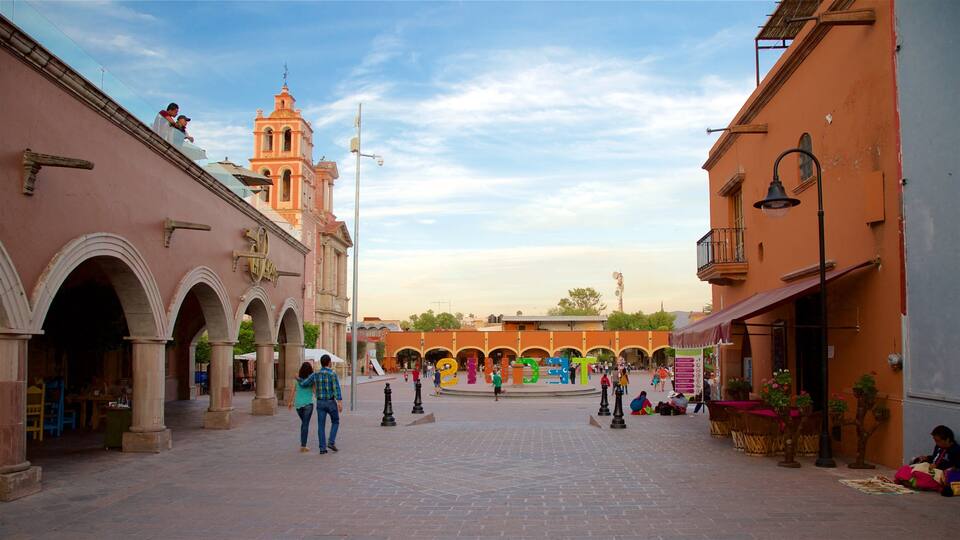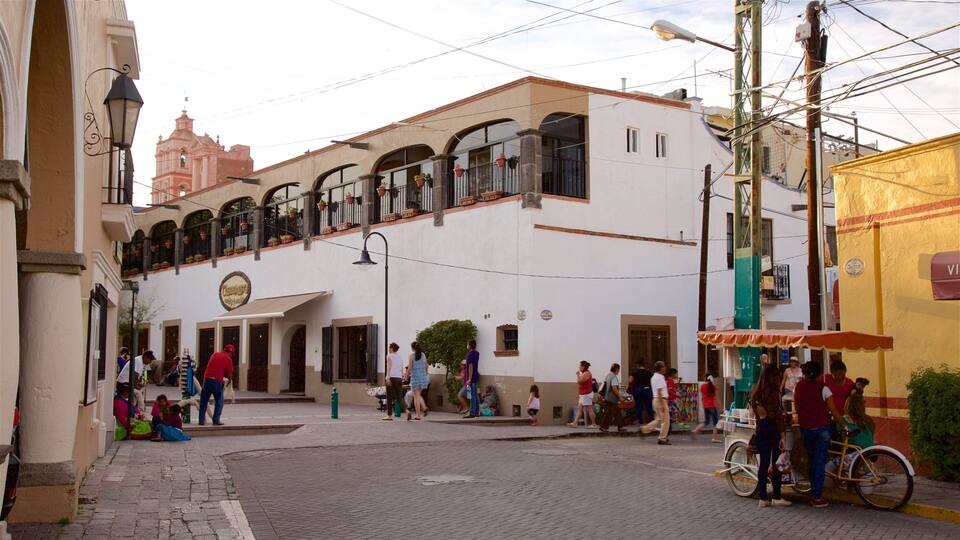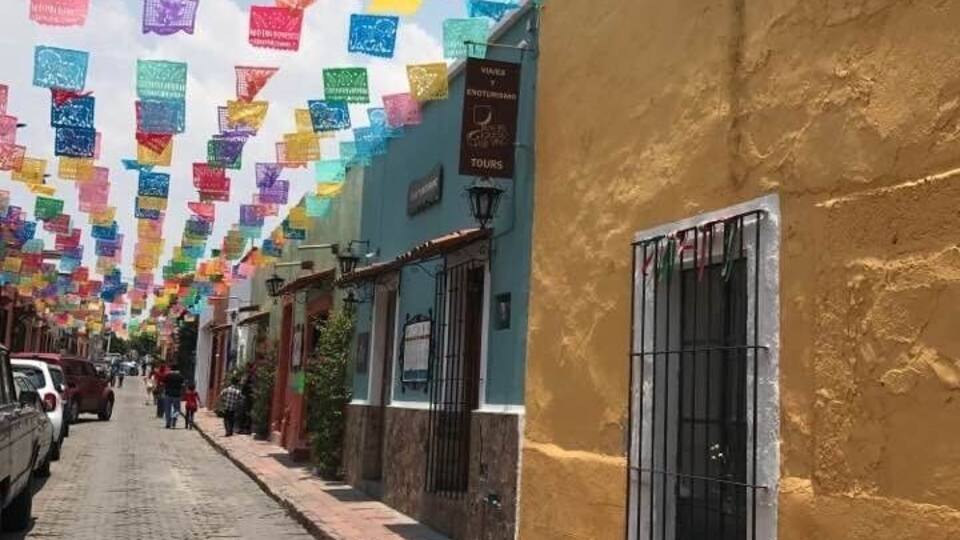


From Toltec pyramids to some of Mexico’s finest Baroque architecture, this charming hill city lays at the heart of the nation’s history.
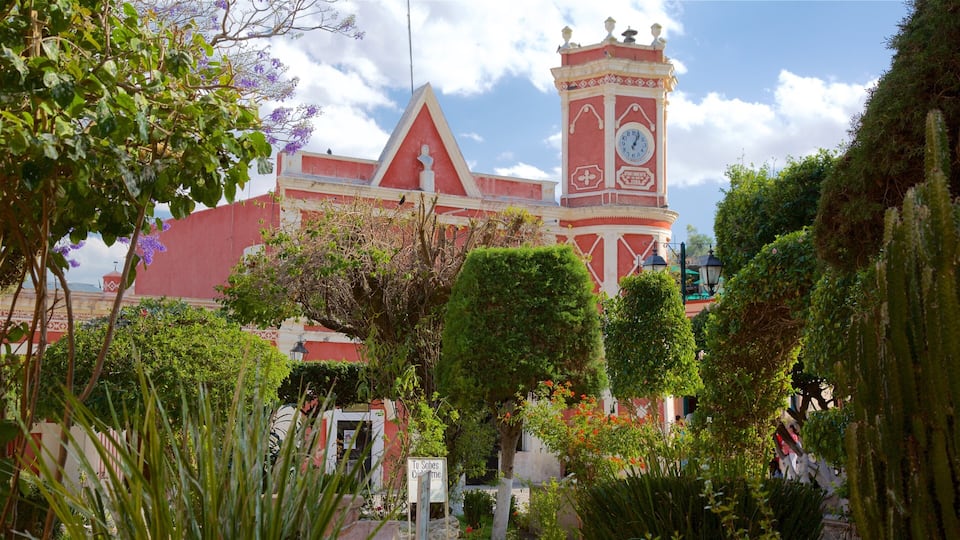
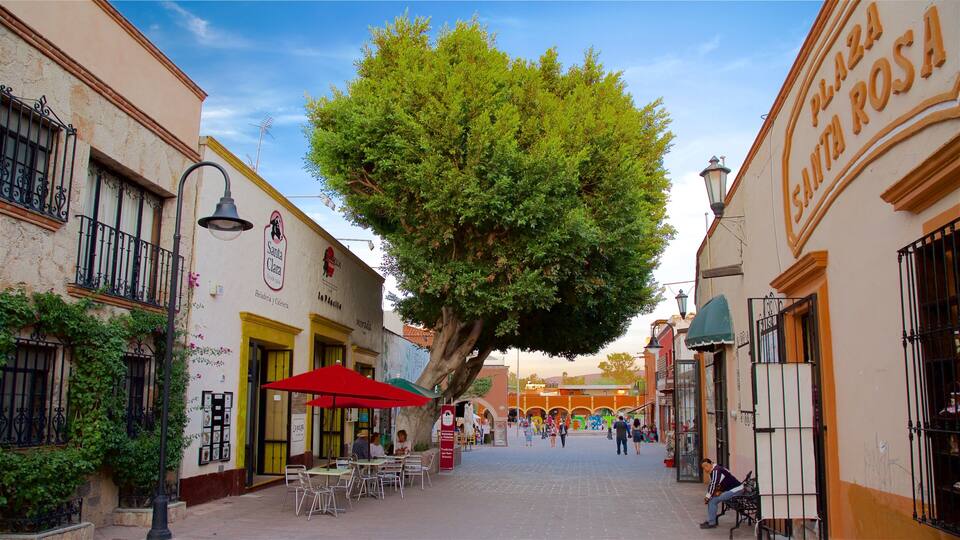
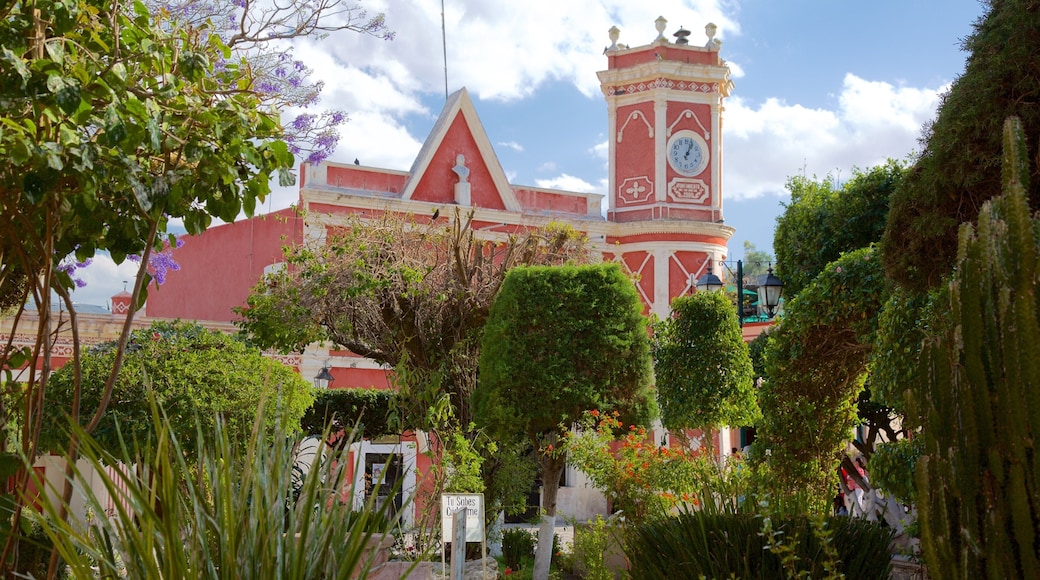
Queretáro is Mexico’s former historical capital. This village in the hills of central Mexico has played center stage in some of the most important chapters of the nation’s history. Visit Queretáro to experience this history and to explore some of Mexico’s most ornate architecture.
During the early 1800s, Queretáro was a headquarters for Mexican revolutionaries, who sought independence from Spain. Later in the century, when France invaded Mexico and established Maximilian I as emperor, Queretáro is where he was captured, tried and executed by republicans. Visit the Hill of the Bells, just west of the historical center of Queretáro, to see where Maximilian was executed.
In 1917, Queretáro was the site of the signing of the Mexican Constitution, which is still in effect today. Visit the 19th-century Teatro de la Republica (Theater of the Republic) in the historical center, where the constitution was ratified.
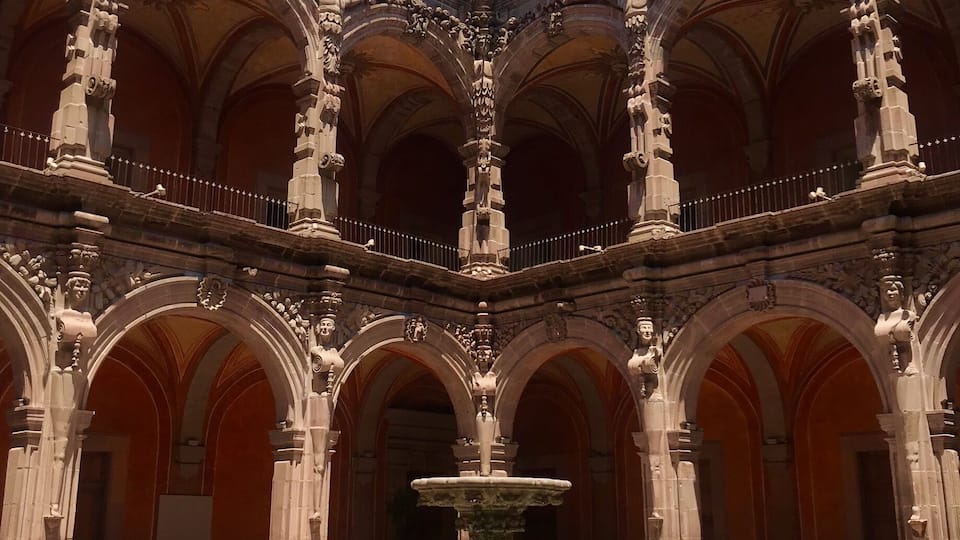
The historical center of Queretáro also has several superb examples of Mexican architecture. The Temple of Santa Rosa de Viterbo is a stunning hybrid of Mexican Baroque and Islamic architecture. Marvel at the lush designs inside the 18th-century temple, including walls covered in solid gold picture frames. At the Museum of Arts of Queretáro, admire the courtyard lined with intricate archways.
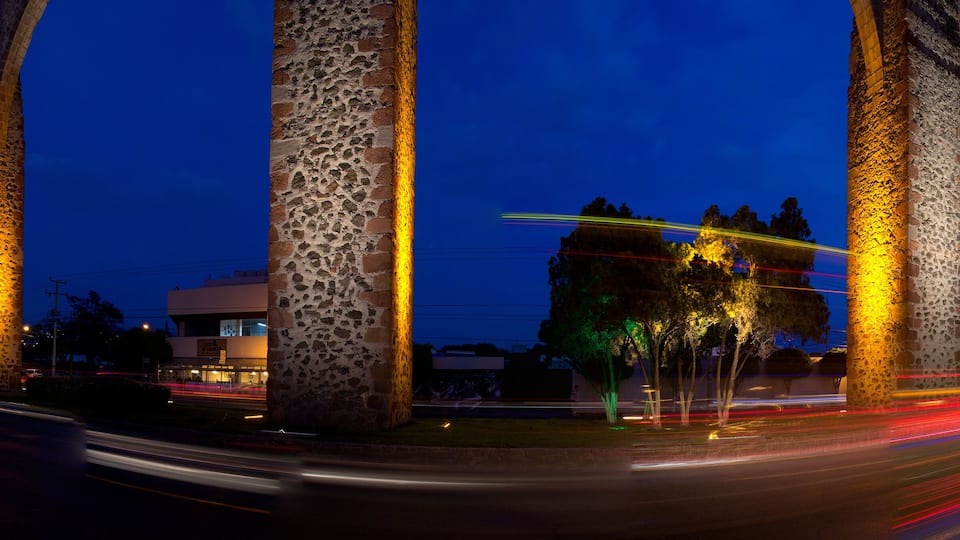
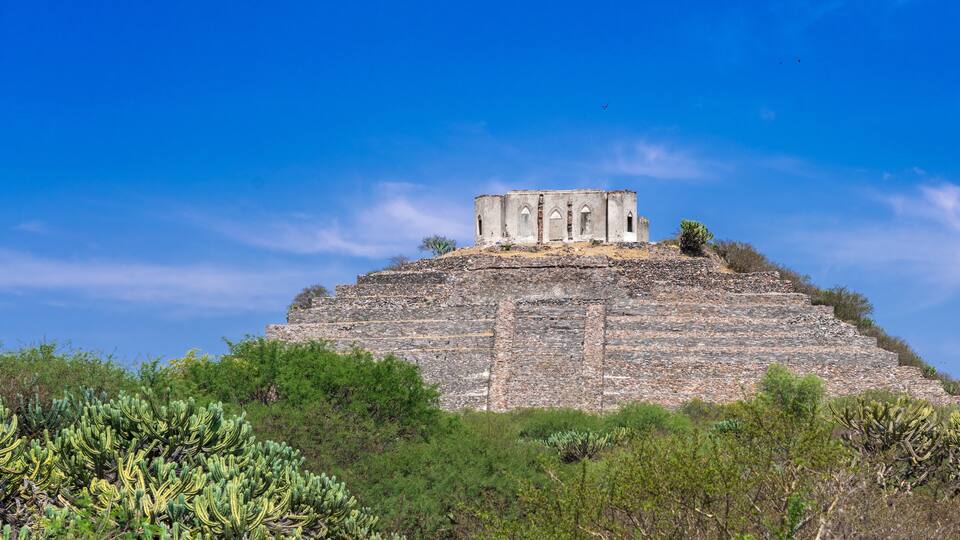
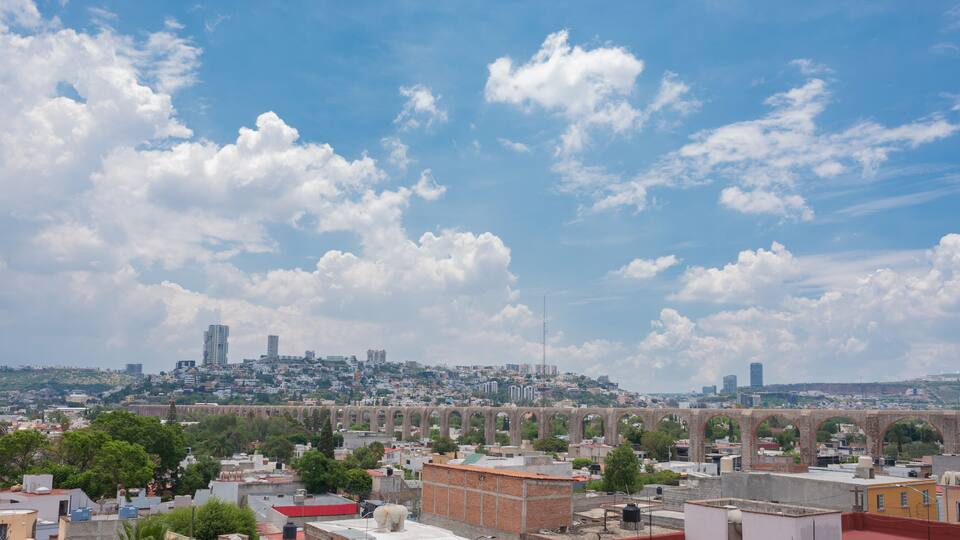
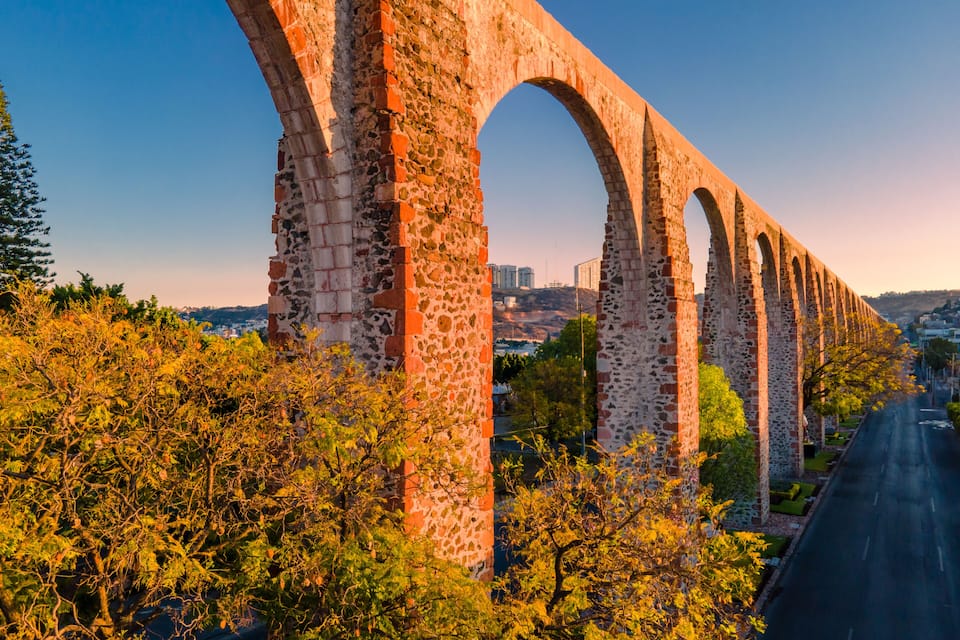
Outside of the historical center, Queretáro reveals an even more ancient history. Look for the massive Aqueduct, built in the early 1700s, which cuts horizontally through town. Nearly a mile long (1.3 kilometers), the brick waterway still provides Queretáro with running water today. Drive 4 miles (7 kilometers) outside of town to see the archaeological site of the El Pueblito settlement. The centerpiece of the complex is a 100-feet (30-meter) high tiered Toltec pyramid, called El Cerrito, from the third century B.C.
Buses and trains run to Queretáro from Mexico City. You can also arrive by plane at the Queretáro International Airport, with flights to and from Houston. Double-decker buses provide tours around the city. To explore beyond the city center, it’s worth renting a car.